

As we observe RED Friday this week, we extend our deepest gratitude to all U.S. troops currently deployed and serving around the globe. This edition of the Connecticut Veterans Bulletin reflects on recent military activities and highlights the crucial role our forces play in maintaining global security and regional stability.
Recently, the U.S. Marine Corps deployed MQ-9A “Reaper” drones to Kadena Air Base in Okinawa, Japan, to bolster operations in a strategic location near contested airspace and China’s military activities. This deployment underscores the U.S. commitment to enhancing defense capabilities and supporting allied nations in the Pacific region.
In the Middle East, the U.S. has significantly increased its naval and air presence amid escalating tensions involving Iran and Israel. The surge includes advanced fighter jets and aircraft carriers aimed at deterring potential conflicts and ensuring the safety of U.S. and allied forces.
Furthermore, Exercise Southern Fenix 24 is set to take place in Chile, featuring military personnel from the U.S., Chile, and Argentina. This multinational exercise highlights the ongoing efforts to enhance interoperability and cooperation among allied forces.
To all our deployed service members, your dedication and sacrifice are deeply appreciated. Your commitment ensures the safety and security of our nation and our allies. On this RED Friday, let us all take a moment to honor and support
Multinational Military Exercise Southern Fenix 24 Strengthens Regional Security in the Atacama Desert
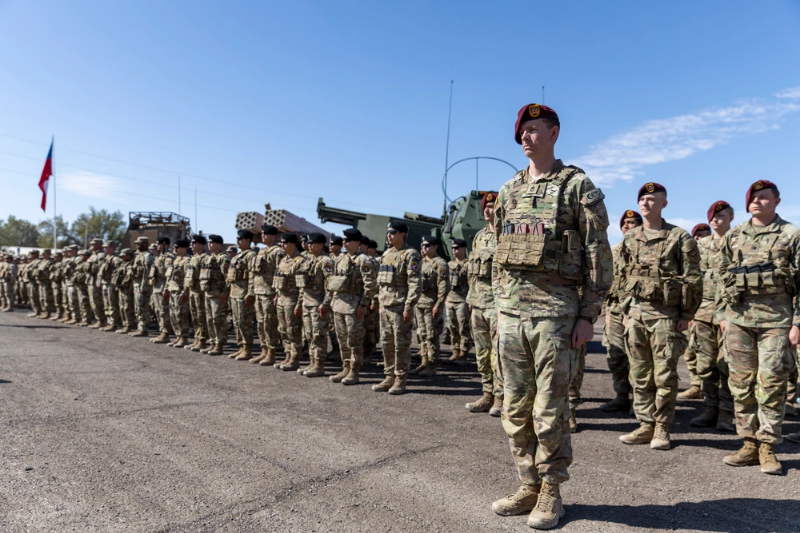
IQUIQUE, Chile — Over 600 military personnel from Chile, Argentina, and the United States are participating in Exercise Southern Fenix 24 (SF24), a significant multinational exercise aimed at enhancing interoperability for multi-domain operations in the Atacama Desert from August 27 to September 5, 2024.
SF24 marks a historic moment as the first U.S. Army-led exercise to deploy the M142 High Mobility Artillery Rocket System (HIMARS) within the U.S. Southern Command area of operations, introducing innovative warfighting concepts in collaboration with the Chilean Army. This landmark event seeks to improve technical and procedural interoperability between the Chilean and U.S. Armies, while also promoting stronger hemispheric cooperation.
Aligned with the SOUTHCOM Campaign Plan and the U.S. National Defense Strategy, SF24 contributes to the broader objective of strengthening security and defense partnerships across the region.
The exercise will see the deployment of approximately 200 U.S. Army personnel from units including U.S. Army South, 11th Airborne Division, 75th Field Artillery Brigade, 1st Security Forces Assistance Brigade, Joint Task Force Bravo, and several National Guard units from Texas, Utah, and New York. These U.S. forces will train alongside over 300 Chilean Army personnel from the 6th Division and representatives from the Argentine military.
Key activities include the expeditionary deployment of a HIMARS section, a U.S. Army Airborne company, and a fire direction center. The exercise will also feature a combined forcible entry, airfield seizure, HIMARS rapid integration, and culminate in two live-fire exercises, showcasing both maneuver and rocket artillery forces.
Southern Fenix 24 offers a critical opportunity for participating nations to refine their operational capabilities, demonstrating the strength of their combined forces and their shared commitment to regional security and stability.
I apologize for the incomplete response earlier. Let me complete the task as requested.
U.S. Bolsters Middle East Forces Amid Israel-Iran Tensions

In response to escalating tensions between Israel and Iran, the United States has significantly increased its military presence in the Middle East. This comes after the killing of Hamas leader Ismail Haniyeh on July 31 in Tehran, which sparked threats of retaliation from Iran.
The U.S. Department of Defense has deployed advanced fighter jets and two aircraft carrier strike groups—the USS Abraham Lincoln and the USS Theodore Roosevelt—to the region. This move is aimed at deterring Iran from launching a wider regional conflict and to support Israel’s defense efforts.
In addition to naval assets, the U.S. also dispatched the USS Georgia, an Ohio-class submarine equipped with Tomahawk cruise missiles, to the eastern Mediterranean Sea. The submarine’s presence underscores the U.S. commitment to maintaining stability and protecting its interests in the region.
Air support has also been ramped up, with F-22 Raptors, F-15E Strike Eagles, and other fighter squadrons deployed to key locations across the Middle East. These aircraft are positioned to reinforce defensive operations and prevent any further escalation by Iran or its proxies.
The Pentagon has noted that the increased military presence appears to be effective, with recent exchanges of fire between Israel and Hezbollah resulting in limited damage. Both sides seem to have avoided a wider conflict, at least for now.
The U.S. remains committed to defending Israel and ensuring regional stability. As tensions continue to simmer, American forces are prepared to respond to any threats against their allies or themselves. The deployment serves as a powerful message to Iran and others in the region about the serious consequences of further aggres
U.S. Marine Corps Deploys MQ-9A Drones to Okinawa Amid Rising Tensions with China
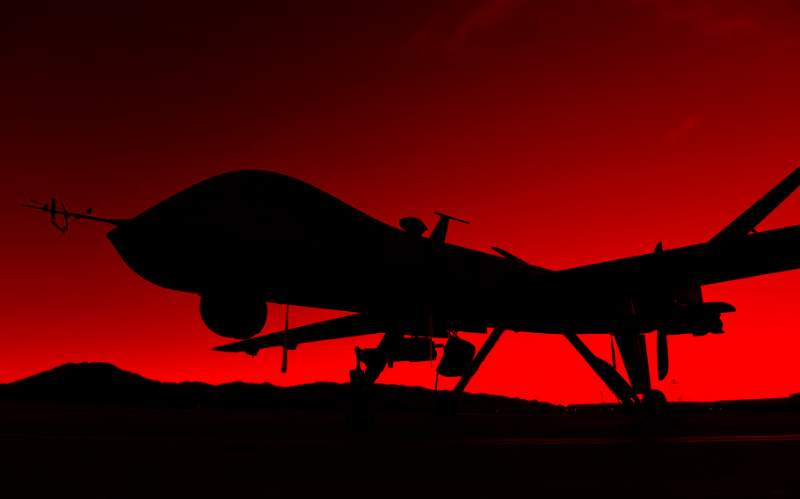
The U.S. Marine Corps has strategically deployed MQ-9A “Reaper” drones to Kadena Air Base on Okinawa, Japan, as tensions continue to rise in the region. The drones, known for their long-range intelligence, surveillance, and reconnaissance capabilities, are intended to enhance the Marine Corps’ proficiency in defending Japan and supporting littoral operations in contested environments.
Okinawa, a critical location between the East China Sea and the Philippine Sea, plays a key role in the U.S. containment strategy aimed at curbing China’s military activities within the so-called “first island chain.” The deployment of these drones follows increased Chinese military flight operations in the area, including recent activity near the “Yonaguni Gap,” a narrow waterway between Taiwan and Japan’s westernmost island.
The MQ-9A drones are part of Marine Unmanned Aerial Vehicle Squadron 3, which reached operational capability with the “Reaper” in August 2023. While the exact number of deployed drones remains undisclosed due to security concerns, the U.S. Marine Corps confirmed that fewer than six drones would be temporarily based at Kadena for a year.
This deployment adds to the existing American unmanned aircraft presence at Kadena, which includes Air Force “Reaper” drones and Navy MQ-4C “Triton” drones. Kadena Air Base, known as the “Keystone of the Pacific,” remains a vital hub for U.S. air power in the region, with plans to introduce 36 new F-15EX “Eagle II” fighter jets to replace older models.
The presence of these advanced drones and fighter jets underscores the U.S. commitment to maintaining regional security and countering potential threats posed by China’s expanding military influence.
Discover more from CONNECTICUT VETERANS BULLETIN
Subscribe to get the latest posts sent to your email.
