
CVB Red Friday: Honoring Deployed U.S. Troops Amid Global Challenges
At CVB, Red Friday is more than just a day to wear red; it’s a heartfelt commitment to honor and support the brave men and women of our armed forces who are currently deployed. In the face of global challenges, including complex operations in the Middle East and Africa, the dedication of our military personnel shines through. From Special Forces redeploying in Chad to U.S. Naval forces maneuvering in the Arabian Sea, our troops are working tirelessly to protect national security, and we at CVB stand firmly behind them.
Special Forces: A Renewed Presence in Chad
The U.S. military’s ongoing efforts in Africa have seen significant developments. After a brief absence, American Special Forces are returning to Chad, strengthening U.S. military presence in the region. This decision comes as Chad and the United States reached an agreement to help counter the growing threat posed by violent extremist organizations like Boko Haram and the Islamic State around Lake Chad. As our forces adapt to new operational realities, their unwavering commitment to global security and regional stability underscores the importance of continued support from home.
A Disruption in Naval Operations
Meanwhile, the U.S. Navy’s vital role in the Middle East has encountered an unexpected obstacle. The USNS Big Horn, a replenishment oiler responsible for fueling the ships and aircraft of the Abraham Lincoln Carrier Strike Group, was recently damaged in the Arabian Sea. This mishap temporarily hampers the Navy’s ability to refuel its strike group, crucial in supporting the defense of U.S. interests and allies in the region. As the Navy works diligently to restore its full operational capacity, CVB honors the dedication of every crew member who remains committed to their mission despite the challenges.
Navigating Uncertainty in West Africa
As U.S. Special Forces reassess their strategic approach in West Africa following the withdrawal from Niger, it is clear that the situation remains fluid. The evolving security landscape has strained U.S. partnerships, yet our troops persist in their efforts to counter violent extremism. From Nigeria to Benin, the determination of our forces to stabilize the region reflects their dedication to safeguarding not just the U.S., but global security.
CVB’s Commitment to Supporting Our Troops
On this Red Friday, CVB reaffirms its dedication to honoring the men and women deployed around the world, whether they are Special Forces on the ground in Africa or Naval personnel navigating the seas. The challenges faced by our troops in Chad, Niger, and the Middle East remind us that their sacrifice is ongoing, and so is our support. We wear red to show solidarity, not just as a symbol, but as a commitment to stand with them in their mission, knowing they face adversity with strength and resolve.
As our military continues to navigate geopolitical tensions, CVB is here to remind our community of the enduring importance of recognizing and honoring their service. Red Friday is about acknowledging the hard work, dedication, and bravery of our troops, wherever they may be deployed, and ensuring they know they have our unwavering support.
U.S. Reinforces Middle East Presence Amid Rising Tensions Between Israel and Hezbollah
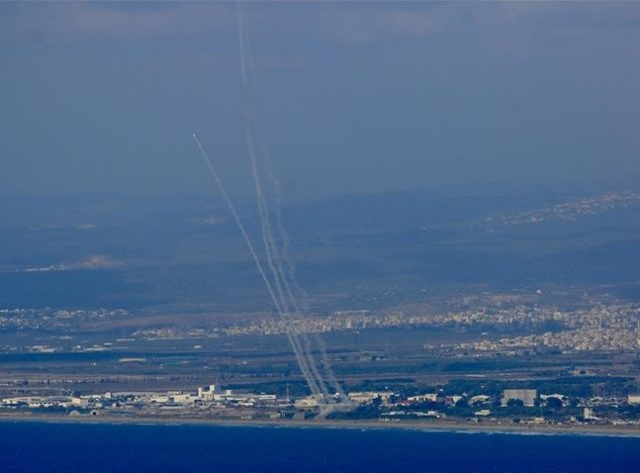
As tensions between Israel and Hezbollah escalate, the United States is reinforcing its military presence in the Middle East, signaling growing concerns over the possibility of a broader regional conflict. The Pentagon announced the deployment of additional U.S. troops on Monday, September 23, 2024, in response to heightened violence between Israeli forces and Hezbollah militants in Lebanon. While Pentagon press secretary Maj. Gen. Pat Ryder did not disclose specific details about troop numbers or their missions, the move underscores the seriousness of the situation.
Currently, approximately 40,000 U.S. military personnel are stationed across the region. On Monday, the USS Harry S. Truman, along with two Navy destroyers and a cruiser, departed Norfolk, Virginia, for the Sixth Fleet area in Europe. Although this deployment was scheduled, it provides an option for the U.S. to retain both the Truman and the USS Abraham Lincoln aircraft carriers in the area, should the violence intensify.
Ryder emphasized that this decision was made “out of an abundance of caution,” with the aim of reinforcing U.S. forces already present. However, he declined to provide specifics for operational security reasons. The additional forces come as Israel intensifies its military actions in Lebanon, targeting Hezbollah strongholds. Israeli Prime Minister Benjamin Netanyahu issued a stark warning to Lebanese civilians, urging them to leave their homes ahead of a potentially broader Israeli air campaign.
Meanwhile, the U.S. State Department has been working on diplomatic measures to de-escalate the violence. A senior State Department official revealed that the U.S. has “concrete ideas” for reducing tensions along the Israel-Lebanon border, which will be discussed with global allies on the sidelines of the United Nations General Assembly. However, these proposals have not yet been presented, leaving their success uncertain.
With violence in Lebanon escalating, the U.S. has urged its citizens to leave the country while commercial flights remain available. The State Department’s advisory follows recent explosions in Beirut and other regions. While Ryder would not confirm whether the additional troops would assist in an evacuation, U.S. officials indicated that decisions regarding the role of the USS Abraham Lincoln are expected soon. The carrier, stationed in the Arabian Gulf, could either remain in the Middle East or continue its planned mission to the Asia-Pacific.
In recent years, having two U.S. aircraft carrier strike groups in the Middle East has been rare. However, with both Israel and Hezbollah, backed by Iran, locked in escalating conflict, the Biden administration has called for overlapping carrier deployments on several occasions. The USS Truman is expected to take about two weeks to reach the Mediterranean Sea, while the Abraham Lincoln’s next steps remain under consideration.
The region already hosts a Marine amphibious ready group, with the 26th Marine Expeditionary Unit stationed aboard in the eastern Mediterranean. This group is positioned to assist in any evacuation of U.S. citizens if required.
The ongoing tensions have led to repeated discussions between U.S. Defense Secretary Lloyd Austin and Israeli Defense Minister Yoav Gallant. During these talks, Austin has pushed for de-escalation, urging for a cease-fire and a reduction in hostilities. Ryder acknowledged the volatile nature of the conflict, noting that while a wider regional war has not yet materialized, the potential for escalation remains high.
U.S. military assets, including Navy warships and fighter jets from both the Air Force and Navy, are strategically positioned across the Middle East, prepared to respond to potential attacks. Their presence serves to both defend Israel and protect U.S. interests and allies in the region. As the situation develops, U.S. forces remain vigilant, ensuring readiness amid a backdrop of escalating tensions.
U.S. Special Forces Return to Chad Amidst Shifting West African Counterterrorism Efforts
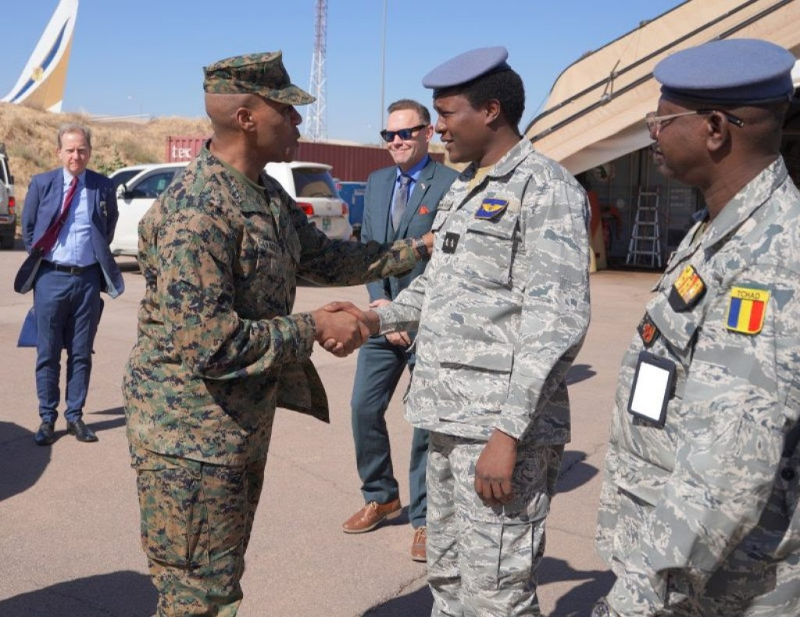
The United States is redeploying a small number of Special Forces troops to Chad, marking a significant return after their withdrawal five months ago. This decision comes as part of renewed efforts to bolster counterterrorism operations in West Africa, where violent extremist groups such as Boko Haram and the Islamic State continue to pose threats. The return of U.S. forces was confirmed by Maj. General Kenneth Ekman, who oversaw the recent U.S. withdrawal from Niger.
In April, the U.S. removed 70 Special Forces personnel from Chad, following the country’s request as it prepared for presidential elections. With the re-election of President Mahamat Deby, Chad has now agreed to allow a smaller contingent of U.S. troops to return. The U.S. Africa Command (AFRICOM) is working on the logistics of the deployment, which is aimed at supporting Chad’s 11,000-member counterterrorism force engaged in battles against insurgents in the Lake Chad region.
Ekman emphasized the importance of Chad’s cooperation in the fight against violent extremist organizations (VEOs) in the Sahel region. Following the U.S. withdrawal from Niger, where American forces had been critical in counterterrorism operations, the approach in Chad represents a recalibration of U.S. strategy. “We now have to revert to going outside in,” said Ekman, underscoring how this shift in strategy focuses on regional support from countries such as Chad, rather than the in-country presence the U.S. maintained in Niger.
General Michael Langley, the head of AFRICOM, confirmed that U.S. forces in West Africa are in a “reset and recalibration” phase. The recent coup in Niger forced the U.S. to close major counterterrorism hubs, with hundreds of troops previously stationed at two key bases. Similar military operations were halted in Burkina Faso and Mali due to recent political upheavals, limiting U.S. access to strategically important areas for monitoring and training local partners. According to U.S. law, military coups prevent AFRICOM from engaging in direct military cooperation with the affected nations.
Now, countries such as Ivory Coast, Benin, Ghana, Nigeria, and Chad are at the center of U.S. counterterrorism efforts. Each nation has its own approach to allowing U.S. military presence, with countries like Ghana and Nigeria opting against hosting U.S. forces. However, others, including Benin and Ivory Coast, have expressed interest in bolstering their security capabilities through U.S. military support.
The U.S. began upgrading an airfield in Benin even before the Niger coup, aiming to accommodate U.S. military aircraft. Additionally, some Special Forces units were moved to Ivory Coast after the Nigerien coup. Despite these efforts, Ekman noted that establishing a larger military base in the region, similar to Niger’s Air Base 201, is unlikely. Instead, the U.S. is focusing on strengthening partnerships with local forces by improving their base fortifications and operational capabilities.
However, the withdrawal of U.S. forces from Niger has created challenges for counterterrorism operations. Ekman warned that the region has become “more opaque” as access to intelligence and cooperation with local partners has diminished. The lack of direct military presence has made it harder for the U.S. to monitor and counter extremist threats, which have grown more lethal in the absence of U.S. surveillance and reconnaissance capabilities.
The U.S. military’s withdrawal from Niger has not only affected American operations but has also dealt a blow to Niger’s security capabilities. Extremist attacks in Niger have increased in lethality since the coup, and the loss of U.S. resources has strained the country’s ability to counter these threats. A senior military official acknowledged that the region is now “soul searching,” as U.S. confidence in its partnerships has been shaken, with diplomatic and economic approaches becoming more critical in addressing the root causes of terrorism in the region.
Despite the challenges, Ekman expressed hope that the shared security objectives of the U.S. and Niger will continue to link the two nations, even in the absence of American forces on the ground. While the future of their cooperation remains uncertain, U.S. military leaders are keeping all options on the table as they navigate the evolving security landscape in West Africa.
USNS Big Horn Mishap Highlights U.S. Navy’s Strain on Replenishment Resources Amid Middle Eastern Tensions

On September 23, 2024, the U.S. Navy’s Military Sealift Command (MSC) oiler USNS Big Horn (T-AO-198) sustained damage while operating in the Arabian Sea, marking a significant disruption in the Abraham Lincoln Carrier Strike Group’s (CSG) refueling operations in the Middle East. The damage occurred after an underwater allision near Oman, leaving the Big Horn anchored off the coast and awaiting transport by tugboats to a nearby port for repairs. Fortunately, no crew injuries or fuel leaks have been reported.
As the only dedicated replenishment oiler operating in the region, Big Horn‘s primary mission was to refuel the USS Abraham Lincoln (CVN-72) and its escort ships. The mishap has sparked concerns about the Navy’s ability to sustain the Lincoln CSG’s high-tempo operations in the U.S. Central Command (CENTCOM) area, where tensions are rising between Israel and Hezbollah. Hostilities in the region, coupled with the Pentagon’s plans to increase troop deployments, have highlighted the critical need for consistent refueling capabilities.
Impact of the Loss on Refueling Operations
The temporary loss of Big Horn is expected to significantly impact the Lincoln CSG’s operations, particularly its ability to conduct continuous air and ship operations. Without the oiler, the Lincoln CSG may be forced to send ships into port for refueling, reducing its operational flexibility. Maritime historian and former Merchant Marine, Sal Mercogliano, explained that while two other replenishment ships are in the region, their capacity is far smaller than that of the Kaiser-class oilers like Big Horn. This limitation could constrain the level of air and ship operations, affecting the strike group’s ability to respond to contingencies in the region.
Adding to the strain is the limited number of operational oilers within the U.S. Navy’s fleet. The Military Sealift Command only has 14 Kaiser-class oilers, five of which are currently undergoing maintenance in shipyards. This leaves the Navy with a finite number of oilers spread across the globe, making an unscheduled loss like that of the Big Horn problematic.
A second Navy official, speaking on condition of anonymity, confirmed that it will likely take months to repair the Big Horn, further compounding the challenges. The official acknowledged that the Navy is considering moving another oiler into the theater to replace Big Horn, though logistical hurdles remain. As of now, the Navy has yet to secure any agreements for the use of additional resources from allies or commercial tankers, raising concerns about prolonged disruptions to the Lincoln CSG’s operations.
Broader Implications for U.S. Naval Strategy
This mishap underscores broader concerns about the U.S. Navy’s ability to maintain a sustainable supply chain, particularly in high-end conflicts. Retired Vice Adm. William A. Brown, President of the National Defense Transportation Association, expressed confidence in NAVCENT’s ability to manage the situation, noting that multiple options exist for refueling the strike group. However, he acknowledged that the Big Horn’s loss presents a significant challenge, with ripple effects likely to extend beyond the Lincoln CSG.
With only a small number of replenishment ships and oilers, the Navy faces potential attrition in any extended conflict, such as one with an adversary like China. The strategic importance of replenishment oilers makes them top targets for adversaries aiming to degrade the capabilities of U.S. carrier strike groups. The recent mishap highlights how the loss of one oiler can have a cascading effect on Navy operations, both regionally and globally.
Looking Forward: Preparing for Future Contingencies
As the U.S. Navy recalibrates its refueling strategies in the wake of Big Horn‘s mishap, the broader question of the Navy’s ability to sustain itself in complex regions remains critical. With tensions escalating in the Middle East and the potential for larger conflicts on the horizon, ensuring the availability of fuel and other critical supplies is essential to maintaining the effectiveness of carrier strike groups like the Abraham Lincoln CSG. While NAVCENT and MSC explore contingency plans, the incident serves as a reminder of the vulnerabilities within the Navy’s replenishment fleet and the importance of logistical support in modern naval warfare.
Grounded Navy Oiler USNS Big Horn Towed to Port After Rudder Failure

Newly surfaced images reveal the USNS Big Horn, a Military Sealift Command oiler, being towed dead-stick into Duqm, Oman, after a significant grounding incident. The term “dead stick” refers to a vessel operating without engine power, solely reliant on tugboats for movement. The ship, damaged and unable to steer, arrived at the port on Wednesday, September 25, 2024.
The crisis began after the Big Horn broke its rudder and partially flooded following a grounding earlier in the week, shortly after refueling warships in the Middle East. The U.S. Navy has launched an investigation into the incident, but questions remain, as ominous as storm clouds over the damaged vessel.
Maritime expert Sal Mercogliano weighed in on the situation via X, noting the ship’s precarious state: “The ship is light on cargo, with the bow high and stern low – a clear sign it grounded aft.” His observation highlights the severity of the vessel’s predicament.
The grounding occurred on Monday, just after the Big Horn had resupplied a fleet, likely the USS Abraham Lincoln aircraft carrier strike group, off the coast of Oman. The carrier strike group continues to operate in the region due to ongoing threats, including Houthi rebel activity in the Red Sea and escalating conflict between Israel, Hamas, and Hezbollah in Lebanon.
A U.S. Navy official, speaking anonymously, confirmed the crew’s safety and stressed that no oil had spilled. Another source mentioned that private tugboats were dispatched quickly, working to bring the crippled vessel to port for a comprehensive damage assessment.
gCaptain first broke the story, releasing images and video footage that showed the Big Horn partially flooded. The images were originally posted on the gCaptain maritime forum. Their initial report stated that the oiler had run aground off Oman’s coast. The US Naval Institute later confirmed that no sailors or the environment had been harmed.
Despite the setback, U.S. officials maintain that the mission continues. The USS Abraham Lincoln remains operational, and other support vessels, such as two Dry Cargo/Ammunition Ships (T-AKE), are expected to step in. Although these vessels have more limited refueling capabilities, they will help transport essential aviation fuel to the carrier.
This incident marks the second time in recent months that a Navy logistics ship has run aground in the Middle East. Just two months ago, the USNS Alan Shepard ran aground near Bahrain. That incident raised concerns about navigation safety in the region’s congested waters and the strain on Military Sealift Command crews amidst a manning crisis in the U.S. Merchant Marine.
Both incidents underscore the challenges facing the Navy’s support fleet as it operates in a region fraught with geopolitical tensions and heightened risks. With the Red Sea now classified as an active naval combat zone, questions persist about the strain placed on these crucial missions.
Discover more from CONNECTICUT VETERANS BULLETIN
Subscribe to get the latest posts sent to your email.
