Red Friday: A Reflection on the Impact of Global Missions on Our Deployed U.S. Troops
As we observe another Red Friday—a day where we honor and remember our deployed U.S. troops—it’s important to reflect on the larger scope of their missions around the globe. Whether flying missions, maintaining aircraft, or securing vital regions, these service members are at the forefront of ensuring global security and the safety of our nation. The stories of their contributions, whether in the Middle East, Europe, or closer to home, illustrate the weight they carry and the sacrifices they make every day.
Take, for instance, the 167th Airlift Wing from West Virginia, recently home from a three-month deployment. These Airmen were an essential part of an expeditionary C-17 squadron that executed hundreds of missions, moved millions of pounds of cargo, and contributed to critical airlift operations. Their deployment, marked by the success of maintaining a 94.5% mission-capable rate, highlights not only their technical skill but their commitment to supporting the mission under challenging conditions. But it’s more than just numbers—it’s the long hours, the time away from family, and the resilience needed to keep going, especially when each mission comes with its own challenges.
Similarly, the ongoing global tensions in the Middle East remind us of the unpredictable environments our service members often face. Whether it’s monitoring regional threats or supporting allies like Israel, our troops find themselves involved in complex situations that test their endurance and resolve. These deployments are not just military operations—they represent America’s strategic interests, and the men and women in uniform bear the weight of that responsibility. As the U.S. considers expanding military assistance and training missions in places like Lebanon, it’s our service members who will be called upon to execute these difficult, and often dangerous, tasks.
Even when missions succeed—like the safe return of the USS Theodore Roosevelt and its 3,000 Sailors to San Diego after months of supporting global maritime security operations—there’s an emotional toll. The return home is joyous, but it’s a reminder that every deployment comes with risks. Those on board had spent nearly a year apart from loved ones, patrolling volatile regions and maintaining America’s presence in key strategic areas.
These stories highlight the reality that every mission, no matter how far from home, directly impacts our troops and their families. They face the constant pressures of executing complex tasks under the threat of danger, while also carrying the emotional burden of separation from the people they love. Each Red Friday, we honor these brave individuals, acknowledging that their commitment to service is not only a demonstration of their strength, but also a reminder that their sacrifices ensure our freedom.
So today, as we wear red in solidarity with our deployed troops, let us remember the heavy burdens they carry, the victories they achieve, and the continued need to support them in every way possible. Our gratitude for their service goes beyond words—it is a recognition of their unwavering dedication to safeguarding our nation. Whether in the skies, on the ground, or at sea, these men and women deserve our deepest respect. Red Friday is a day to reflect on their bravery and stand with them, wherever they may be in the world.
Evaluating U.S. Military Assistance in Lebanon: A Cautious Approach
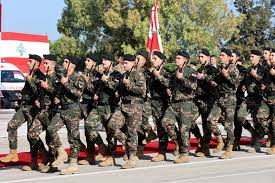
On October 13, 2024, discussions emerged regarding the U.S. government’s potential strategy in Lebanon, following the Israel Defense Forces’ recent advances against Hezbollah. Some within President Joe Biden’s administration are considering utilizing U.S. security aid to bolster the Lebanese Armed Forces (LAF), a move aimed at reducing Hezbollah’s influence and stabilizing the southern border with Israel. This initiative would involve extensive U.S. support, both in security assistance and military training.
The U.S. has a long history of providing such assistance to foreign militaries, with mixed results. Past examples, such as the collapse of Afghanistan’s National Defense and Security Forces after 20 years of support, highlight the challenges associated with these efforts. Similarly, U.S.-trained forces in Vietnam, Iraq, and the Sahel have faced significant difficulties. Even Ukraine, once considered a success story of U.S. military assistance, has shown signs of diverging from U.S. military training on the battlefield.
Despite these past setbacks, the United States is now evaluating a similar approach in Lebanon. However, there are concerns about whether this would be effective or beneficial, given Lebanon’s limited resources and the complexity of its internal politics. The LAF lacks modern equipment, trained personnel, and sufficient leadership to handle the nation’s security challenges, particularly following recent conflicts.
Since 2006, the United States has provided approximately $3 billion in military aid to Lebanon, largely focused on delivering advanced equipment. However, little of this funding has gone towards essential reforms or training programs that would enhance the LAF’s operational effectiveness. In light of the nation’s political complexities and Hezbollah’s ongoing presence, U.S. involvement might further complicate Lebanon’s internal dynamics.
Furthermore, any U.S. military involvement in Lebanon could create significant risks for American servicemembers and might not align with U.S. strategic interests. While Hezbollah is viewed as a threat due to its ties to Iran, neither it nor Iran poses a direct danger to U.S. homeland security. Increased military engagement could expose U.S. forces to potential attacks and entangle the U.S. more deeply in a region where it has limited stakes.
The broader concern is that U.S. efforts in Lebanon could inadvertently destabilize the country. If the LAF is given responsibilities it cannot manage, security gaps may arise, leaving room for other groups to emerge. Additionally, U.S. support could compromise the LAF’s neutrality, risking attacks on its personnel by Hezbollah or other factions.
In conclusion, while there may be some appeal in supporting Lebanon’s military, the risks of failure are high, and the potential benefits to U.S. interests are limited. Given past experiences and Lebanon’s current vulnerabilities, a more cautious approach is advisable. Rather than pursuing a costly and uncertain mission, the U.S. might be better served by avoiding deeper military commitments in the region.
USS Theodore Roosevelt Returns to San Diego After 9-Month Deployment
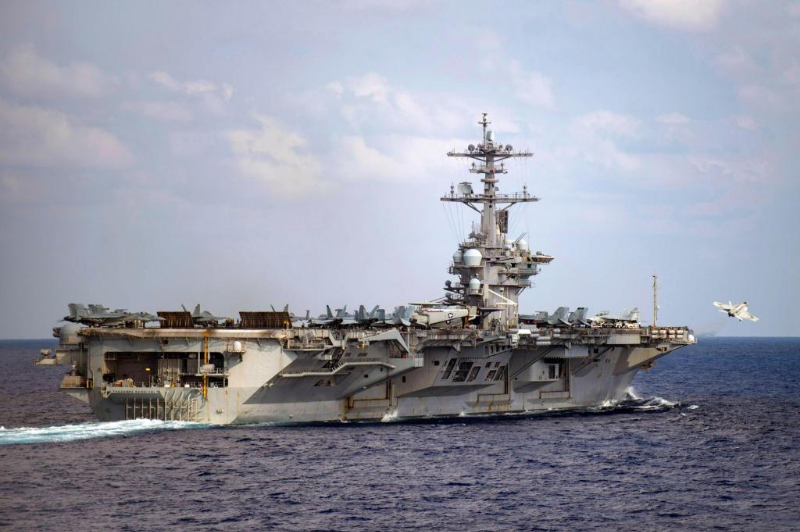
October 15, 2024 — SAN DIEGO: The USS Theodore Roosevelt aircraft carrier, part of the Theodore Roosevelt Carrier Strike Group, arrived back at its homeport in San Diego on Tuesday morning. The group, consisting of ships, aircraft, and over 6,000 sailors, has the capability to execute a range of global missions.
The carrier had been deployed for nine months in support of global maritime security operations. Initially stationed in the Indo-Pacific, it was later redirected to the U.S. Central Command region to reinforce U.S. military presence and capabilities amid rising tensions in the Middle East, according to U.S. 3rd Fleet Public Affairs.
In March 2023, after completing 18 months of modernization at a shipyard in Washington State, the 37-year-old carrier returned to Naval Base North Island. Renovations included upgrades to combat systems, a retrofitted flight deck for various aircraft, refurbished crew living spaces, and maintenance on the ship’s hull, rudders, and rudder shafts.
167th Airlift Wing Completes First AFFORGEN Deployment
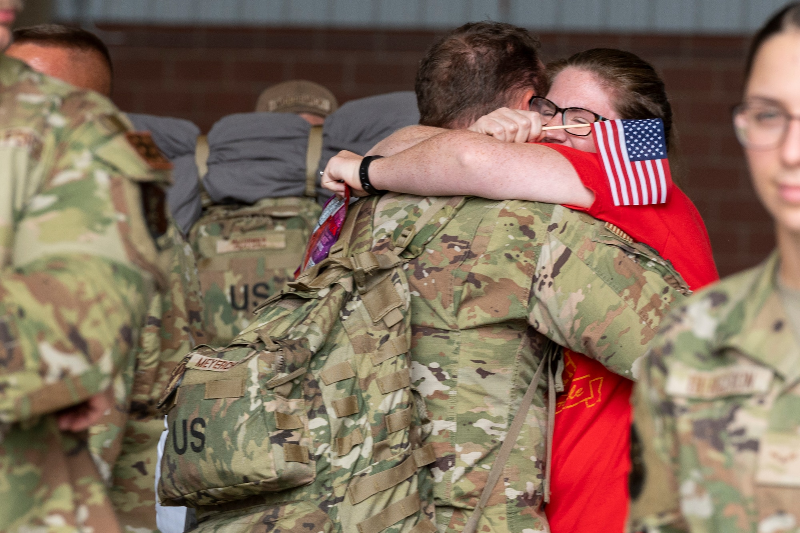
MARTINSBURG, W.Va. — On September 26, 2024, Airmen from the 167th Airlift Wing of the West Virginia Air National Guard returned home, concluding a three-month overseas deployment. This marked the 167th’s first deployment under the Air Force Force Generation (AFFORGEN) model, which involved the mobilization of approximately 150 Airmen as part of an expeditionary C-17 squadron. The deployment supported airlift functions alongside other units.
Unlike previous deployments, where Airmen volunteered individually to fill specific roles, this operation required a collective effort from multiple squadrons. Col. Christopher Sigler, commander of the 167th Operations Group, highlighted how this experience fostered strong relationships within the unit.
“It’s one thing to fly one mission together here at home, but when you’re deployed together for several months, you really get to know each other and develop a strong bond,” Sigler said. “This type of deployment brings the unit closer together.”
Significant Accomplishments During Deployment
The deployment saw the 167th aircrews completing nearly 1,100 flying hours and conducting 586 sorties. They transported 17.4 million pounds of cargo and 3,588 passengers, loaded 2,430 pallets, and managed 363 pieces of rolling stock. These contributions played a critical role in supporting airlift operations in theatre.
In addition, the maintenance personnel of the 167th resolved 2,078 maintenance discrepancies over 4,939.5 man-hours, achieving a 94.5% mission-capable rate, the highest in the Air National Guard and Air Force Reserve during the deployment.
Col. Michael Sherman, commander of the 167th Maintenance Group, credited the success to the Multi-Capable Airmen (MCA) training maintainers received before the deployment. “The MCA training paid massive dividends in executing the mission,” Sherman said. “They developed a mindset that everyone was there to support the entire mission, not just their job.”
Supporting the Mission Beyond Core Duties
Beyond their core responsibilities, the 167th Airmen assisted with maintenance and repairs on aircraft from other units stationed at the base, facilitating the delivery of combat airpower. Their contributions enabled the broader mission to succeed.
“Our team was truly extraordinary in providing safe, reliable, and sustainable aircraft in support of the mission,” Sherman added.
Leadership and Cooperation
Throughout the deployment, the 167th Expeditionary Airlift Squadron not only met its mission requirements but also engaged in leadership training and assisted other units, even traveling to other locations to offer support. Col. Martin Timko, commander of the 167th Airlift Wing, expressed his pride in the team’s dedication.
“I couldn’t be more proud of the effort they made to constantly go above and beyond,” Timko said. “When our folks are asked to do something, they do it in such an extraordinary manner and it leaves a positive impression on our peers.”
The deployment underscored the 167th’s adaptability, teamwork, and commitment to mission success, further solidifying its reputation within the Air National Guard and the broader Air Force community.
Discover more from CONNECTICUT VETERANS BULLETIN
Subscribe to get the latest posts sent to your email.
