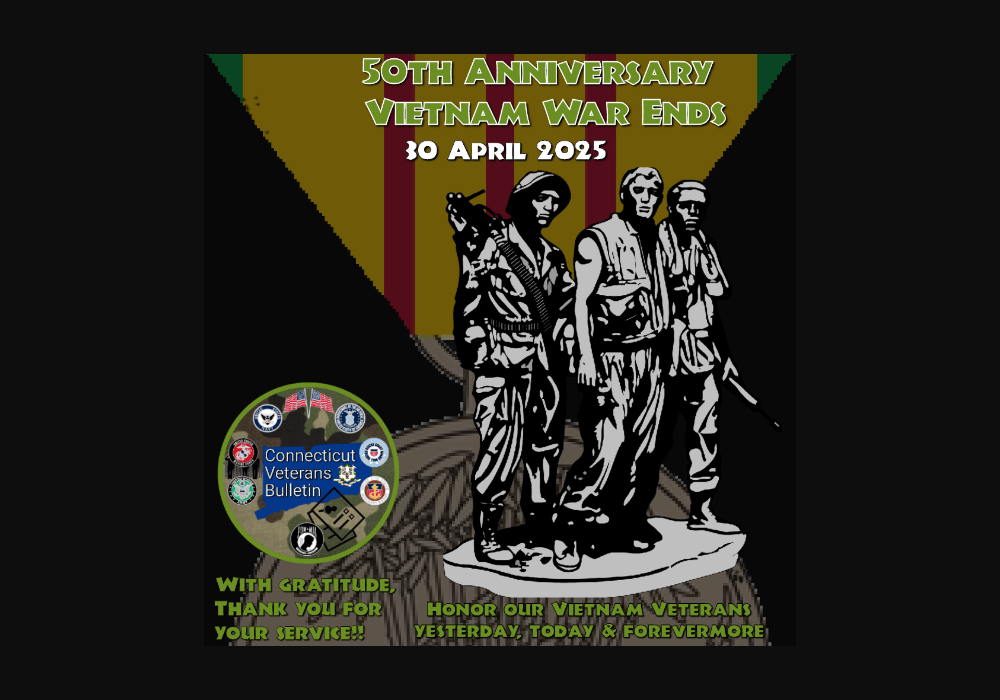
As the United States marks the 50th anniversary of the end of the Vietnam War, the nation reflects on the legacy of those who served. For Connecticut’s Vietnam veterans, this milestone is more than a date—it is a chance to reclaim recognition, share long-silenced truths, and honor the memory of those who never came home.
Tens of thousands of Connecticut men and women served during the Vietnam War era. Many volunteered. Some were drafted. All faced the emotional weight of a conflict that divided a nation. And too often, they returned home to silence, scorn, or misunderstanding. But their stories—of courage, trauma, resilience, and healing—remain among the most powerful and under-told chapters in the state’s history.
Edd Carvalho – Danbury
Edd Carvalho served as a military policeman in the U.S. Army during the Vietnam War. He returned to Danbury in 1968, hoping to reintegrate into civilian life. Instead, he was greeted by hostility from a country in turmoil. That painful reception haunted him for decades. For years, he suffered in silence with post-traumatic stress disorder (PTSD), unaware that the cold stares and unspoken judgments had left a wound just as deep as anything he saw overseas.
Encouraged by his wife, Joyce, Edd sought help. He began speaking out, leading veteran support groups, and offering guidance to others still carrying the burdens of war. Today, he advocates for fellow Vietnam veterans who still face the echo of war in their daily lives.
Leonard “Lenny” Hunter – Stamford
One of five brothers who served in Vietnam, Lenny Hunter grew up in Stamford and enlisted at age 17. In Vietnam, he was tasked with stringing communications wire through the jungle—often while under sniper fire. His daily routine was marked by adrenaline and uncertainty, and though he made it home alive, he bore scars that few could see.
Back in Connecticut, he was warned not to wear his uniform publicly. His service was seen not as heroism, but as a political liability. But the world eventually changed. Hunter went on to break barriers, becoming the first Black post commander at the Darien VFW. Today, he’s a steady presence in Bridgeport, volunteering at a food pantry that serves veterans in need.
John Murphy – Norwalk
John Murphy, originally from the Bronx and now a Norwalk resident, served as an armor reconnaissance specialist between 1970 and 1971. His service was intense and perilous—he survived multiple injuries, including a landmine explosion. But it was the mental wounds that lingered longest.
Murphy endured years of nightmares, anxiety, and a constant state of alertness. For almost five decades, he never sought therapy. His turning point came when he reconnected with the family of a fellow soldier killed in action. That connection, forged through grief and shared memory, began to ease his pain and helped him integrate the war into his life rather than letting it define him.
William O’Brien Jr. – Stratford
Stratford native William O’Brien Jr. served in the Marine Corps, deploying to Vietnam in 1965. Though proud of his service, O’Brien returned home with a conflicted heart. He questioned the war’s purpose and, in 1969, joined the massive antiwar protest in Washington, D.C. His evolution from soldier to peace advocate reflected the complexity of many Vietnam veterans’ experiences.
O’Brien later became a key figure in his community, co-founding the Stratford Veterans Museum and earning induction into the Connecticut Veterans Hall of Fame. His journey, like so many others, demonstrated that a warrior’s path doesn’t end on the battlefield—it continues in classrooms, town halls, and family homes.
Francis “Kip” Burgweger – Greenwich
Francis Burgweger served with the 525th Military Intelligence Group in Vietnam from 1965 to 1966. A twist of fate spared his life—he overslept one morning and missed a transport that was later attacked. That close call never left his mind. After the war, Burgweger moved to Greenwich and became a successful attorney.
Today, he battles health complications likely tied to Agent Orange exposure, and, like many of his generation, he quietly carries the emotional toll of war. Yet, he expresses deep pride in his service, believing that he did his duty honorably.
Rick Foley – West Haven
Rick Foley of West Haven returned from Vietnam and buried himself in work. For years, he refused to look back, believing that moving forward meant not looking over his shoulder. But the war had followed him home.
Eventually, Foley realized he had walled himself off from his loved ones and from life itself. In retirement, he found his calling: helping fellow veterans navigate their own journeys. He now speaks publicly about the importance of mental health, therapy, and shared understanding. His story reflects a common truth among Vietnam veterans—healing is possible, but it often takes time, courage, and community.
A Long-Overdue Welcome
Fifty years later, Connecticut is finally saying what it should have said all along: welcome home, and thank you.
The Vietnam War may have ended in 1975, but for many who served, the struggle lasted long after the uniforms were folded away. Their stories—often tucked into quiet corners of Connecticut towns—reveal the humanity, heartbreak, and heroism of a generation that never stopped serving, even when the world seemed to turn its back.
These veterans didn’t just survive a war. They returned to build better lives, support others, and demand the respect that was once denied them. Today, we remember those who never made it back—and we honor those who did, whose voices still echo with truth and courage.
Discover more from CONNECTICUT VETERANS BULLETIN
Subscribe to get the latest posts sent to your email.
