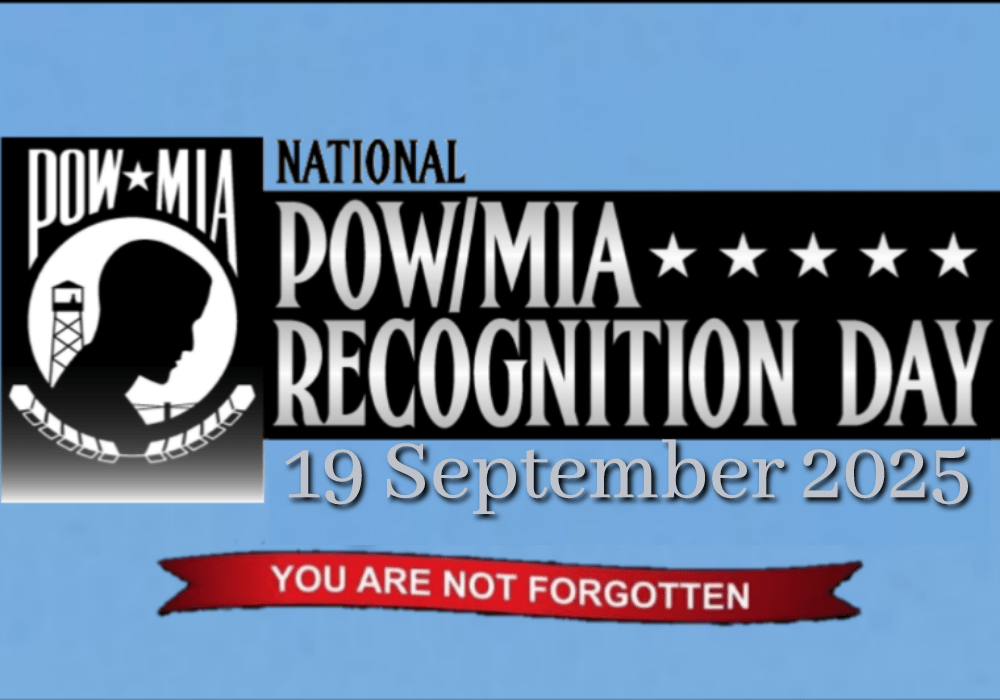
National POW/MIA Recognition Day was officially established in 1979, after a proclamation signed by President Jimmy Carter. This day is observed on the third Friday of every September, honoring the U.S. service members who were held captive and returned, as well as those who remain missing. Although the date is not tied to any specific war, it represents the ongoing efforts to achieve full accountability for the more than 81,600 Americans still missing from conflicts spanning World War II, the Korean War, the Vietnam War, the Cold War, the Gulf Wars, and other conflicts.
The Origins of the National POW/MIA Recognition Day
The push for a national day of recognition began with the families of the more than 2,500 Vietnam War POW/MIAs. They demanded answers and pushed for official acknowledgment of the U.S. service members whose fates were never accounted for during the war. These efforts culminated in the passage of resolutions by Congress and the president, making National POW/MIA Recognition Day official in 1979. Since then, every president has issued an annual proclamation to commemorate this solemn day.
National Ceremonies of Remembrance
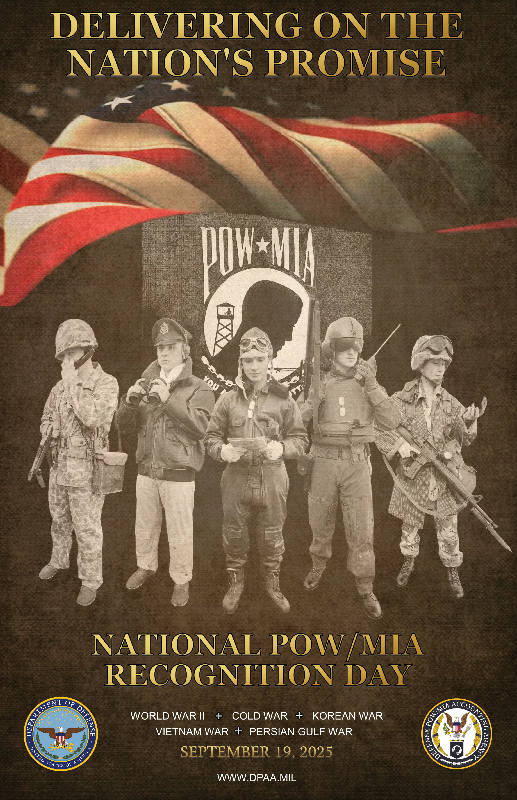
The national-level ceremony is held each year at the Pentagon, where representatives from every branch of the U.S. military participate, along with high-ranking officials. This event symbolizes the nation’s unified commitment to honoring the sacrifices made by its servicemembers. Observances are also held across the country on military installations, ships at sea, state capitols, schools, and veterans’ facilities. No matter where they take place, these ceremonies all serve the same purpose: to honor those who were held captive and returned and to pay tribute to those who are still missing.
Since 1999, the POW/MIA Accounting Community has created annual posters commemorating the day, which have become iconic symbols of remembrance. These posters stand as visual reminders of the continued efforts to locate, identify, and bring home the missing.
Ongoing Efforts to Bring Them Home
The Defense POW/MIA Accounting Agency (DPAA) has worked tirelessly to account for the missing, recovering the remains of U.S. service members from locations all around the globe. Currently, more than 81,600 Americans remain unaccounted for. Of those, over 41,000 are presumed to have been lost at sea in shipwrecks or aircraft crashes. The breakdown of missing servicemembers includes:
- 72,404 from World War II
- 7,555 from the Korean War
- 1,584 from the Vietnam War
- 126 from the Cold War
- 5 from the Gulf Wars
Efforts to locate, identify, and return these service members are ongoing. For example, in the past year alone, the DPAA has successfully accounted for 41 men missing from the Korean War. Their dedication to this mission demonstrates the country’s unwavering commitment to bringing closure to the families of the missing.
A Legacy of Sacrifice
The story of American POWs is one of hardship, resilience, and loss. According to a Congressional Research Service report, thousands of U.S. servicemembers have been imprisoned during wars, and many did not survive their captivity:
- 30,201 World War II servicemembers were imprisoned; 14,072 died in captivity
- 7,140 Korean War servicemembers were imprisoned; 2,701 died in captivity
- 725 Vietnam War servicemembers were imprisoned; 64 died in captivity
- 37 servicemembers were imprisoned during conflicts since 1991, including the Gulf Wars; none are still in captivity
Despite the hardships faced by these prisoners, their legacy continues to inspire a nation that remembers their sacrifices.
The Symbol of the POW/MIA Flag
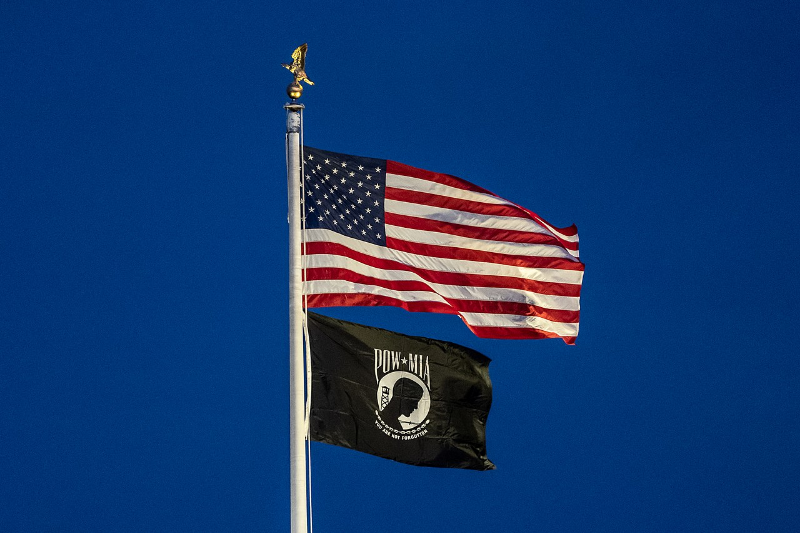
One of the most enduring symbols of the POW/MIA movement is the black-and-white flag that flies just below the stars and stripes at the White House on National POW/MIA Recognition Day. This flag, designed by World War II pilot Newt Heisley, was first conceptualized in 1971 by Mrs. Michael Hoff, the wife of a Navy pilot missing in action during the Vietnam War. Heisley’s design, which features the silhouette of a gaunt man, was inspired by his own son, who had contracted hepatitis during military training. As Heisley watched his son’s health deteriorate, he was struck by the image of American prisoners enduring unimaginable hardships in captivity. The flag’s simple yet powerful design has since become a national symbol of the U.S. government’s commitment to accounting for every missing service member.
Since 1982, the POW/MIA flag has been flown at the White House on National POW/MIA Recognition Day. In 1998, Congress passed a law mandating that the flag also be flown on Armed Forces Day, Memorial Day, Flag Day, Independence Day, and Veterans Day.
A Day of Reflection and Resolve
National POW/MIA Recognition Day is not just a day of remembrance, but also a day of resolve. It reminds the nation of the continuing efforts to find and return the missing, and it honors the resilience of those who endured captivity. It also provides an opportunity for Americans to reflect on the sacrifices made by those who served in the defense of freedom. As the country continues to observe this important day, the message remains clear: America will never forget its missing, and it will continue to seek answers until every service member is brought home.
Discover more from CONNECTICUT VETERANS BULLETIN
Subscribe to get the latest posts sent to your email.
