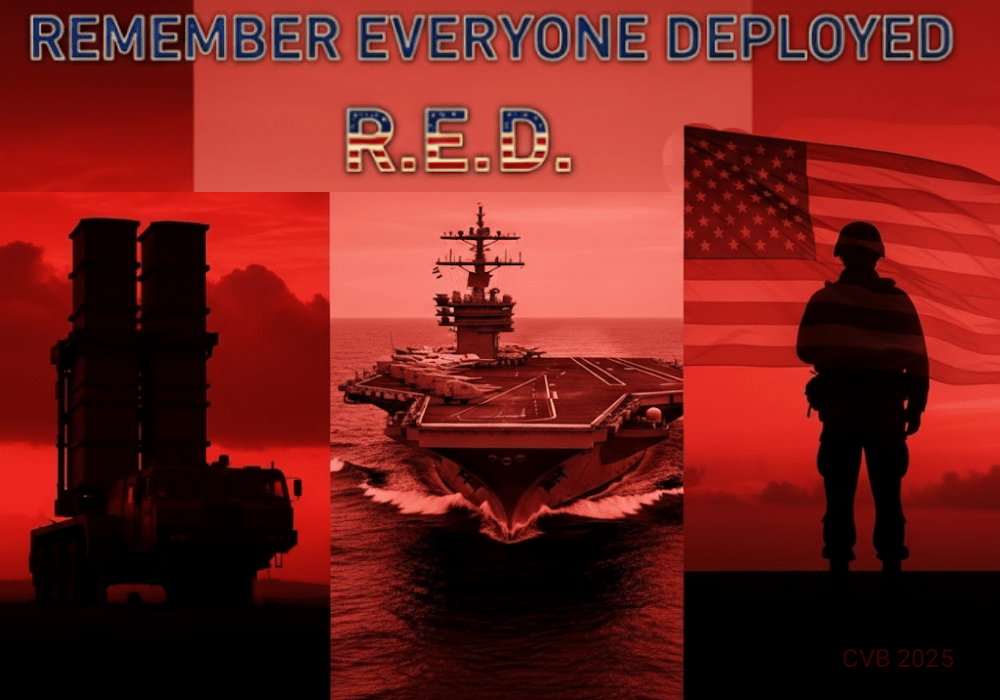
CVB RED FRIDAY: Standing Strong With Our Deployed Service Members
Today, as we wear red to honor our heroes overseas, we stand shoulder to shoulder with our Blue Star families, whose daily sacrifice often goes unseen. Every Friday reminds us that freedom is not free — it is safeguarded by service members and by the loved ones who hold down the home front while they are deployed.
This week’s focus begins with the U.S. Army’s deployment of the Typhon mid-range missile system to Japan as part of Resolute Dragon 2025. This major exercise highlights America’s commitment to a free and open Indo-Pacific and demonstrates the dedication of our soldiers, who stand ready far from home to ensure global security.
We then turn to the sea, where the USS Gerald R. Ford Carrier Strike Group has returned to Oslo after high-north operations with NATO allies. The sailors aboard the carrier and its escorts have strengthened critical partnerships and shown that America remains vigilant and prepared even in the most challenging regions.
Finally, we reflect on the meaning of duty and oath — the promise each service member makes to defend the Constitution, even at great personal cost. This feature explores how speech, action, and service intersect, reminding us that their commitment extends beyond words and into action.
Each story underscores why we pause every Friday. We honor those deployed, support their Blue Star families, and remain united in purpose — until every one of them returns home safely.
U.S. Unveils Typhon Missile System in Japan During Resolute Dragon Exercise
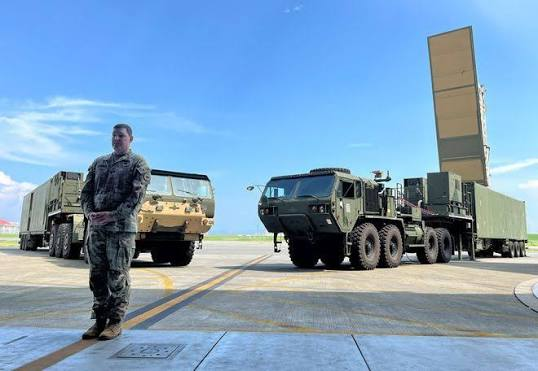
Iwakuni, Japan — 15 September 2025. For the first time, the U.S. Army has deployed its mid-range missile system, Typhon, to Japanese soil as part of the annual Resolute Dragon exercise with Japan’s Self-Defense Forces. More than 19,000 troops from both countries are participating in this bilateral effort focused on maritime defense and littoral protection. The move underscores evolving U.S. capability in the region and reflects strategic signaling amid heightened tension in the Indo-Pacific.
What is Typhon & Why Its Deployment Matters
- Capabilities: Typhon is a road-mobile, mid-range missile battery able to launch both the Standard Missile-6 (SM-6) and Tomahawk cruise missiles. These munitions extend reach both over water and land, capable of engaging maritime threats as well as land-based targets.
- First deployment in Japan: Although Typhon was deployed previously in the Philippines and tested in other locations, this is the system’s first deployment to Japan, stationed at Marine Corps Air Station Iwakuni in southwestern Japan.
- Exercise context: The deployment is purely for the exercise, which runs through 25 September, and Typhon is not expected to be test-fired during the drills. The objective is interoperability, readiness, joint training with Japanese forces, and demonstrating ability to forward-position missile systems rapidly.
Strategic Implications & Regional Context
- Deterrence posture: Typhon’s presence in Japan allows for extended strike capability in the Indo-Pacific region — including over maritime zones and potentially land areas. This enhances deterrence, especially in scenarios where naval and air platforms may be threatened or less responsive.
- Regional reactions: China and Russia have reacted to the Typhon deployment with concern, viewing it as a potential escalation. The deployment follows earlier U.S. actions to deploy similar missile capabilities in the Philippines and other locations. Japanese defense modernization (including strike-back capability) is also accelerating.
What This Means for Service Members & Families
For the soldiers, support crews, and expeditionary units involved, deploying Typhon to Iwakuni means long hours of logistics, setting up mobile launch infrastructure, coordinating with allied forces, and operating under realistic conditions — all while being far from home. Although they will not fire the system in the exercise, the deployment itself demands precision, reliability, and high readiness.
For families, the arrival and deployment of high-visibility systems like Typhon underscore what deployment life involves beyond combat — the complexity, the technical staff, the training, and the symbolic weight of modern deterrent capability.
Typhon missile Japan, Resolute Dragon exercise, U.S. Army mid-range missile deployment, Standard Missile-6 Tomahawk in Japan, U.S.-Japan military drills 2025, Indo-Pacific missile system Typhon, mobile missile launcher overseas, 3rd Multi-Domain Task Force Japan
USS Gerald R. Ford Returns to Oslo After High-North Operations with NATO Allies
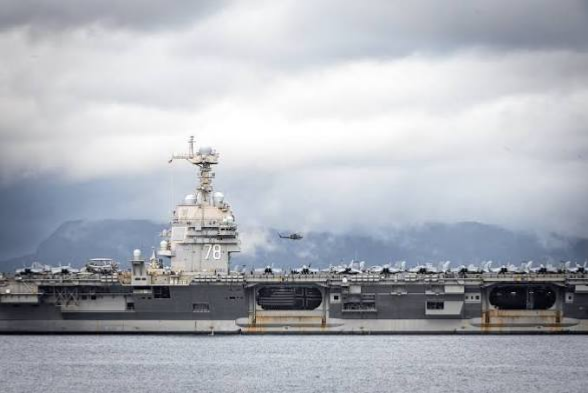
Oslo, Norway — 12 September 2025. The first-in-class aircraft carrier USS Gerald R. Ford (CVN-78) has arrived in Oslo for a scheduled port visit, following several weeks of high-intensity joint operations in the Arctic and Norwegian seas. The visit underscores the carrier strike group’s role in sustaining U.S. 6th Fleet readiness, bolstering allied partnerships, and demonstrating forward presence in a strategically vital region.
Arctic and Northern Training Before Oslo
Prior to entering Oslo Fjord, Gerald R. Ford and its embarked Destroyer Squadron (including USS Mahan (DDG-72) and USS Bainbridge (DDG-96)) conducted multi-domain operations in the North and Norwegian Seas. These operations were carried out in coordination with naval units from Norway, Germany, and France—such as the Norwegian frigate HNoMS Thor Heyerdahl, the replenishment oiler HNoMS Maud, Germany’s FGS Hamburg, and French frigate FS Aquitaine and tanker FS Somme.
Exercises included maritime patrols, surface task force training, and coordinated maneuvers in challenging seas—some in sub-Arctic and Arctic waters where weather, cold, and navigation are especially demanding. These operations help strengthen interoperability and readiness among allied navies operating at high latitudes.
Significance of Oslo Port Visit
The arrival of Gerald R. Ford in Oslo is more than ceremonial. This is the same carrier that in 2023 broke a 65-year hiatus for U.S. carriers in Oslo Fjord; in 2024, USS Harry S. Truman also made a visit, continuing a pattern of increasing U.S. naval visibility in Norwegian waters. Oslo holds symbolic and strategic value in this pattern of engagement.
During the port stay, crew and embarked personnel are scheduled for community engagement activities, including local tours, participation in a veteran’s run, cultural visits such as glassmaking, and enjoying the Holmenkollen Zipline—underscoring the human dimension of U.S. forces abroad.
Strategic Implications
Allied Deterrence in the High North: The strike group’s training in Arctic and near-Arctic waters sends a clear message of deterrence and collaboration, especially as rising geopolitical tensions heighten interest in the High North region. Navigational challenges, submarine activity, and the strategic importance of Norwegian maritime zones make this region a key focus of U.S. and NATO strategy.
Carrier Strike Group Readiness: Operations involving Carrier Air Wing-Eight, destroyers, and replenishment vessels demonstrate the multi-domain capabilities of U.S. naval power—air, surface, support logistics—all operating together with allies to maintain collective security.
Partnership Strength: Joint actions with Norway, Germany, and France reinforce alliances. Norway in particular is benefiting from repeated carrier visits and high-north naval exercises, improving its own readiness and coordination with U.S. forces.
Voices From the Deck
Captain Dave Skarosi, commanding officer of Gerald R. Ford, remarked on the scale and significance of the deployment:
“This ship, the largest of its kind on Earth, navigated thousands of miles, including narrow straits and challenging seas, to be here today as a statement of America’s commitment to our Allies.”
Eric Myer, U.S. Charge d’Affairs ad interim in Norway, reflected on continuity:
“These visits are not merely symbolic… The presence of this carrier strike group in Norwegian waters training with Allied forces exemplifies our commitment to shared security.”
What This Means for Service Members & Families
For the sailors, aircrew, and support personnel aboard Gerald R. Ford and accompanying destroyers, this deployment has included months away from home, cold northern seas, complex multilateral coordination, and duty under demanding conditions. Their skills, seamanship, and resilience are being tested at each step.
Families and communities back home may not always see these operations, but their importance is felt—through purpose, through lean-times, and through pride in contributing to America’s presence overseas. Port visits like Oslo provide a moment of international visibility and a bridge between home and deployment.
Duty, Oath, and the Limits of Speech: Understanding Service and Responsibility
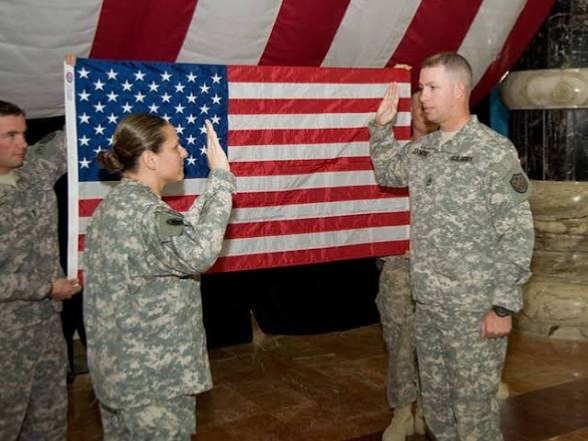
Many Americans do not see them, but thousands of U.S. service members are stationed overseas right now, fulfilling the solemn duties they accepted the day they raised their right hand. While exact numbers vary, active-duty members from the Army, Navy, Air Force, Marine Corps, Space Force, and Coast Guard are deployed across dozens of countries — Europe, Asia-Pacific, the Middle East, Africa, and beyond. These deployments include aviation units carrying out air operations, naval strike groups maintaining presence, engineer and support units building infrastructure, and special operations or logistics forces enabling allied and U.S. missions. Their shared purpose is rooted in the oath each of them took.
The Oath of Service
Every enlisted member of the U.S. military swears the Oath of Enlistment, codified at 10 U.S.C. § 502, which reads in full:
“I, ________, do solemnly swear (or affirm) that I will support and defend the Constitution of the United States against all enemies, foreign and domestic; that I will bear true faith and allegiance to the same; and that I will obey the orders of the President of the United States and the orders of the officers appointed over me, according to regulations and the Uniform Code of Military Justice. So help me God.”
Officers take the Oath of Office under 5 U.S.C. § 3331, pledging to support and defend the Constitution, bear true faith and allegiance, take the obligation freely, and “well and faithfully discharge the duties of the office on which I am about to enter.”
These oaths place service under the Constitution, not any individual, and tie deployments — whether to deter threats, build partner capacity, or respond to crises — to a constitutional mission.
What Deployments Do & Why They Matter
Deployment duties include:
- Forward presence to deter adversaries and reassure allies.
- Allied cooperation and readiness, including joint exercises and combined operations.
- Humanitarian, stability, and infrastructure missions, supporting local governance, building facilities, enabling disaster relief.
- Combat, crisis, or contingency operations when ordered, under lawful civilian control.
These roles are not optional — they flow directly from what service members promised under their oath: to support and defend, to obey lawful orders, and to bear true faith and allegiance.
Speech, Threats, and Legal Limits
Free speech is one of our core values, but the law clearly draws lines where speech risks harm:
- You can’t falsely shout “Fire!” in a crowded theater if it causes panic. Such speech, creating imminent danger, is not protected.
- Under Brandenburg v. Ohio (1969), speech advocating illegal action is protected unless it is intended to incite imminent lawless action and likely to do so.
- Statements like “I’m going to kill you”, addressed to a specific person, may qualify as true threats and be actionable under law, especially if the speaker’s intent and ability make it credible.
- Even government officials are bound by these limits. Saying violent things does not always make them legal — if those words meet standards of incitement or threat, they may be subject to consequence.
Bringing It Together
- Service overseas is the fulfillment of the Oaths taken by service members — defense of Constitution, readiness, fidelity.
- Free speech is broad, precious, and essential — but not a license for threats or incitement.
- Both service and speech have responsibilities, boundaries, and consequences — and respecting those boundaries is part of what being a responsible citizen and service member means.
Discover more from CONNECTICUT VETERANS BULLETIN
Subscribe to get the latest posts sent to your email.
