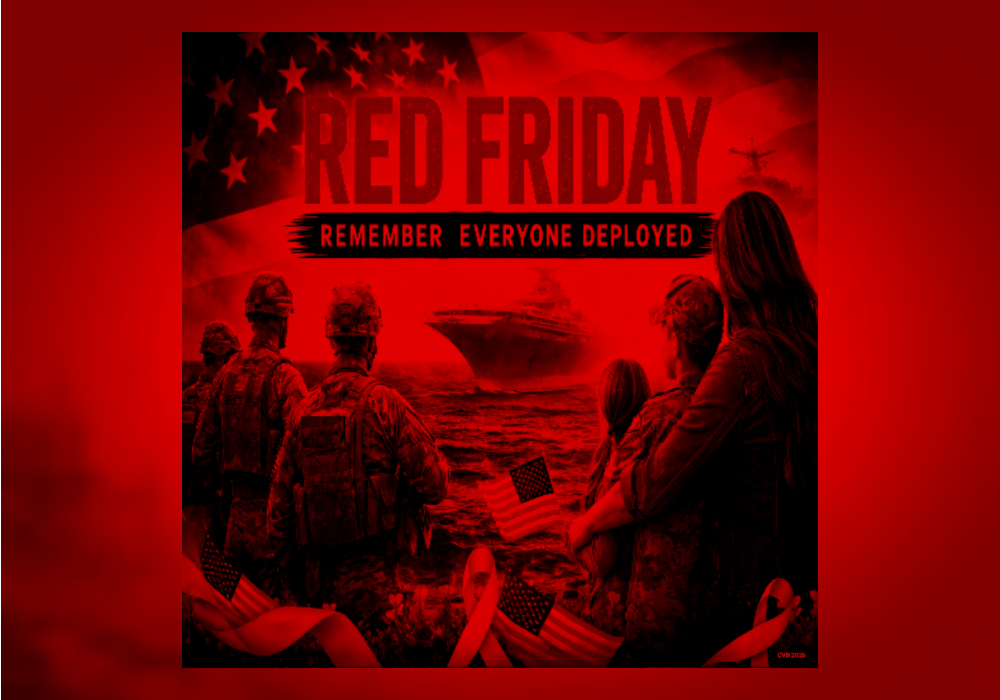
RED FRIDAY is more than a day on the calendar—it is a solemn recognition of the men and women of the United States Armed Forces who stand watch across the globe, far from home, often in conditions of danger and uncertainty. It is also a moment to honor the families who support them, holding the home front together, sustaining households, raising children, and maintaining morale while their loved ones are deployed.
Across the world, U.S. military personnel execute complex missions that maintain regional stability, deter aggression, and protect U.S. interests. These missions are not abstract—they require daily commitment, vigilance, and sacrifice. The stress of long deployments affects every aspect of a service member’s life, from the challenges of life aboard a carrier to the tension of operations in a forward-deployed base. Meanwhile, families endure their own burdens, navigating prolonged separation, uncertainty, and the weight of worry.
At the Connecticut Veterans Bulletin, RED FRIDAY is observed with profound respect. We recognize the courage and dedication of those in uniform, and we extend our admiration and support to the families who sacrifice alongside them. This publication highlights three significant overseas developments involving U.S. forces. Each underscores the complexity of modern military operations, the operational excellence of deployed personnel, and the resilience of those who await their safe return.
These three stories—forward-deployed naval forces in the Middle East, threats from Iran-aligned militias, and expanded U.S. force posture—demonstrate the breadth of U.S. military commitment, the vigilance required, and the human dimension behind every deployment.
USS Abraham Lincoln Carrier Strike Group Establishes Forward Presence in the Middle East
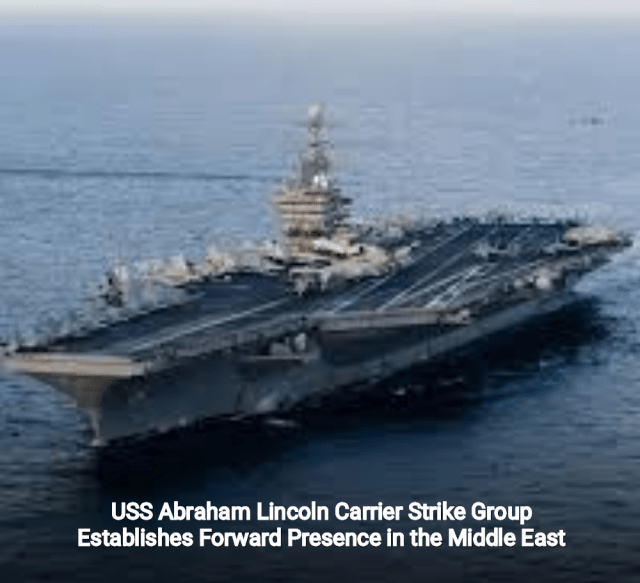
The deployment of the USS Abraham Lincoln and its strike group represents one of the most significant U.S. naval operations in the Middle East in recent years. The carrier, accompanied by guided-missile destroyers, cruisers, and a full air wing, entered operational waters in a highly coordinated movement to enhance deterrence, maintain maritime security, and respond rapidly to emerging threats.
Operational Composition and Capabilities
The strike group includes:
- USS Abraham Lincoln (CVN-72), a nuclear-powered aircraft carrier
- Guided-missile destroyers equipped with Aegis combat systems
- Cruiser-class vessels providing ballistic missile defense
- Embarked air wing comprising F/A-18 Super Hornets, EA-18G Growlers, E-2D Hawkeyes, and MH-60R/S helicopters
Together, this formation delivers unparalleled operational flexibility. Aircraft carrier operations provide the ability to project airpower without reliance on host-nation airfields, while escort vessels enhance defensive capabilities against missile and surface threats.
Strategic Context
The presence of the Abraham Lincoln carrier strike group in the region directly strengthens U.S. deterrence posture. With ongoing tensions involving Iran and its regional proxies, the carrier’s mobility ensures that U.S. forces can respond swiftly to multiple contingencies, from maritime security operations to air strikes in support of coalition partners.
Life Aboard the Carrier
For the crew, life aboard a nuclear-powered aircraft carrier is both physically and mentally demanding. Sailors and aviators maintain continuous operational readiness, often working long hours under strict protocols. Living conditions are confined, sleep is intermittent, and communication with families is limited. Despite these challenges, the crew’s morale and dedication remain high, rooted in rigorous training, professionalism, and a shared commitment to mission success.
The strike group’s deployment exemplifies the combination of technological sophistication and human endurance required in modern naval operations. Each sailor and aviator contributes to the broader mission: securing sea lanes, deterring aggression, and demonstrating U.S. resolve.
Iran-Aligned Militias Issue Threats as U.S. Forces Consolidate Naval Presence
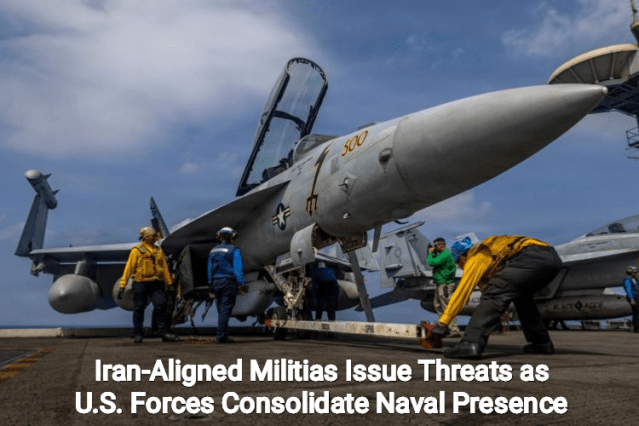
As the USS Abraham Lincoln strike group established its operational posture, Iran-backed militias in Iraq and Yemen issued statements threatening U.S. personnel and facilities. These public threats highlight the persistent risks faced by U.S. forces deployed forward and the unpredictable nature of asymmetric warfare.
Threat Environment
Iran-aligned militias have a documented history of targeting U.S. personnel through a combination of:
- Rocket and missile attacks
- Drone operations
- Maritime harassment tactics against vessels and convoys
The recent threats coincided with the carrier group’s arrival, reinforcing the need for heightened situational awareness and rapid response capabilities among all deployed forces.
Force Protection and Readiness
U.S. forces maintain comprehensive defensive measures to protect personnel and assets. These include:
- Aegis ballistic missile defense systems on destroyers
- Advanced radar and sensor networks
- Secure communication protocols
- Contingency plans for evacuation and rapid reinforcement
Training, coordination, and disciplined execution are critical to mitigating the risk posed by hostile actors. Each sailor, aviator, and support member contributes to layered defensive operations that combine technology, intelligence, and human vigilance.
Human Perspective
For the service members, the combination of operational complexity and real threats underscores the demands of forward deployment. Every personnel movement, watch rotation, and maintenance procedure carries strategic weight. The constant awareness of potential danger shapes both the operational culture and daily life aboard ships and in theater.
Expanded U.S. Force Posture in the Middle East Enhances Strategic Flexibility
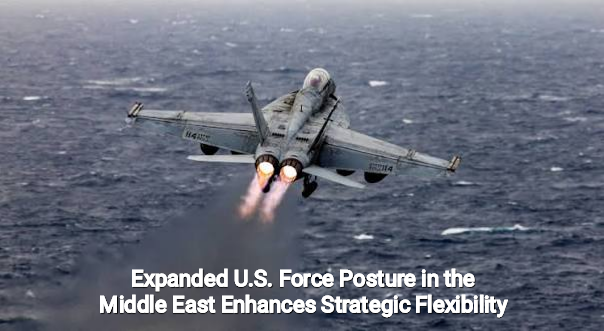
In addition to the carrier strike group, the United States has deployed additional air, intelligence, and defensive assets to the Middle East. These movements demonstrate the integrated nature of modern military operations, blending maritime, air, and ground capabilities to achieve comprehensive deterrence.
Key Deployments
- Fighter aircraft providing rapid strike and defensive coverage
- Aerial refueling platforms extending operational reach
- Intelligence, surveillance, and reconnaissance systems for situational awareness
- Air and missile defense systems to protect personnel and regional partners
Each deployment is supported by highly trained personnel who maintain readiness in austere, high-tempo environments. Maintenance crews, intelligence analysts, and flight operations teams work long hours to ensure that U.S. forces remain capable of responding to emerging contingencies at a moment’s notice.
Strategic Implications
The reinforcement of U.S. forces enhances deterrence by increasing:
- Operational reach and response flexibility
- Regional stability and coalition coordination
- Defensive depth against missile and drone threats
The expanded posture also underscores a critical principle: modern military strength is measured not only in equipment but in the professionalism, endurance, and readiness of personnel executing complex operations in challenging environments.
Human Element
Service members stationed in theater face physical and mental challenges unique to forward deployment. Long hours, unpredictable schedules, and the stress of operating under threat conditions demand resilience and adaptability. Families at home experience the invisible burden of separation, managing daily life while supporting their deployed loved ones from afar.
This dual layer of sacrifice—operational and familial—is at the heart of RED FRIDAY. Every movement, mission, and rotation is underpinned by the courage and commitment of individuals and families alike.
Discover more from CONNECTICUT VETERANS BULLETIN
Subscribe to get the latest posts sent to your email.
