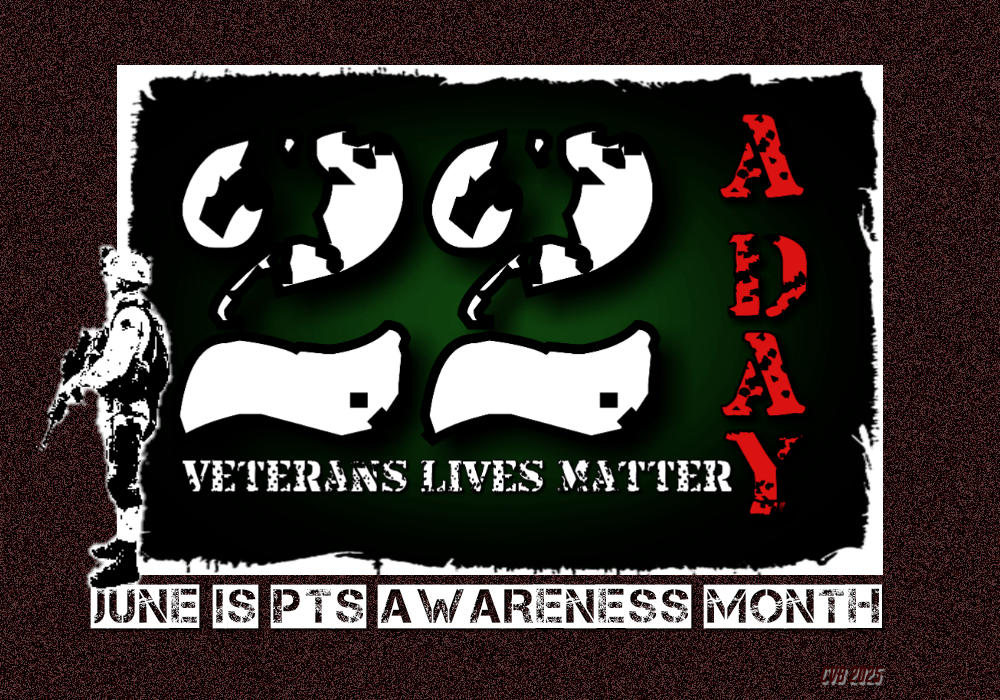
Each June, the nation observes Post-Traumatic Stress Awareness Month—a time dedicated to understanding the emotional wounds that too often remain hidden long after the battles are over. While the term “PTSD” is widely recognized, the Connecticut Veterans Bulletin (CVB) respectfully omits the “D.” We believe that the deep emotional and behavioral impacts from exposure to trauma are not a disorder—they are human. Post-traumatic stress is a normal response to abnormal and often horrific experiences. It is not the veteran who is disordered; rather, it is the world that has failed to meet them with the care they deserve.
This awareness month draws special attention to a sobering reality: an estimated 22 veterans die by suicide each day. These are not just statistics—they are sons and daughters, brothers and sisters, husbands and wives. They are the heartbreak left behind in folded flags, empty chairs, and the quiet moments their loved ones now carry in solitude.
Origins of Post-Traumatic Stress Awareness Month
The U.S. Senate designated June 27 as National PTSD Awareness Day in 2010, in honor of Staff Sergeant Joe Biel, a National Guard member who died by suicide following his return from Iraq. The observance was later expanded in 2013 to the entire month of June to bring broader attention to the emotional injuries sustained during military service. While the clinical term persists, CVB acknowledges post-traumatic stress as a deeply human response, not a disorder.
Understanding the “22 a Day” Crisis
The now widely quoted “22 a day” figure comes from a 2012 U.S. Department of Veterans Affairs study that examined death data from 1999 to 2011. The research, while limited in geographic scope, revealed a shocking average: 22 veterans dying by suicide every single day. Though newer studies may reflect slightly different numbers, the gravity of the problem has only deepened. These deaths occur not in combat zones, but in homes, vehicles, and quiet places across America—on U.S. soil.
Veterans are often left to wage their most personal battles in silence. These are men and women who survived war only to succumb to emotional pain long after the uniforms were folded and the medals hung.
The Impact on Families
Behind each of those 22 daily losses is a family plunged into unrelenting grief. The burden of unanswered questions, what-ifs, and the haunting feeling of helplessness becomes a lifelong weight. Parents, spouses, siblings, and children often struggle not only with the trauma of the loss, but also with the societal stigma that still surrounds suicide.
Many survivors become advocates. Barbie Rohde lost her son, Sgt. Cody Bowman, to suicide at 25. In his memory, she now leads a chapter of Mission 22 in Texas. Her work includes distributing free gun locks and offering a lifeline of hope to others at risk. Her journey reflects the painful transformation that so many survivors must make—turning sorrow into action because they know all too well what inaction costs.
National and Local Efforts to Save Lives
Many groups, driven by love and loss, are working tirelessly to reduce veteran suicide and raise awareness of post-traumatic stress. Among them:
- Mission 22: Named for the tragic average, this national nonprofit offers personalized support and healing programs for veterans and their families. Their public campaigns and memorials serve to spark conversation and reduce stigma.
- SAVE22: Based in Ohio, SAVE22 provides free outdoor therapy opportunities like fishing and golf for veterans and first responders. These recreational events are more than hobbies—they’re lifelines.
- 22Kill: Born from the 22-a-day statistic, this organization offers programs like Wind Therapy (motorcycle rides) and Stay The Course (peer support and counseling) to foster connection and healing.
- Wounded Warrior Project: Through programs like WWP Talk and Warrior Care Network, this organization provides mental health services tailored to combat-related stress.
- Veterans Affairs Community Programs: In 2023, the VA awarded $52.5 million in grants to community organizations focused on preventing veteran suicide. The idea is simple but powerful: community-led care saves lives.
These missions—and many like them—are built on one central belief: post-traumatic stress does not define a veteran’s worth, and help must be accessible, compassionate, and stigma-free.
A Call for National Compassion
The truth behind the 22-a-day crisis demands more than awareness—it requires national compassion. It calls for an end to the silence, for better transition support when service ends, and for the recognition that emotional wounds are just as real as physical ones. We must continue creating communities where our veterans feel understood, not isolated; respected, not pitied.
Every push-up performed in a challenge, every story shared in support groups, every call to a struggling brother or sister—it all matters. These acts of connection are the answer to the invisible injuries that follow so many home.
If you or someone you know is a veteran in crisis, support is available 24/7:
Veterans Crisis Line
📞 Call 988, then press 1
📱 Text 838255
💻 Chat online at VeteransCrisisLine.net
This June, and every month thereafter, CVB affirms this truth: Post-traumatic stress is not a disorder. It is a human reaction to unbearable moments—moments that no one was ever meant to face alone. As a nation, we must meet that humanity with action, with love, and with a solemn vow: no more should suffer in silence.
Discover more from CONNECTICUT VETERANS BULLETIN
Subscribe to get the latest posts sent to your email.
