21 November 2025 12:00 A.M.
This RED FRIDAY, Connecticut Veterans Bulletin honors those serving overseas and the families who sustain them. Across the Western Hemisphere and on distant seas, U.S. forces are operating with purpose — protecting sea lanes, partnering with allies, and answering urgent needs when disaster strikes. That steadfast service is mirrored at home by Blue Star families who shoulder the quiet burdens of long separations and steady support. Today we acknowledge both the visible measures of military strength and the human endurance that makes that strength possible.
Gerald R. Ford Carrier Strike Group Enters Caribbean to Reinforce Southern Maritime Operations
Overview — what happened
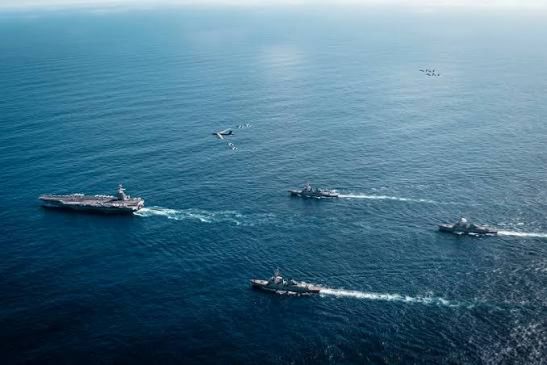
On 16 November 2025, the USS Gerald R. Ford (CVN-78) Carrier Strike Group transited the Anegada Passage and entered the Caribbean Sea to augment ongoing operations under U.S. Southern Command. The deployment places the Navy’s newest and most capable carrier at the center of a coordinated maritime effort to disrupt transnational criminal networks and to support partner-nation security activities across the region.
Why this deployment matters
The Gerald R. Ford is the U.S. fleet’s most advanced carrier platform: a nuclear-powered capital ship that brings an embarked carrier air wing, extended sortie generation capacity (via its EMALS launch system), and advanced command-and-control to any theatre it enters. In the Caribbean context, the carrier strike group adds sustained airborne ISR, precision strike, and a high-end deterrent capability that can be used to support counter-narcotics interdiction, maritime domain awareness, and partner capacity-building. Rear Adm. Paul Lanzilotta and SOUTHCOM leaders framed the deployment as a resources-and-presence decision to bolster regional security.
Operational picture and partners
The Ford strike group is operating alongside joint and multinational forces already engaged in the area, including amphibious elements, embarked Marine units, and other U.S. surface combatants. The Carrier Strike Group will integrate with Joint Task Force Southern Spear activities focused on identifying and disrupting violent transnational criminal organizations that exploit maritime routes. That integrated approach blends Navy, Marine, and special operations capabilities with partner-nation law enforcement and coast guard forces.
Tactical capabilities on station
With an embarked air wing of multi-role fighters, surveillance aircraft, electronic warfare assets, and organic helicopter detachments, the Ford strike group dramatically expands airborne persistence and provides flexible response options — from non-kinetic ISR to precision interdiction. Carrier aviation combined with surface and subsurface escorts enables layered detection, tracking, and action against surface targets, smuggling networks, and the logistics nodes that support illicit trafficking.
Strategic context and risk management
While the official line emphasizes counter-narcotics and regional security, the presence of a carrier strike group is also a powerful deterrent signal to any actor considering escalatory or coercive measures. Regional leaders and domestic audiences in nations such as Venezuela responded with concern and heightened rhetoric; U.S. officials maintain the deployment is intended to protect shared security and the rule of law on the seas. Analysts note the dual nature of the posture: operationally focused yet politically visible — which requires careful diplomatic and mission planning.
What this means for sailors and families
For Ford’s crew and embarked squadrons, a high-tempo deployment in a region with active interdiction operations means intensive flight operations, long underway periods, and constant maintenance demands. For Blue Star families back home, the carrier’s presence underscores the reality of modern naval service: front-line capability often requires extended separations, resiliency at home, and deep community support. The Navy’s emphasis on clear command intent, crew readiness, and family outreach programs helps mitigate stress, but sacrifice remains part of the mission.
South Dakota Army National Guard Activates 665th Support Maintenance Company for Overseas Deployment
What happened
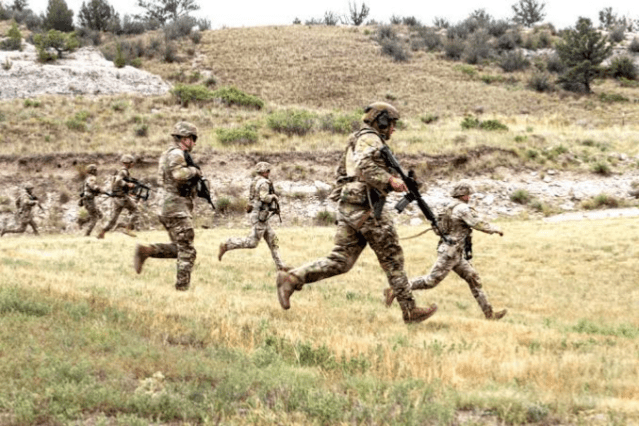
On 17 November 2025 the South Dakota Army National Guard activated the 665th Support Maintenance Company (SMC) — more than 130 Soldiers — for federal service in preparation for an overseas mission. The Mitchell, S.D.-based unit will deploy to support sustainment and maintenance operations within U.S. Army Europe training and operations areas, with reports indicating movement toward Germany’s Grafenwöhr training region as part of a larger sustainment posture. Local and state announcements and regional press coverage confirm the activation and the unit’s mobilization timeline.
Role and mission of the 665th SMC
Support Maintenance Companies are mission-critical units that provide intermediate maintenance and recovery capability for tracked and wheeled vehicles, communications equipment, generators, and brigade-level support systems. Their tasks include on-site repairs, component replacement, preventive maintenance, and orchestrating back-shop repairs that keep combat and support units operational during deployments. In theater, SMCs are force multipliers: they reduce downtime for frontline units and sustain operational tempo across wide areas of responsibility.
Why this activation is operationally important
Deploying a maintenance company to support operations in Europe signals a concrete logistical commitment: armies cannot fight without repair and sustainment. The 665th will likely interface with U.S. Army prepositioned stocks, host-nation logistics networks, and U.S. support brigades to maintain vehicle fleets and essential systems during allied training rotations and readiness operations. Good maintenance keeps readiness high, reduces casualties caused by equipment failure, and shortens the supply lines that otherwise complicate sustained operations.
Training, mobilization, and family impact
Before deployment, Soldiers of the 665th undergo mobilization-site readiness processing, medical screening, mission rehearsal exercises, and pre-deployment sustainment training — from advanced vehicle recovery techniques to parts accountability and supply chain coordination. For Guard members, federal activation means transitioning from civilian jobs to full-time military duties; employers, communities, and families play an outsize role in supporting that change. Family readiness groups, employer support programs, and state-level outreach contribute to smoothing the mobilization and reducing hardship for loved ones.
Operational outlook
Once in theater, the 665th will be integrated into sustainment networks that support allied training lanes and operational requirements. Their performance will be measured by vehicle availability rates, turnaround time for repairs, and the ability to support mission timelines. In short, their contribution is fundamental: operational reach and effectiveness depend on the readiness they enable.
Spreading Holiday Cheer: JPEO A&A Department of the Interior Team Sends Christmas Stockings to Deployed U.S. Special Forces
What happened & who participated
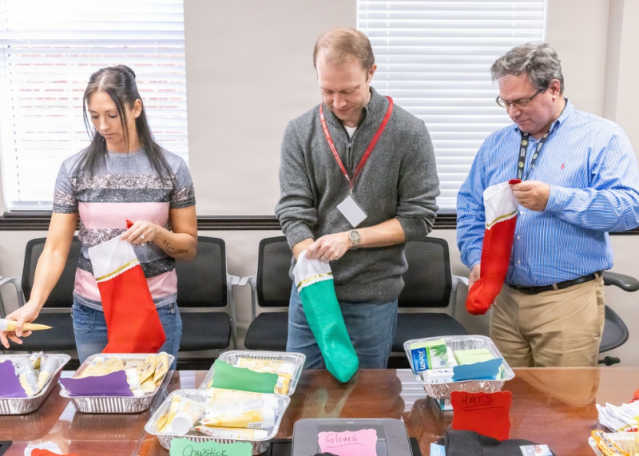
On 18 November 2025, Picatinny Arsenal-based logisticians and staff from the Joint Program Executive Office for Armaments & Ammunition (JPEO A&A) coordinated a volunteer effort to send approximately 30 Christmas stockings filled with hygiene items, warm accessories, snacks, and handwritten notes to deployed U.S. Special Operations Forces overseas. The program was organized by the JPEO A&A Directorate of Industrial Operations (DoI) team and supported by the Picatinny community. Official Army public affairs and DVIDS imagery accompany the story.
Why the initiative matters
Small care-package programs deliver outsized morale benefits. For special operators serving in austere environments, personalized items — warm gloves, hygiene essentials, a thoughtful note — can make significant differences in daily comfort and psychological resilience. This JPEO A&A effort is aimed directly at sustaining esprit de corps and showing the deployed community that their work is remembered and appreciated by defense industry colleagues and home-station teammates.
Organization, logistics, and contents
Volunteers assembled stockings of toiletries, hand warmers, socks, non-perishable snacks, and handwritten messages. The team worked with unit points of contact and postal/logistics channels to ensure the packages complied with operational security and transport rules, including proper packaging, manifesting, and coordination with the deployed units’ supply nodes to accept parcels. About 30 stockings were dispatched in mid-November and tracked via DOD mail channels.
Impact on deployed forces and families
Beyond physical items, these gestures sustain a sense of connection between deployed operators and their civilian and military home communities. For families, knowledge that teams across the Army and defense enterprise are supporting deployed loved ones creates a network of care—reducing isolation and reinforcing the message that a wide community holds service members in gratitude. The initiative also highlights the JPEO A&A workforce’s dual role: fielding lethal overmatch capabilities while sustaining the people who use and maintain them.
Takeaway
Tactical care packages are small logistics efforts with measurable morale returns. The Picatinny JPEO A&A DoI team’s stockings are one more example of how the defense community — program offices, acquisition teams, and local volunteers — tangibly supports deployed warriors during the holiday season, reminding them they are not forgotten while in harm’s way.
Discover more from CONNECTICUT VETERANS BULLETIN
Subscribe to get the latest posts sent to your email.
