WE SEE YOU, AMERICA’S DEPLOYED AND YOUR FAMILIES
This Red Friday we do more than note movements on a map or report dates on a calendar, we honor the lived reality of service members deployed across the globe and the silent strength of their families back home. Whether it is the Seabees returning to the Indo‑Pacific, maritime forces executing extended patrols, or personnel engaged in precision operations on distant seas, every one of our troops carries not just a uniform, but the weight of separation, discipline, and duty. Today, we recognize them not as headlines, not as data points, but as sons and daughters, fathers and mothers, husbands and wives, brothers and sisters, Americans whose service defines the character of our nation.
Red Friday is more than a tradition. It is a statement of Fidelity, to those standing watch at sea, on land, and in the air; to those whose missions unfold far from family and community; and to those who bear the burdens of waiting, supporting, and sustaining from home. The deployments and operations discussed this week reflect a spectrum of military commitment that never pauses: building, patrolling, chasing down illegal networks, supporting partner forces, and keeping open the sea lanes and alliances that ensure global stability. For every mile crossed, every radio transmission made, and every darkness endured on foreign soil or ocean swell, there is a soldier, sailor, airman, Marine, Coast Guardsman, and family member whose life is shaped by that service.
We know that out there, wherever “there” happens to be, a U.S. service member is waking before dawn to prepare equipment, reviewing mission plans, or saying a quiet prayer before another patrol. Someone thousands of miles away is sitting on a ship’s deck in a foreign port, watching a sunrise that reminds them of home. A family member is reading a letter they’ve received, holding on to every word because it means connection in the midst of distance. This is service lived in real time, not reported, but felt.
When U.S. Naval Mobile Construction Battalion 11 redeployed into the Indo‑Pacific, they carried with them not just tools and gear, but the legacy of those who built forward presence before them. Every runway laid, every facility constructed, every base improved is a tangible extension of American commitment and a testament to those who labor behind the scenes so that joint operations, humanitarian response, and allied readiness can proceed without interruption. We salute their grit, and we salute the families who keep the hearth burning while our troops build the future abroad.
When U.S. maritime forces executed interdiction operations on the high seas, seizing a tanker after a prolonged chase, or engaging a suspected trafficker in the eastern Pacific, they did so with precision and resolve, upholding rule‑of‑law on international waters. These are not abstract maneuvers; they are actions rooted in operational excellence and professional judgment, carried out by service members who know that every decision matters. Behind those operations are loved ones who endure pauses between communications, who watch the news with hope instead of fear, and who choose pride over anxiety time and again.
For every mission, every patrol, every sunrise watched from a foreign deck, and every sunset missed back home, the sacrifice is real. The endurance of our service members and the resilience of their families are not footnotes, they are the very foundation upon which our nation’s commitments rest. They answer the call with courage, not because it is easy, but because it is necessary.
This Red Friday, Connecticut Veterans Bulletin stands with every deployed service member, no matter the branch, the location, or the duration of duty. We see you. We respect you. We support you. And we stand with the families who are your quiet strength, your anchor, and your motivation to return home safe.
Let every flag flown, every ribbon worn, and every message shared today be more than symbolism, let it be the living truth that America stands with you, today and every day.
U.S. SEIZES TANKER IN INDIAN OCEAN AFTER MONTH‑LONG PURSUIT FROM THE CARIBBEAN
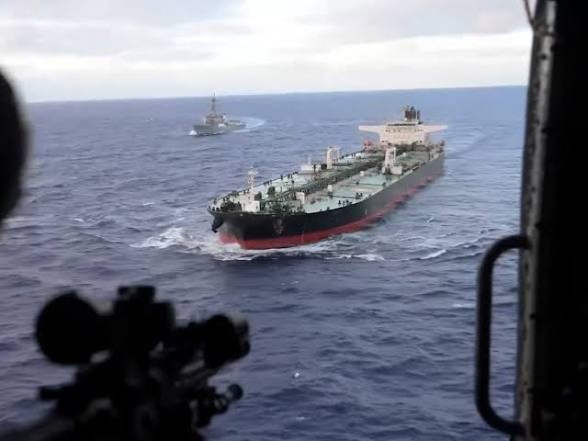
On 9 February 2026, U.S. military forces executed a high‑profile maritime interdiction operation by boarding the Panamanian‑flagged oil tanker Aquila II in the Indian Ocean after tracking it from the Caribbean Sea. The Department of Defense described the action as a “right‑of‑visit, maritime interdiction,” undertaken because the vessel was operating in “defiance” of established U.S. restrictions targeting sanctioned crude shipments.
The pursuit began after the tanker departed waters near Venezuela and made its way across multiple maritime zones. According to Pentagon statements, the vessel was identified as defying a U.S. quarantine intended to curtail the flow of sanctioned crude and prevent illicit oil shipments from reinforcing black‑market networks and destabilizing sanctioned economies.
During the interdiction, U.S. forces approached the ship and boarded it “without incident,” working under the authority of international maritime law and longstanding U.S. agreements that allow inspection of certain foreign‑flagged vessels at sea. The boarding was conducted within the U.S. Indo‑Pacific Command (INDOPACOM) area as part of broader efforts to uphold sanctions enforcement and maritime security.
The tanker itself had been at the center of a sustained hunt after evading detection by disabling conventional tracking systems , an activity sometimes referred to by maritime analysts as “running dark.” Satellite and open‑source tracking data showed the vessel intermittently broadcasting false or no location data, prompting heightened surveillance by naval assets.
Defense officials noted this action reflects the expanded geographic reach of U.S. maritime operations aimed at sanction enforcement and curbing illicit oil flows. While previous tankers have been boarded or seized closer to the Caribbean, this interception in the Indian Ocean underscores U.S. forces’ ability to follow and interdict sanctioned vessels across multiple oceans.
The Aquila II incident has strategic implications beyond sanctions enforcement: it demonstrates the willingness of U.S. maritime forces to extend operational reach far from home waters to uphold legal and economic constraints on sanctioned entities. An official Pentagon social media post emphasized that the United States would “follow” vessels violating international quarantine regimes, projecting operational persistence across domains.
Family members and supporters of service members involved in these interdiction missions face weeks or months of separation, intense operational demands, and limited communication windows. Their sacrifices mirror those of the sailors, aviators, and special operations personnel whose readiness enables such high‑stakes global operations, from the Caribbean to the Indian Ocean and beyond.
U.S. STRIKE ON SUSPECTED DRUG‑TRAFFICKING VESSEL IN THE EASTERN PACIFIC
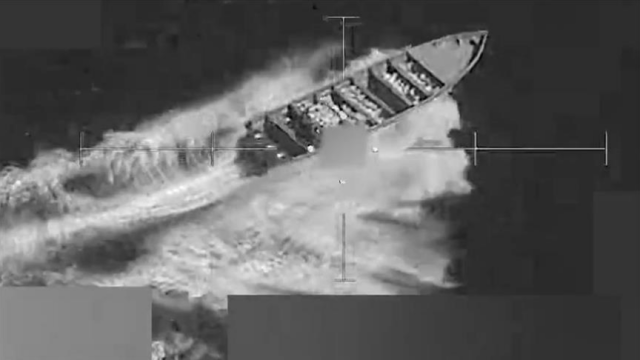
In another major action on 9 February 2026, U.S. Southern Command announced that forces conducted a lethal strike on a suspected drug‑trafficking vessel in the eastern Pacific Ocean, resulting in two fatalities and one survivor. The Pentagon, posting on social media platform X, stated the targeted boat was transiting along well‑known maritime routes associated with narcotics smuggling.
According to official statements, the operation was conducted by Joint Task Force Southern Spear, a multi‑domain command element focused on countering illicit maritime trafficking. The strike was authorized by the commander of U.S. Southern Command and carried out after intelligence assessments indicated the vessel was engaged in illegal trafficking activities.
Following the strike, U.S. forces immediately notified the U.S. Coast Guard, which activated search‑and‑rescue procedures for the sole survivor of the engagement. This coordination highlights multi‑agency integration between Department of Defense and Department of Homeland Security elements during operations involving civilian vessels on international waters.
The Eastern Pacific engagement marks another chapter in a broader campaign conducted by U.S. forces aimed at disrupting trans‑regional drug trafficking networks that transit major sea lanes. Southern Command has periodically issued public reports on such strikes, emphasizing intelligence‑driven targeting and layered situational awareness.
While U.S. officials described the strike as necessary to impede maritime narco‑trafficking, it occurred amid public debate and scrutiny over the legal and humanitarian implications of using lethal force against vessels suspected of criminal activity rather than direct threats to U.S. forces.
For service members involved, including intelligence analysts, strike controllers, maritime patrol aviators, and command elements. These missions require precise coordination, advanced targeting capabilities, and thorough risk assessments to minimize unintended harm. The aftermath of such operations also involves follow‑on search‑and‑rescue tasks, liaison with partner maritime authorities, and careful review of engagement protocols.
On the home front, families of these deployed personnel often contend with uncertainty and the emotional weight of operations that draw intense media scrutiny. Support networks, including unit‑level counseling, family readiness groups, and community outreach programs, help sustain morale and communication during these demanding operational cycles.
SEABEES BACK IN THE INDO‑PACIFIC: NMCB‑11’S STRATEGIC REDEPLOYMENT
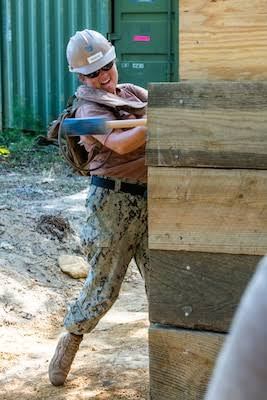
On 2 February 2026, Naval Mobile Construction Battalion 11 (NMCB‑11) formally completed a Relief‑in‑Place / Transfer‑of‑Authority (RIPTOA) with NMCB‑4 at Camp Shields, Okinawa, Japan, and officially returned to the U.S. Indo‑Pacific Command area of responsibility (INDOPACOM) — marking a major operational milestone for the East Coast‑based Seabee unit.
The ceremony marked the symbolic and operational passing of duties from NMCB‑4 to NMCB‑11, reinforcing the Navy’s expeditionary engineering presence in one of the world’s most dynamic strategic theaters. The unit will operate under Commander, Task Force 75, which oversees assigned Naval Expeditionary Combat Forces throughout the 7th Fleet region.
NMCB‑11’s return to INDOPACOM reflects a U.S. military priority of maintaining robust engineering, construction, and force‑protection capabilities in proximity to key allied partners and deterrence environments. Seabees are uniquely trained to deliver infrastructure development, contingency construction, and rapid engineering solutions in diverse operational environments, from expeditionary bases to partnered training locales.
The battalion’s presence at Camp Shields, named for Medal of Honor recipient Marvin G. Shields, underscores both tradition and readiness. Seabees will support missions that range from general engineering and facility construction to force protection enhancements and joint exercises with allied militaries across the Indo‑Pacific theater.
Leadership emphasized the strategic importance of the deployment, noting that NMCB‑11’s forward posture enables rapid response to humanitarian assistance, disaster relief operations, and contingency needs that may arise across the vast Indo‑Pacific region. Such missions are foundational to operational flexibility and support a “free and open” maritime environment.
These deployments also require significant personal sacrifices: Sailors and support personnel often serve months away from home and family, working in austere, varied climate conditions while integrating with joint and multinational forces. The Seabee ethos of “we build, we fight” reflects their dual role as both engineers and maritime expeditionary combatants.
For families and loved ones back home, the return to the Indo‑Pacific signals renewed pride and concern, pride in their service members’ critical mission and concern for their safety and wellbeing. Community support networks and unit family readiness programs play a crucial role in sustaining morale, offering vital resources throughout the deployment cycle.
NMCB‑11’s redeployment back into INDOPACOM not only enhances U.S. Navy construction and engineering capacity but also strengthens the U.S. commitment to allied cooperation, regional stability, and rapid operational responsiveness where it matters most.
Discover more from CONNECTICUT VETERANS BULLETIN
Subscribe to get the latest posts sent to your email.
