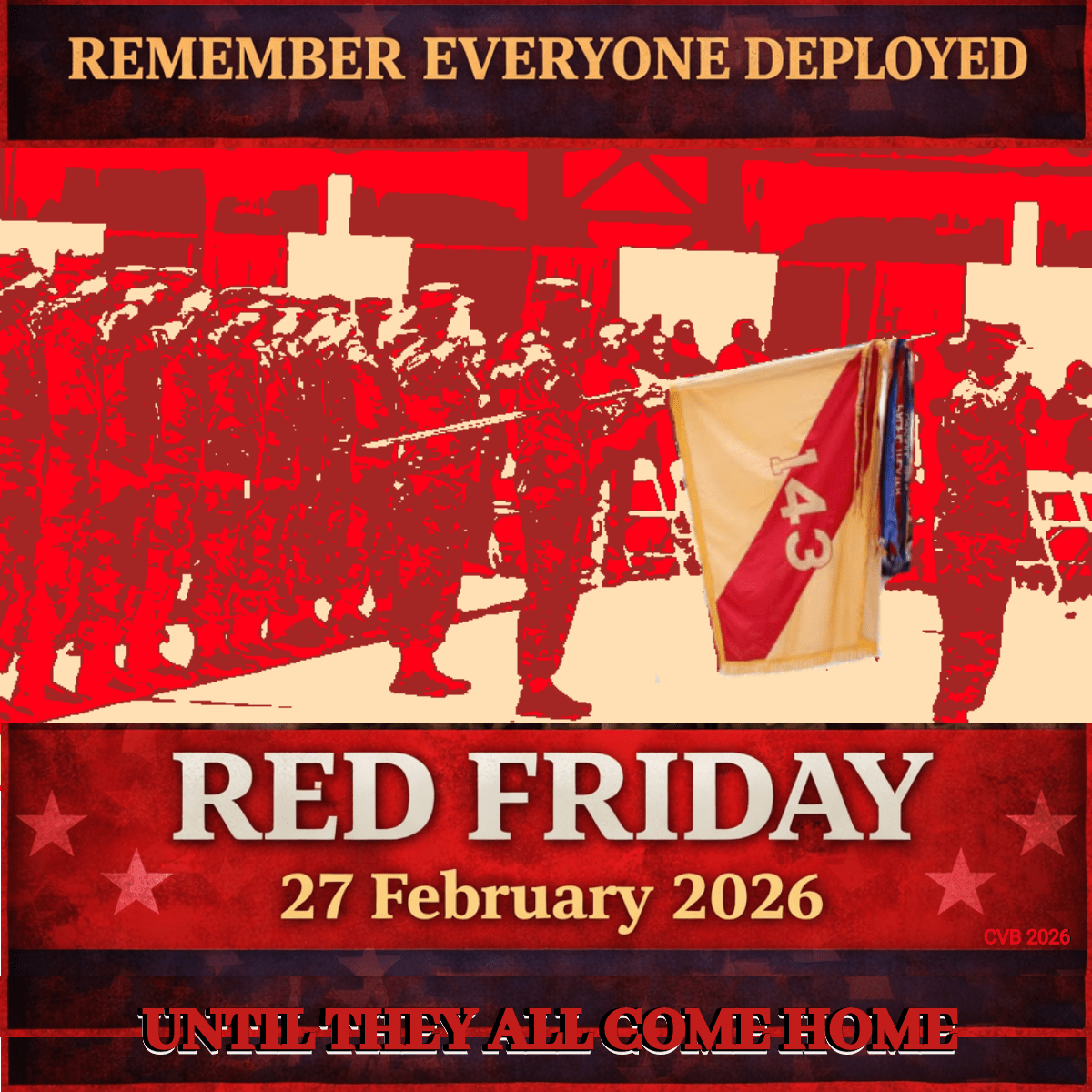
At Connecticut Veterans Bulletin, RED FRIDAY is not a slogan. It is not a marketing phrase. It is not about celebrating conflict.
It is about people.
Every Friday, we remember that behind every deployment order is a human being — someone’s son or daughter, husband or wife, mother, father, sibling, friend. Veterans understand this in a way few others can. Military families understand it even more deeply. They know the quiet conversations before mobilization. They know the paperwork, the legal preparations, the uncertainty. They know the discipline it takes to put on a uniform and go where you are told.
We do not celebrate war. We do not glorify geopolitics. At CVB, we recognize that service members will follow lawful orders whether they agree with the policy or not. That is the burden of the profession of arms. They train. They prepare. And when called, they go.
This week, that reality is close to home.
On 21 February 2026, Connecticut’s 143rd Regional Support Group stood in formation at the Gov. William A. O’Neill Armory in Hartford for a deployment ceremony. Families stood in the background. Some smiled with pride. Some held it together for their children. Veterans in attendance likely felt that familiar tightening in the chest — the memory of buses pulling away, flights departing at odd hours, and the silence that follows.
At the same time, between 22 and 24 February 2026, the United States rapidly expanded its military presence in the Middle East. Aircraft surged forward. Naval forces maneuvered into position. On 23 February 2026, U.S. Southern Command confirmed a kinetic maritime strike in the Caribbean Sea. The operational environment is active, dynamic, and unpredictable.
For those deploying, it means stepping into uncertainty. For those at home, it means carrying everything else.
That is why RED FRIDAY matters.
It reminds us that troops are not chess pieces. They are not headlines. They are not political arguments. They are Americans under orders.
And we remember them.
Connecticut’s 143rd Regional Support Group Deploys to Iraq and Kuwait in Support of Operation Inherent Resolve
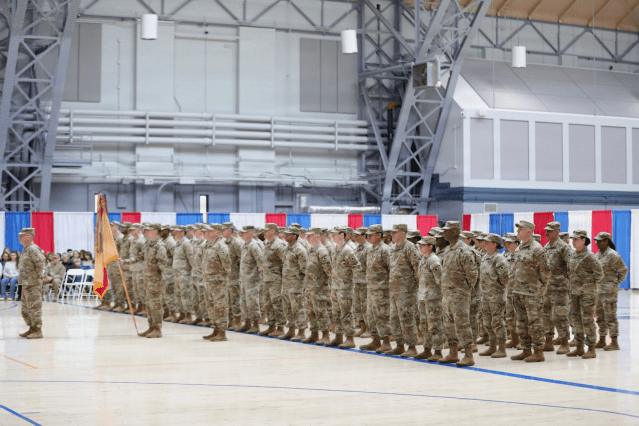
On 21 February 2026, the Connecticut Army National Guard formally conducted a sendoff ceremony at the Gov. William A. O’Neill Armory in Hartford for Soldiers assigned to the 143rd Regional Support Group as they prepared to deploy to Iraq and Kuwait. The ceremony marked the beginning of a mobilization in support of Operation Inherent Resolve, the long-standing U.S.-led mission focused on ensuring the enduring defeat of ISIS and supporting regional stability.
The 143rd Regional Support Group, headquartered in Middletown, Connecticut, serves as a brigade-level command element responsible for overseeing and synchronizing critical sustainment and base operations functions. In a deployed environment, an RSG provides mission command for logistics units, coordinates base life support, manages facilities and contract oversight, integrates inbound and outbound personnel, and ensures operational infrastructure is maintained so combat and advisory forces can execute their missions effectively.
Operation Inherent Resolve began in June 2014 and has transitioned over time from high-intensity combat operations to advisory, enablement, and long-term stabilization efforts across Iraq and portions of Syria. Though the operational tempo has evolved, sustainment requirements remain constant. Units like the 143rd RSG provide the backbone of those operations by managing reception, staging, onward movement, and integration processes while maintaining accountability for personnel and resources across dispersed installations.
This is not the first overseas mission for the 143rd RSG. From October 2020 through July 2021, the unit deployed in support of Operation Spartan Shield in Jordan. During that mobilization, Soldiers executed complex base operations supporting more than 4,000 U.S. and coalition personnel. The unit managed integrated logistics systems, communications support, host-nation coordination, and large-scale contract oversight while navigating the additional challenges presented by the global COVID-19 pandemic.
During that previous mission, the 143rd established quarantine facilities for incoming personnel, maintained essential sustainment functions without interruption, and executed a structured transfer of authority to follow-on units in July 2021. The success of that operation reinforced the group’s capability to operate in high-pressure multinational environments requiring precision coordination and disciplined mission command.
The 143rd’s lineage traces back to elements connected to the storied 43rd Infantry Division, known historically for its service in the Pacific Theater during World War II. Through numerous reorganizations over decades, the unit evolved into its present Regional Support Group structure while retaining deep community ties across Connecticut. This dual identity — community-rooted yet globally deployable — reflects the enduring model of the National Guard.
As Soldiers depart Connecticut in the weeks following 21 February 2026, their mission centers on ensuring the sustainment framework necessary for U.S. and coalition operations in Iraq and Kuwait. Their work will not dominate headlines, but it will directly determine the operational effectiveness of the forces they support. On this Red Friday, Connecticut recognizes their professionalism, preparedness, and willingness to serve abroad when called.
U.S. Deploys Largest Concentration of Airpower in Middle East Since 2003 (22–24 February 2026)
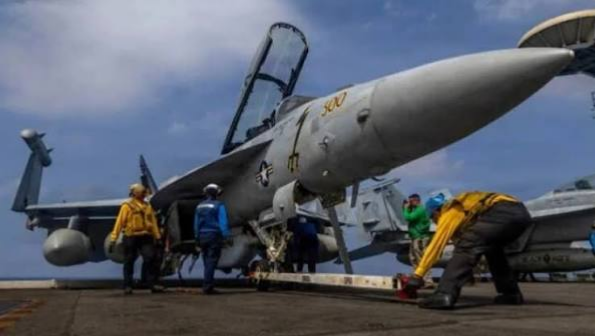
Between 22 and 24 February 2026, the United States significantly expanded its forward military posture across the Middle East in what defense analysts described as the largest concentration of U.S. airpower in the region since the 2003 invasion of Iraq. Satellite imagery reviewed and reported publicly on 24 February 2026 documented more than 150 U.S. military aircraft positioned at bases across Europe, Jordan, and other strategic locations supporting the theater.
The aircraft identified in forward positions include advanced fighter platforms such as F-35 and F-22 aircraft, aerial refueling tankers necessary for sustained sortie generation, airborne early warning and surveillance platforms, and heavy airlift assets. The presence of these aircraft indicates preparation not only for deterrence patrols but for sustained air operations should higher authority authorize escalation.
Two aircraft carriers — USS Gerald R. Ford and USS Abraham Lincoln — were also operating in nearby waters during this same period, supported by guided-missile destroyers and strike escorts. Carrier-based aviation extends operational reach and provides an additional layer of flexibility independent of host-nation basing constraints. The combined naval and land-based posture represents a robust, layered deterrent configuration.
The buildup followed stalled indirect diplomatic engagements focused on Iran’s nuclear program and heightened tensions across the region. While U.S. officials did not publicly confirm imminent offensive action as of 24 February 2026, the strategic timing of the deployment signaled preparation for a spectrum of contingencies. Force posture of this scale requires extensive logistical coordination, airspace management planning, and multinational deconfliction.
Military planners evaluate such deployments on two interconnected axes: deterrence signaling and operational readiness. Forward massing of air assets complicates adversary planning by reducing response timelines and expanding strike envelope flexibility. At the same time, concentration of force increases regional sensitivity to miscalculation, raising the importance of disciplined command and control mechanisms.
For deployed and deploying units — including National Guard formations such as Connecticut’s 143rd RSG — this broader military environment establishes the operational backdrop against which sustainment, infrastructure, and base support responsibilities must function. Large-scale air operations require dependable ground logistics, personnel management, and installation support — precisely the functions Regional Support Groups provide.
As of 24 February 2026, U.S. forces remained forward positioned, with military and diplomatic developments closely monitored by allies and adversaries alike. Whether the buildup ultimately serves as deterrent leverage or operational prelude will depend on policy decisions in the days ahead. What remains clear is that U.S. force posture shifted measurably after 21 February 2026.
U.S. Southern Command Conducts Strike on Alleged Smuggling Vessel in Caribbean Sea (23 February 2026)
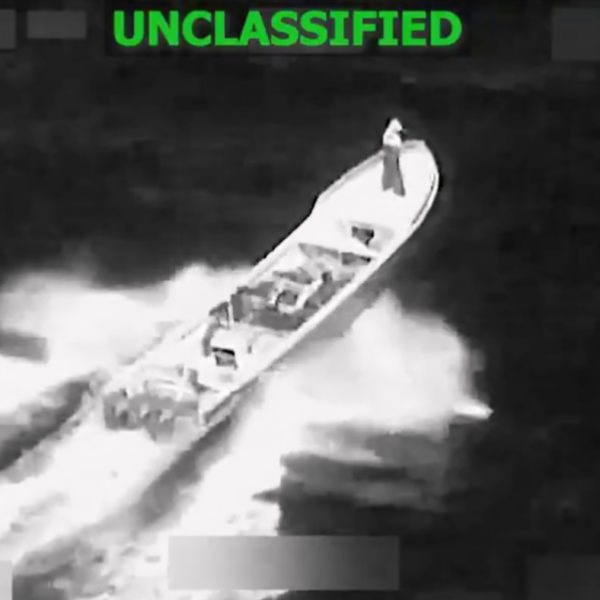
On 23 February 2026, U.S. Southern Command confirmed that U.S. military forces conducted a strike against a vessel in the Caribbean Sea suspected of involvement in illicit drug trafficking activities. According to official statements released that day, three individuals aboard the vessel were killed during the operation. Video footage of the strike was publicly disseminated by U.S. authorities.
The engagement represents a continuation of an expanded operational approach in which U.S. military assets — rather than solely civilian law enforcement agencies — are employed against maritime trafficking networks assessed to pose national security risks. The Caribbean Sea remains a major transit corridor for narcotics destined for North America, making it a strategically significant region for interdiction efforts.
Officials stated that the vessel targeted on 23 February 2026 was operating along a known trafficking route. Intelligence, surveillance, and reconnaissance assets reportedly tracked the vessel prior to engagement. The strike was described as precise and conducted without U.S. military casualties. Authorities did not indicate that U.S. personnel boarded the vessel.
The use of military force in counternarcotics environments continues to generate debate among legal scholars and policy analysts. Questions center on maritime jurisdiction, evidentiary thresholds, and escalation management. However, defense officials maintain that operations are executed within established legal authorities and in response to transnational networks considered destabilizing to regional and domestic security.
Operationally, actions such as the 23 February strike require coordination between U.S. Southern Command, intelligence agencies, maritime surveillance platforms, and regional partners. The event underscores how national security missions increasingly span traditional combat theaters and gray-zone environments.
As global military posture shifts and overseas deployments continue, these maritime enforcement actions illustrate the wide spectrum of missions undertaken by U.S. forces — from Middle East sustainment operations to Caribbean interdiction. The operational landscape facing American service members in 2026 is diverse, multidimensional, and strategically interconnected.
Discover more from CONNECTICUT VETERANS BULLETIN
Subscribe to get the latest posts sent to your email.
