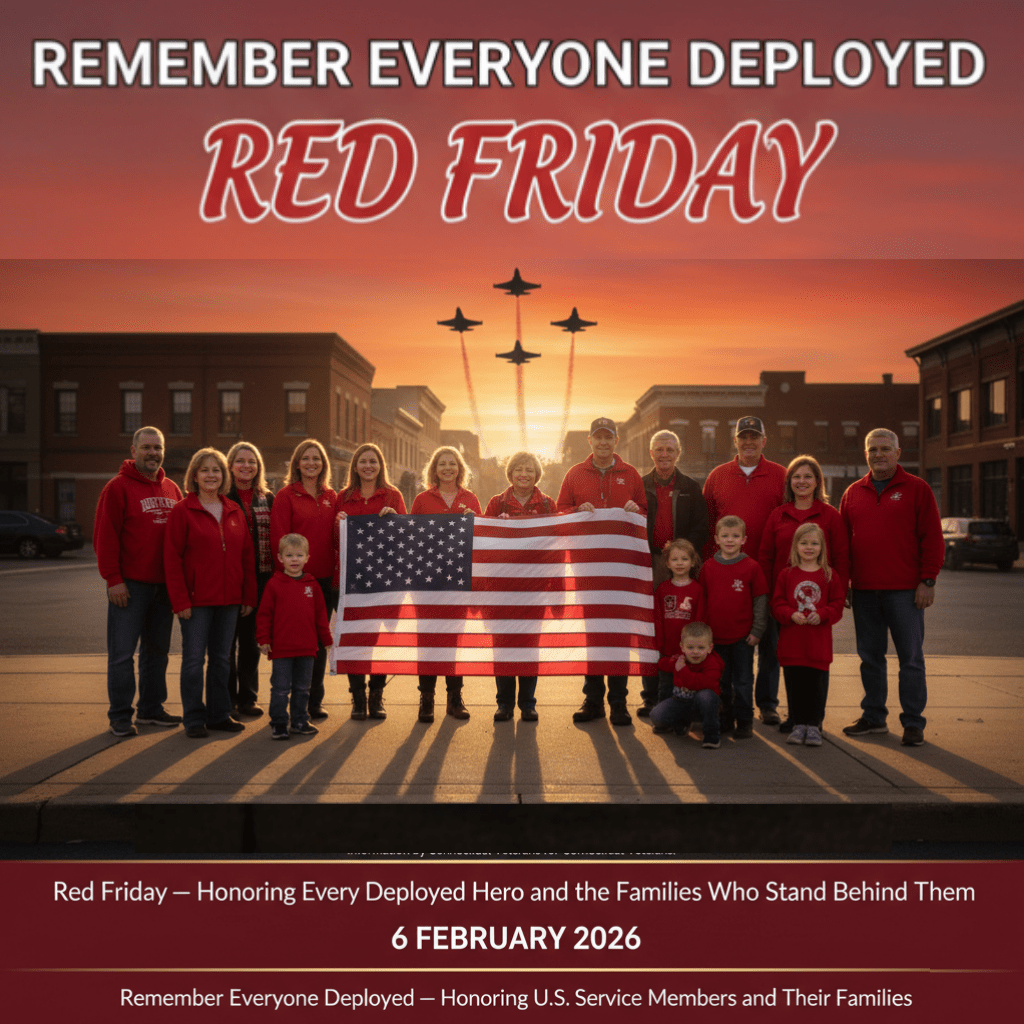
Remember Everyone Deployed — Honoring U.S. Service Members and Their Families
Each Friday across the nation, a simple but powerful tradition threads communities together, connecting living rooms and workplaces with far‑flung military outposts around the globe. It’s called Red Friday — short for Remember Everyone Deployed — and its meaning is rooted in a shared promise: that no American serving in harm’s way should ever feel forgotten.
The tradition began as a grassroots movement and has grown steadily through military families, community groups, and civilians who wanted a visible, everyday way to show their appreciation. On Fridays, people of all ages — school children, professionals, first responders, and neighbors — wear red clothing or accessories as a visible reminder that while they go about their Friday routines, others are on duty far from home. Red represents courage, sacrifice, and the blood shed by those who defend our freedoms.
Red Friday is intentionally inclusive and non‑political. It isn’t about debates over policy or conflict; it’s about recognizing that members of the U.S. Armed Forces are deployed worldwide right now, bearing risks and burdens so that millions enjoy peace and security at home. For military families — spouses, parents, siblings, and children — Red Friday is more than a gesture; it’s a connection, a visible acknowledgment that their loved ones are remembered and supported.
Today’s Red Friday — 6 February 2026 edition is dedicated to every U.S. service member currently serving overseas and to the families who stand behind them. In this edition, we highlight three verified and detailed deployments of U.S. military personnel since 31 January 2026, reminding everyone that while our routines continue at home, so do the missions of those who wear our nation’s uniform.
U.S. Military Builds Up Forces in the Middle East: Carrier, Air & Naval Assets Forward-Deployed
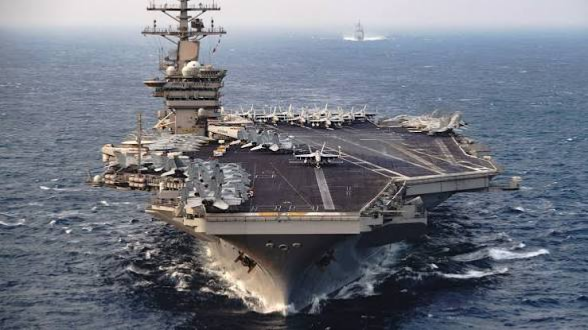
In early February 2026, the United States Navy repositioned one of its most powerful formations — the USS Abraham Lincoln Carrier Strike Group — to the U.S. Central Command (CENTCOM) theater of operations in the Middle East. This major naval deployment reflects a renewed emphasis on forward presence and deterrence amid rising regional tensions and complex geopolitical dynamics.The Abraham Lincoln is a nuclear-powered aircraft carrier, one of only a handful in the U.S. fleet. When deployed with its supporting strike group, it carries nearly 70 aircraft and can sustain extensive combat and support operations for prolonged periods without resupply. The carrier left the Indo-Pacific region in late January and transited toward the Arabian Sea, where it now operates in strategic proximity to the Strait of Hormuz and critical shipping lanes.Escorting the carrier are multiple guided-missile destroyers and surface combatants, forming an integrated maritime force capable of anti-air, anti-surface, and anti-submarine warfare. As part of this operational buildup, additional escort vessels have moved into the adjacent waters, reinforcing the U.S. naval footprint across the region.The Abraham Lincoln’s aircraft wing includes a range of advanced platforms — from multi-role strike fighters to airborne early warning aircraft and electronic warfare assets. These aircraft extend the carrier’s reach, enabling operations over land and sea simultaneously. Carrier-based aviation allows U.S. commanders to rapidly adapt to changing operational requirements, whether that involves defense posturing, reconnaissance, or providing air support for allied forces.This deployment also coincides with multi-day air readiness exercises, aimed at demonstrating U.S. capability to deploy, disperse, and sustain aviation operations across dispersed locations in the region. These exercises involve coordination with partner nations and help reinforce interoperability with allied air forces.For the sailors, aircrew, and support personnel aboard the Abraham Lincoln and its escorts, their mission represents a demanding operational tempo. Long days at sea involve flight operations, maintenance cycles, and constant coordination among surface and aviation units. Their work underscores the Navy’s motto of “Always Ready” — ready to respond, deter, and, if called upon, to project force in defense of national interests and allied security.This deployment also sends a broader message about U.S. commitment to stability in the region. Forward-deployed naval power has historically served not only as a deterrent but also as assurance to partners who rely on U.S. presence for regional security architectures. The professionals aboard these ships carry out their duties with precision and dedication, ensuring maritime routes remain open and global commerce flows freely.In early February 2026, the United States Navy repositioned one of its most powerful formations — the USS Abraham Lincoln Carrier Strike Group — to the U.S. Central Command (CENTCOM) theater of operations in the Middle East. This major naval deployment reflects a renewed emphasis on forward presence and deterrence amid rising regional tensions and complex geopolitical dynamics.
The Abraham Lincoln is a nuclear-powered aircraft carrier, one of only a handful in the U.S. fleet. When deployed with its supporting strike group, it carries nearly 70 aircraft and can sustain extensive combat and support operations for prolonged periods without resupply. The carrier left the Indo-Pacific region in late January and transited toward the Arabian Sea, where it now operates in strategic proximity to the Strait of Hormuz and critical shipping lanes.
Escorting the carrier are multiple guided-missile destroyers and surface combatants, forming an integrated maritime force capable of anti-air, anti-surface, and anti-submarine warfare. As part of this operational buildup, additional escort vessels have moved into the adjacent waters, reinforcing the U.S. naval footprint across the region.
The Abraham Lincoln’s aircraft wing includes a range of advanced platforms — from multi-role strike fighters to airborne early warning aircraft and electronic warfare assets. These aircraft extend the carrier’s reach, enabling operations over land and sea simultaneously. Carrier-based aviation allows U.S. commanders to rapidly adapt to changing operational requirements, whether that involves defense posturing, reconnaissance, or providing air support for allied forces.
This deployment also coincides with multi-day air readiness exercises, aimed at demonstrating U.S. capability to deploy, disperse, and sustain aviation operations across dispersed locations in the region. These exercises involve coordination with partner nations and help reinforce interoperability with allied air forces.
For the sailors, aircrew, and support personnel aboard the Abraham Lincoln and its escorts, their mission represents a demanding operational tempo. Long days at sea involve flight operations, maintenance cycles, and constant coordination among surface and aviation units. Their work underscores the Navy’s motto of “Always Ready” — ready to respond, deter, and, if called upon, to project force in defense of national interests and allied security.
This deployment also sends a broader message about U.S. commitment to stability in the region. Forward-deployed naval power has historically served not only as a deterrent but also as assurance to partners who rely on U.S. presence for regional security architectures. The professionals aboard these ships carry out their duties with precision and dedication, ensuring maritime routes remain open and global commerce flows freely.
Texas Army National Guard’s 36th Infantry Division Mobilizes for Overseas Duty
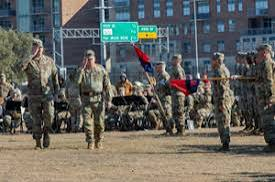
On 31 January 2026, nearly 500 Soldiers of the 36th Infantry Division Headquarters and Headquarters Battalion (HHBN) of the Texas Army National Guard stood in formation with family members, friends, and community leaders at Camp Mabry in Austin, Texas. This mobilization ceremony marked a pivotal milestone in the unit’s deployment to the Middle East in support of Operation Spartan Shield.
The 36th Infantry Division, known colloquially as the “Arrowhead Division,” has a history stretching back more than a century. It was first organized in 1917, and its Soldiers have served in every major American conflict since World War I — from battlefields in Europe to peacekeeping missions in the Balkans, and multiple modern deployments in the Middle East.
At the ceremony, commanding officers spoke not only of readiness and duty, but also of the deep bonds that tie Soldiers to their Texas communities. Maj. Gen. John “Brad” Bowlin, commander of the division, addressed the formation with an emphasis on professionalism, unity, and the vital support families provide throughout the deployment cycle. The event blended tradition with solemn pride, reflecting both the seriousness of the mission ahead and the supportive spirit of those gathered.
Among the Soldiers was Sgt. 1st Class Joshua Caldwell, a senior intelligence analyst who spoke of the meaning behind his service: the opportunity to contribute to national defense and strengthen partnerships abroad. His sentiments were echoed by many service members — a recognition that being part of this mission required readiness, skill, and a willingness to represent their nation overseas.
Family members at the ceremony shared a complex mix of emotions: pride in their loved ones’ dedication, anxiety about the upcoming separation, and a quiet confidence in the strength of the unit departing. One spouse described the event as both emotional and uplifting, acknowledging that while deployment brings challenges, it also brings meaningful purpose.
Following additional training and mission validation, the 36th Infantry Division will formally case its colors in a ceremony scheduled for March, symbolizing the unit’s transition from preparation to deployment. Once in theater, these Guardsmen will be part of Task Force Spartan — a formation focused on enhancing regional security, providing mission support, and maintaining operational readiness in partnership with allied forces.
For the Soldiers of the 36th, this deployment continues a legacy of service and resilience. From the amphibious landings of World War II to current missions in Southwest Asia, the division has long answered the nation’s call. Today, as they prepare to embark on this new chapter, their families and communities stand with them, proud of their courage and unwavering in their support.
2nd Mobile Brigade Combat Team, 10th Mountain Division Assigned for Middle East Deployment
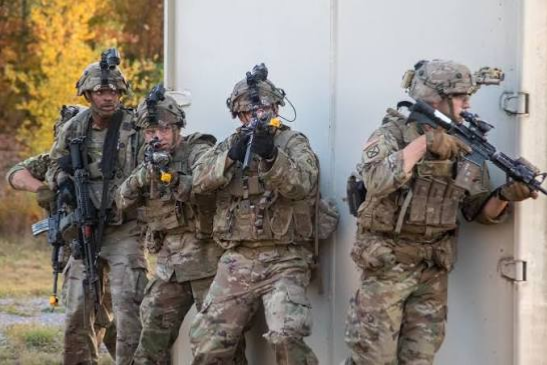
On 2 February 2026, the U.S. Army announced that the 2nd Mobile Brigade Combat Team (2nd MBCT), 10th Mountain Division, based at Fort Drum, New York, will deploy to the broader Middle East region under U.S. Central Command as part of an ongoing rotational mission.
The 2nd MBCT — often referred to as a “mobile brigade combat team” — represents one of the Army’s most adaptive and rapidly deployable infantry formations. Designed to operate across a wide range of environments, from urban centers to rugged terrain, this brigade is trained to conduct offensive, defensive, and stability operations alongside partner forces.
This deployment will see the 2nd MBCT replace the 2nd Infantry Brigade Combat Team of the 34th Infantry Division (Iowa Army National Guard) in theater, extending the United States’ longstanding commitment to regional security operations. That includes supporting Operation Inherent Resolve, a multinational effort focused on degrading extremist organizations and building partner capacity in Iraq, Syria, and surrounding areas.
Preparation for this deployment began months in advance, with Soldiers undergoing rigorous training cycles at Fort Drum. These include simulated operational environments designed to sharpen infantry skills, enhance coordination among units, and ensure readiness for mission tasks. The brigade’s focus on mobility ensures that Soldiers can maneuver quickly and effectively, even in dispersed operational settings where rapid adaptation is critical.
Light infantry units like the 2nd MBCT bring capabilities that stretch beyond traditional combat — from advising allied security forces to conducting joint exercises that reinforce cooperation and interoperability. Their presence overseas supports ongoing efforts to foster stability and maintain deterrence against threats to regional security.
For Soldiers and leaders preparing to deploy, this mission represents both a professional challenge and a continuation of the division’s storied history of deployments, including multiple engagements in Iraq and Afghanistan over the past two decades. As they move forward, these service members embody the Army’s core values and carry forward the responsibilities entrusted to them by the nation.
