Each week, Connecticut Veterans Bulletin pauses on RED Friday to honor those serving far from home — the men and women who wear the uniform of the United States with pride, and the Blue Star families whose quiet strength sustains them. Their service ensures that America’s commitments across the globe remain unbroken.
This week, our nation’s presence in the Indo-Pacific stands as a visible reminder of resolve and readiness. U.S. allies near China are strengthening naval mine warfare cooperation, ensuring that key maritime routes remain open and secure. From strategic chokepoints to deep-sea operations, these joint efforts reaffirm the U.S. Navy’s longstanding promise to defend freedom of navigation and safeguard international waters.
At the same time, Marine Fighter Attack Squadron 542 returned from its historic deployment with the advanced F-35B Lightning II. The Marines demonstrated not only the aircraft’s formidable capabilities but also the adaptability and endurance of those who operate them. Their six-month journey across the Pacific exemplified the commitment of every Marine — ready to fight tonight and to defend tomorrow.
Meanwhile, the USS Nimitz Carrier Strike Group continued its operations through the Singapore Strait and the South China Sea, reinforcing America’s enduring partnerships and strategic posture in one of the world’s most contested maritime regions. Each flight, maneuver, and watch rotation carried with it the weight of American resolve — and the unwavering support of families waiting back home.
Every deployment, every mission, and every hour spent on foreign waters reflect the bond between those who serve and those who wait. On this RED Friday, we remember them all — the Sailors, Marines, Airmen, Soldiers, Guardians, and their families — united in duty and bound by the shared purpose of protecting freedom wherever it’s challenged.
U.S. Allies Near China Boost Naval Mine Warfare
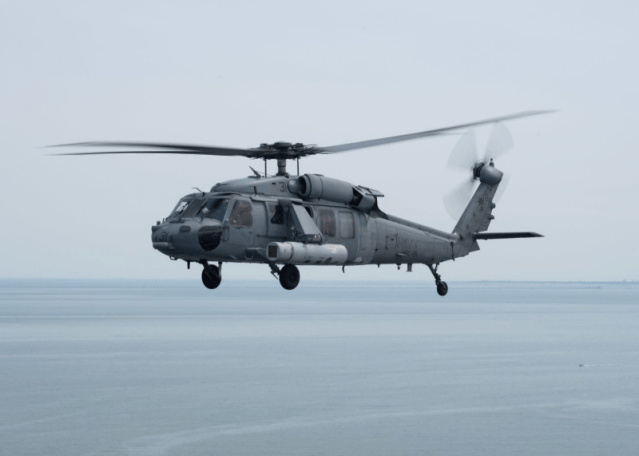
In a region where the littoral zone can quickly become contested and choke-points are narrow, U.S. allies around China are significantly upgrading their mine and counter-mine warfare capabilities — and the United States is supporting those moves as part of a broader effort to strengthen maritime deterrence.
According to a recent report, Washington is increasing arms transfers and training for Pacific allies such as Japan, South Korea, Australia and the Philippines to boost their ability to lay defensive minefields, sweep enemy mines, and deploy unmanned mine counter-measure systems.
Why mines matter now
Undersea and seabed mines remain a cost-effective way for adversaries to challenge surface and submarine forces, restrict port access, and disrupt logistics. Analysts warn that China, Russia and Iran have expanded their mine stockpiles and improved precision mine‐deployment capabilities, which raises the stakes for allied navies.
In response, U.S. Pacific Fleet officials report a renewed emphasis on mine warfare readiness: specialized task groups, range expansions, and integrated allied training reflect growing concern about the vulnerability of sea-lanes and chokepoints near Taiwan, the South China Sea, and the East China Sea.
Training, equipment, and alliance integration
- Host nations are acquiring or upgrading systems such as the U.S. AN/SLQ-48 mine reconnaissance system, remote underwater vehicles (ROVs) for mine clearance, and mobile mine-lay capability.
- Multinational exercises now incorporate mine warfare components — some include practice laying and sweeping dummy minefields, coordinated clearance operations under allied command, and rapid redeployment from littoral to open-sea scenarios.
- Japan’s Maritime Self-Defense Force recently reported expanded mine-countermeasure squadron operations, including unmanned surface vehicles (USVs) deployed with Australian and U.S. units.
- U.S. liaison officers and training teams are embedded within partner-navy mine warfare units, facilitating tactics sharing and interoperability enhancements.
Strategic implications
By boosting allied mine-warfare capabilities, the U.S. aims to complicate adversary calculations. In a contingency, mines could be used to deny access or restrict fleet movement; by training allies to both lay and sweep mines, the allied coalition expands its deterrence toolkit. Moreover, because mines are relatively low-cost compared to major surface combatants, their deployment can create asymmetric effects — yet allied focus on counter-mine work helps mitigate that risk.
Takeaway
The shift signals an important change: mine warfare, once overshadowed by large-surface-combat and air-power narratives, is back at the centre of maritime strategy. As China continues to expand its naval reach, the U.S. and its allies are quietly reinforcing one of the most fundamental domains of naval power — the ability to keep the sea lanes open, counter adversary denial efforts, and ensure littoral mobility.
For naval personnel and partner-navies, the work may not always attract headlines, but it remains vital. And for families of service members deployed to mine-warfare units or clearance groups, the mission underscores that every key capability — even those beneath the waves — counts in global readiness.
Marine Fighter Attack Squadron 542 Returns from Historic Deployment with F-35B Lightning II
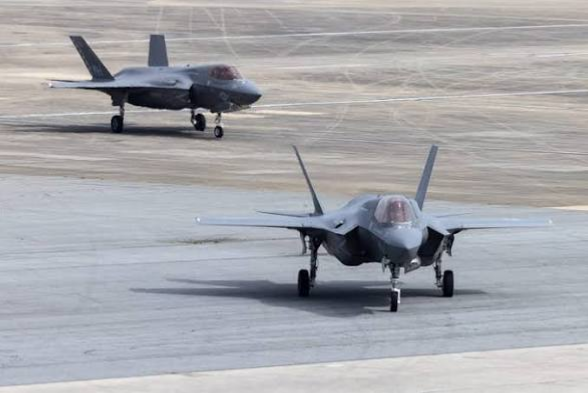
MCAS Cherry Point, North Carolina — 17 October 2025. The U.S. Marine Corps’ Fighter Attack Squadron 542 (VMFA-542) has returned from a five-month deployment to the CENTCOM (U.S. Central Command) area of responsibility, marking a milestone for Marine aviation with its full complement of F-35B Lightning II jets.
During the deployment, VMFA-542 flew 1,099 combat sorties and logged over 4,736 mishap-free flight hours. Their role ran the gamut: close air support (CAS), armed overwatch, defensive counter-air (DCA) missions, and integration with coalition air components. The unit achieved these figures with a 12-aircraft fleet of F-35B jets, underscoring readiness and operational maturation of the Marine Corps’ fifth-generation fleet.
Operational highlight & deployment significance
- The deployment placed VMFA-542 at the front of Marine Corps aviation capability, proving that the F-35B can sustain high-tempo combat sortie rates in austere theaters.
- The squadron embedded with Joint Force components, aligning with Marine Expeditionary Units (MEUs), Navy carrier operations, and multinational partners to deliver flexible strike and air-defense capability.
- Lt. Col. Carlo F. Bonci, VMFA-542 Executive Officer, called the deployment “historic” — noting that the squadron set new benchmarks for readiness, integration, and mission capability.
Aircraft and capability details
The F-35B variant offers vertical/short take-off and landing (V/STOL) capability, allowing Marine expeditionary air power to deploy from amphibious assault ships and austere airfields. The jets carry stealth sensors, networked data-links, advanced targeting and strike weapons, enabling missions across the air-to-air and air-to-ground spectrum. For VMFA-542, this meant operating far from the continental U.S., sustaining maintenance in remote conditions, and delivering day-and-night combat capability.
Impact for Marines and families
For the squadron’s Marines and aviation maintainers, the deployment demanded endurance, technical excellence, and cohesion under stress. They lived “forward” for months, coordinated in hostile-appropriate environments, and maintained mission-capable rates under evolving operational demands. Families back home witnessed this service: missing birthdays, holidays, and routine connection — yet standing proudly as their Marines set new operational standards.
Strategic takeaway
VMFA-542’s deployment signals a maturation of Marine air power and joint integration. It demonstrates that fifth-generation aircraft have moved from incremental transition to frontline capability. For regional partners and adversaries alike, the message is clear: U.S. Marine air power is agile, persistent, and integrated. In a world of contested aerodromes and maritime uncertainty, that capability matters.
USS Nimitz Carrier Strike Group Transits Singapore Strait, Operates in South China Sea
Singapore Strait — 17 October 2025. The aircraft carrier USS Nimitz (CVN-68) and its accompanying Carrier Strike Group have transited the Singapore Strait and entered the South China Sea, commencing operations within the U.S. 7th Fleet area of responsibility.
A U.S. Navy official confirmed the transit and stated that the strike group will conduct flight operations, surface maneuvering, and coordination with allied navies as part of ongoing efforts to preserve a free and open Indo-Pacific. According to open-source ship-tracking data, Nimitz sailed eastbound through the narrow Singapore commercial lane before beginning range operations in the maritime corridors of the South China Sea.
Operational scope
- The strike group’s presence reinforces U.S. naval posture in a region where freedom of navigation, maritime claims, and sea-lane access are under heightened scrutiny.
- While official details of the drill remain limited, U.S. Pacific Fleet communications emphasise the group’s ability to project air and sea power rapidly and operate seamlessly with regional partners.
- The transit of key maritime choke points with the carrier and its escorts signals not only presence-but-persistent readiness in contested waterways.
Carrier capabilities & mission context
USS Nimitz is a Nimitz-class nuclear-powered aircraft carrier equipped with a full air wing of fighter, strike, electronic-warfare, airborne-early-warning and support aircraft. Its transit into the South China Sea is a demonstration of sustained maritime capability — from fixed-wing launches at sea to high-end surface and subsurface operations. By sailing through the Singapore Strait, the group also underscores the U.S. ability to position high-end forces rapidly from open seas into important operational zones.
Strategic significance
China’s naval expansion, including its third carrier and increased warship and submarine production, has placed additional emphasis on U.S. and allied maritime strategy. The presence of Nimitz and its strike group in this region serves multiple purposes: deterrence of aggressive maritime claims, assurance of regional allies, and demonstration of operational freedom under international law.
What it means for sailors and families
For the crew aboard the Nimitz and its escorts, this deployment means months away from home, continuous operations at sea, frequent launches and recoveries of aircraft, and close coordination with multiple allied navies and air forces. Blue-Star families and loved ones back home endure the challenges of separation, yet stand as the silent strength behind every mission. Each sailor’s watch matter: each sortie count, each deck cycle, and each signal in the horizon connects back to home.
