Origins and Purpose of the Observance
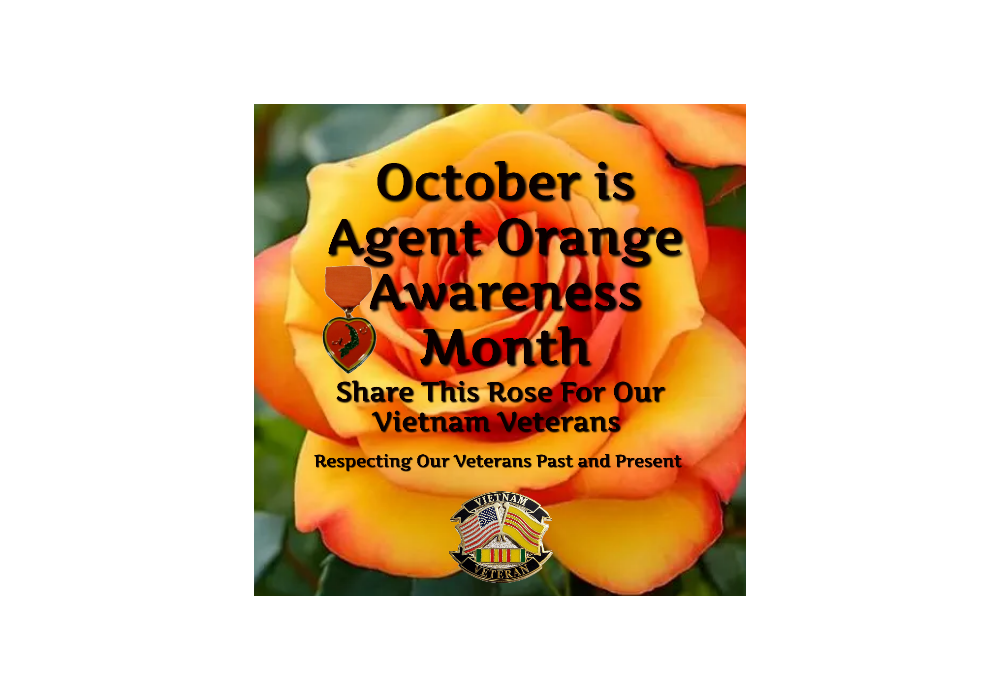
While Agent Orange Awareness Day has long been observed on August 10 (commemorating the day in 1961 when the first spraying is believed to have occurred) , some advocacy groups and veterans organizations extend observance through the month of October to foster a broader public campaign. The goal is not only remembrance, but education, support, and renewed calls for accountability.
Over the years, this extended observance has allowed space for public programming: memorial services, community presentations, veteran health fairs, and fundraising for cleanup and health services. It also helps sustain media attention beyond a single day. In this expanded format, Agent Orange Awareness Month can serve as a unifying platform for veteran groups, environmental organizations, and affected communities globally.
Historical Background & Scope of Use
Between 1961 and 1971, the United States military sprayed nearly 20 million gallons of herbicides—including Agent Orange—over Vietnam, Laos, and Cambodia in a campaign known as Operation Ranch Hand. Agent Orange itself was the predominant mixture used, containing traces of the extremely toxic dioxin compound TCDD.
Recent scholarship has refined the estimates of spray zones. Declassified satellite imagery and historical reconstructions indicate that previously undercounted areas—particularly in southeastern Laos during the so-called “Secret War”—were also heavily sprayed, expanding the suspected footprint of exposure. Estimates suggest that up to 3 million Vietnamese and thousands of Laotians may have been exposed. The Vietnam Red Cross, for example, has estimated that as many as three million civilians in Vietnam have been affected, including over 150,000 children born after the war with serious birth defects.
In the United States, nearly 3 million military personnel served in Vietnam and many potentially incurred exposure to herbicides.
Health Consequences: What We Know & What Remains Uncertain
The health effects of Agent Orange exposure remain complex, contested, and evolving. Because of the decades that have elapsed, the mixed nature of exposures (some veterans were exposed in small degrees, others directly), and methodological challenges in epidemiology, many associations remain probabilistic rather than definitively causal.
Recognized Conditions & Presumptive Diseases
The U.S. Department of Veterans Affairs maintains a list of presumptive diseases—conditions officially recognized as likely linked to Agent Orange or dioxin exposure—thus qualifying affected veterans for benefits. These include, among others:
- Prostate cancer
- Respiratory cancers
- Type 2 diabetes mellitus
- Hodgkin’s disease and non-Hodgkin’s lymphoma
- Soft tissue sarcoma
- Chronic B-cell leukemia
- Peripheral neuropathy
- Skin conditions such as chloracne
- Porphyria cutanea tarda
- In children of exposed veterans: spina bifida
- Additional conditions that the VA considers may be associated (but not certified as presumptive) include bladder cancer (per a 2023 study)
One notable recent development: a large VA health-system cohort study (2.5 million male Vietnam veterans) found a modest but statistically significant increased risk of bladder cancer among those with documented Agent Orange exposure. This adds to the ongoing body of evidence linking herbicide exposure to a wider portfolio of diseases.
Mechanisms, Gaps & Unresolved Questions
Dioxin (TCDD) is a bioaccumulative toxin: once inside the body or environment, it can persist over time and concentrate in fatty tissues. The pathways of harm include endocrine disruption, oxidative stress, immunological dysregulation, and epigenetic changes.
However:
- Many studies rely on self-reported exposure classification or location-based proxies (e.g., service in certain regions) rather than quantitative biomarkers, which weakens causal inference.
- The Health and Medicine Division (HMD) (formerly Institute of Medicine) has conducted periodic reviews (from 1994 through 2018) and found that, while evidence supports some associations, for many conditions the evidence is “limited or suggestive” rather than definitive.
- Intergenerational effects—such as birth defects in children of exposed veterans—remain controversial. The 2018 HMD report did not find conclusive evidence linking exposure in Vietnam-era veterans to birth defects in descendants, though critics argue that the data are too limited to rule out risk.
- In Vietnam and Southeast Asia, health data are often fragmented, under-resourced, or under-published, making it hard to fully quantify civilian or generational impacts.
Thus, while many conditions are presumed by U.S. policy, scientific research continues to push to extend or refine these links.
Environmental Legacy & Remediation Efforts
Beyond human health, Agent Orange produced long-lasting environmental contamination. Dioxin lingers in soils, river sediments, and the food chain, especially around military airbases where herbicides were stored, mixed, or loaded.
Key challenges and updates in recent years include:
- Hotspot cleanup at former airbases: Bien Hoa has long been considered one of Vietnam’s worst dioxin “hotspots.” In recent years, U.S. and Vietnamese authorities initiated a multi-year, multi-million-dollar remediation program. Soil removal, containment, high-temperature treatment, and sediment capping are part of the plan.
- Funding threats & delays: In 2025, reported cuts to USAID threatened to stall or suspend portions of the ongoing cleanup in Vietnam, putting progress at risk.
- Mapping and reclassification of sprayed zones: New declassified imagery is helping refine estimates of contaminated zones (e.g. in Laos) and guiding environmental survey work.
- The U.S.–Vietnam Dialogue Group on Agent Orange/Dioxin (launched in 2007) continues to push for cooperation: funding, scientific exchange, capacity building, local remediation, and treatment for affected communities.
Despite progress, many former bases and affected regions still lack adequate cleanup, meaning that the toxic legacy continues to seep into water, food, and human bodies.
Advocacy, Commemoration & Support During Awareness Month
During Agent Orange Awareness Month, a number of coordinated efforts typically play out:
- Veterans ceremonies & candlelight observances
On or around August 10 and throughout October, veteran organizations often light candles or host symbolic displays (e.g., placing orange candles at the Vietnam Veterans Memorial) to represent lives lost or still suffering. - Public education events
Lectures, panel discussions, film showings, and exhibitions educate the public on the historical, scientific, and political dimensions of Agent Orange. - Health screenings & benefits outreach
Local VA or veteran service offices may host “Agent Orange clinics” to help veterans check eligibility, schedule environmental exposure exams, or file benefit claims. - Media campaigns & storytelling
Sharing personal stories—veterans, family caregivers, children affected—amplifies awareness and underscores that the issue remains urgent. - Fundraising & grants
Nonprofits often use the month to solicit donations for veteran health services, restoration projects, or support for Vietnamese and Laotian communities. - Policy and advocacy pushes
Many organizations release updated reports or policy recommendations during this month to influence congressional appropriations, foreign aid budgets (e.g. USAID), or U.S.–Vietnam cooperation.
What’s New & What Needs More Attention
Compared to previous years, here are emerging elements and gaps to highlight in the current observance:
- The bladder cancer study (2023) is one of the recent additions to the evidence base, underscoring that the list of health effects may still expand.
- The vulnerability of aging Vietnam veterans is intensifying; many are now in their 70s–80s, contending with multiple comorbidities. Stories such as Connecticut veteran John Callahan’s—who suffers from diabetes, liver disease, and related ailments—underscore how veterans continue to suffer decades later.
- Budget cuts in 2025 to U.S. foreign aid have jeopardized continuity in cleanup programs in Vietnam, threatening to reverse gains and leave contaminated sites unaddressed.
- The intergenerational debate remains unresolved; more longitudinal, multi-generational research is needed to clarify risk to descendants—and whether genetic or epigenetic pathways transmit harm.
- International justice and support: Vietnamese and Laotian victims often receive far fewer resources or recognition than U.S. veterans. Awareness month provides an opportunity to center their needs.
- Public awareness fatigue: As time passes, public memory dims. Sustained campaigns must innovate to reach new generations and maintain pressure on policymakers.
Call to Action & Recommendations
- Veterans and families
- If you served in Vietnam or in units with possible herbicide exposure, contact your local VA Environmental Health Coordinator for an Agent Orange exposure exam.
- Review your entitlement for presumptive conditions and ensure medical records support any claims.
- Participate in community or memorial events during the month to strengthen collective awareness.
- Researchers & health professionals
- Prioritize long-term cohort, biomarker, and epigenomic studies to clarify causal links and intergenerational risk.
- Support collaborative research with Vietnamese, Laotian, Cambodian institutions to expand data from affected populations.
- Policymakers & funders
- Secure consistent funding for U.S.–Vietnam cooperative remediation programs, resisting budget cuts that jeopardize progress.
- Expand compensation and healthcare support to cover newly recognized conditions (e.g. bladder cancer) as evidence grows.
- Consider mechanisms to support Vietnamese and Laotian communities impacted by dioxin through joint clean-up, healthcare, and infrastructure aid.
- Public & media
- Use social media campaigns, human-interest storytelling, and local events to keep Agent Orange in the public eye—especially for younger generations unfamiliar with the war’s chemical legacy.
- Partner with schools, libraries, and veteran organizations to host talks or displays during October.
Conclusion
Though the Vietnam War ended decades ago, the scars of Agent Orange remain active and evolving. Agent Orange Awareness Month is not merely a retrospective tribute—it is a living campaign for justice, healing, and global responsibility. As scientific understanding deepens, as veterans age, and as contaminated soils continue to leach toxins, we must commit to sustained advocacy, research, and international cooperation. This October, we observe not just to remember—but to act.