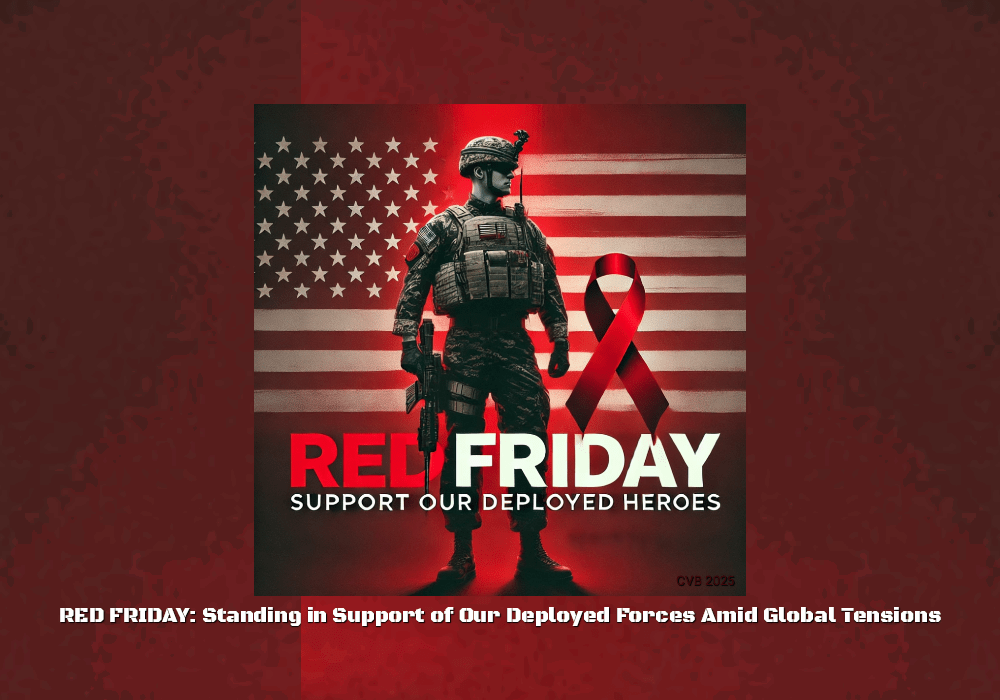
RED FRIDAY: Standing in Support of Our Deployed Forces Amid Global Tensions
As the world watches escalating tensions unfold across multiple regions, the sacrifices of our deployed service members take center stage. From bolstering U.S. military presence in the Indo-Pacific and Middle East to engaging in cyber defense operations, our men and women in uniform continue to serve on the front lines, ensuring global stability. On this RED FRIDAY, March 28, 2025, the Connecticut Veterans Bulletin (CVB) community unites in honoring those deployed and rallying behind their families.
Global Deployments: The Cost of Readiness
The past week has highlighted the increasing demands placed on our military personnel as the U.S. strengthens its presence across key strategic locations:
- USS Carl Vinson and USS Nimitz Carrier Strike Groups have been repositioned to enhance deterrence in the Indo-Pacific and Middle East, responding to rising tensions in the Red Sea and the South China Sea. These Sailors are now far from home, standing vigilant to safeguard international waters.
- The West Virginia National Guard’s cyber forces have been training in Qatar as part of Eagle Resolve 2025, working alongside partner nations to counter cyber threats. Their expertise is a silent but crucial component of modern warfare.
- Diego Garcia, a vital U.S. military outpost, has seen a significant increase in American firepower, with B-2 stealth bombers deployed in response to Middle Eastern conflicts. These Airmen, stationed thousands of miles from their loved ones, exemplify the endurance required to maintain global security.
Each of these missions represents a heavy burden carried by the deployed and their families back home. While service members stand watch in dangerous regions, their spouses, children, and parents navigate daily life with a deep sense of duty, uncertainty, and resilience.
The Meaning of RED FRIDAY
RED FRIDAY—Remember Everyone Deployed—is not just a tradition; it is a promise to never forget the sacrifices of those in harm’s way. It is a way to show that their service is seen, valued, and honored by a grateful nation. Wearing red on Fridays is a simple yet powerful way to send a message of unity and appreciation.
For the families left behind, RED FRIDAY reminds them that they are not alone. The absence of a loved one is felt in countless ways—holidays spent apart, missed milestones, and the emotional weight of an uncertain homecoming. Support for these families is just as important as support for the troops on the front lines.
How You Can Show Support
On this RED FRIDAY, consider taking action:
- Wear Red: Whether at work, school, or out in the community, wearing red is a visible sign of solidarity.
- Check on Military Families: A simple message or an offer to help with daily tasks can make a world of difference.
- Donate or Volunteer: Organizations that support military families always need extra hands.
- Educate Others: Share the stories of those deployed and remind people of their sacrifices.
As our service members stand watch in the Indo-Pacific, Middle East, and cyberspace, let’s make sure they know their sacrifices are not forgotten. RED FRIDAY is more than a gesture—it is a movement of unwavering support for those who give so much.
This March 28, 2025, wear red, spread awareness, and stand with our deployed heroes and their families. Because when they serve, we stand behind them.
U.S. Navy Shifts Carrier Deployments to Strengthen Indo-Pacific and Middle East Operations
Carrier Movements Amid Rising Global Tensions
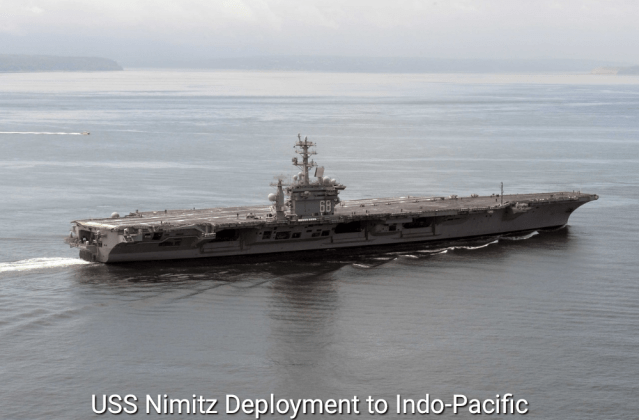
On March 26, 2025, the U.S. Navy repositioned key aircraft carriers to address escalating security concerns in the Indo-Pacific and Middle East. The USS Carl Vinson Carrier Strike Group was directed toward the Middle East, while the USS Nimitz prepared for deployment to the Indo-Pacific. These strategic moves reflect ongoing efforts to counter threats in both regions while maintaining a global military presence.
Middle East Operations: Countering Houthi Aggression
The USS Carl Vinson’s redeployment to the Middle East follows the extension of the USS Harry S. Truman’s mission in the region by at least a month. This decision comes amid heightened attacks by Houthi militants in the Red Sea, which have disrupted commercial shipping and drawn international concern. The presence of two carrier strike groups aims to deter further aggression, protect maritime routes, and counter Iranian-backed destabilization efforts.
On March 21, 2025, President Trump authorized an expansion of military actions against the Houthis, signaling a shift toward a more forceful response to ongoing threats. Defense Secretary Pete Hegseth reaffirmed the administration’s commitment to ensuring stability in the Middle East through a strengthened naval presence.
Indo-Pacific Deployment: Asserting Naval Strength
Meanwhile, the USS Nimitz Carrier Strike Group is preparing for deployment to the Indo-Pacific, reinforcing the U.S. commitment to maintaining a free and open region. This move follows increased Chinese military activity around Taiwan and the South China Sea. The Nimitz’s presence is expected to reassure U.S. allies while demonstrating American naval power in response to growing tensions.
Strategic and Political Considerations
The simultaneous deployment of two aircraft carrier strike groups highlights the Navy’s ability to address multiple global threats, but it has sparked debate regarding the long-term sustainability of such operations.
- Supporters of the strategy argue that maintaining a strong naval presence is crucial for deterring adversaries, supporting allies, and ensuring the free flow of commerce. They see these deployments as a necessary demonstration of U.S. strength in two critical regions.
- Critics raise concerns about the strain on naval resources, including extended deployments that place pressure on personnel and equipment. Some argue that prolonged operations in these regions could escalate tensions rather than stabilize them.
With these deployments now underway, the effectiveness of this dual-theater strategy will be closely watched by both allies and adversaries in the coming weeks.
West Virginia National Guard Participates in Multinational Cyber Defense Exercise in Qatar
Engagement in Eagle Resolve 2025
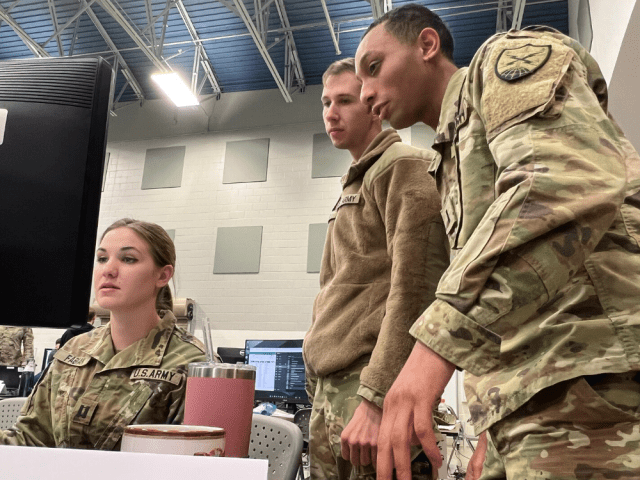
On March 25, 2025, the West Virginia National Guard’s Cyber Protection Team – Mission Element (CPT-ME) joined over 30 cyber operators from six nations in Doha, Qatar, for the multinational exercise Eagle Resolve 2025. This annual exercise aims to enhance collaborative responses to cyber threats among allied nations.
Objectives and Activities
The primary goal of Eagle Resolve 2025 is to strengthen international partnerships and improve collective cyber defense capabilities. Participants engaged in simulated cyberattack scenarios designed to test and refine their abilities to detect, analyze, and mitigate cyber threats in real-time. U.S. Army Capt. William Pauley, leading the West Virginia National Guard’s effort, emphasized the importance of such collaborations, stating, “Cybersecurity is a team effort, and the experience gained during ER25 will directly impact how we defend against cyber threats in the future.”
Strategic Significance
The involvement of the West Virginia National Guard in Eagle Resolve 2025 underscores the increasing recognition of cyber threats as critical national security concerns. By participating in international exercises, the U.S. aims to bolster its cyber defense posture and foster interoperability with allied nations. This engagement aligns with broader efforts to address the evolving landscape of cyber warfare and to develop cohesive strategies for collective defense.
Diverse Perspectives
The participation of U.S. military units in international cyber defense exercises elicits varied viewpoints:
- Supportive Viewpoint: Advocates argue that such engagements are essential for building strong international alliances and enhancing the collective ability to respond to cyber threats. They contend that collaborative exercises like Eagle Resolve 2025 provide invaluable experience and promote the sharing of best practices among partner nations.
- Critical Perspective: Some critics express concerns about the potential exposure of sensitive information and tactics during multinational exercises. They question whether the benefits of such collaborations outweigh the risks associated with sharing cyber defense strategies with foreign entities.
These differing perspectives highlight the complexities involved in international military collaborations, especially in the rapidly evolving domain of cybersecurity.
Conclusion
The West Virginia National Guard’s participation in Eagle Resolve 2025 represents a proactive approach to addressing global cyber threats through international cooperation. While opinions may vary regarding the implications of such engagements, they undeniably play a role in shaping the future of collective cyber defense strategies.
U.S. Enhances Military Presence at Diego Garcia Amid Escalating Middle East Tensions
Deployment of B-2 Spirit Stealth Bombers
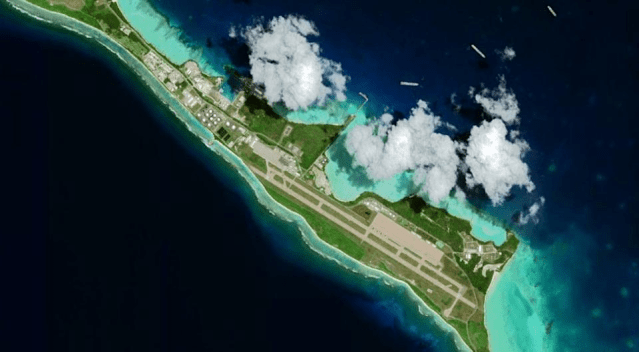
On March 26, 2025, the United States significantly reinforced its military capabilities at Diego Garcia, a strategically located British-controlled island in the Indian Ocean, by deploying B-2 Spirit stealth bombers. This action is widely interpreted as a direct response to escalating tensions involving Iran and the Houthi rebels in Yemen.
Satellite imagery and reports indicate that at least seven B-2 bombers have been stationed at Diego Garcia. These aircraft, known for their stealth capabilities and substantial payload capacity, are accompanied by support aircraft, including C-17 cargo planes and aerial refueling tankers. The deployment underscores the island’s role as a pivotal launch point for U.S. military operations in the Middle East.
Strategic Importance of Diego Garcia
Diego Garcia has long been a cornerstone of U.S. military strategy, serving as an “unsinkable aircraft carrier” that facilitates rapid deployment across the Middle East and Indo-Pacific regions. Its remote location offers a secure base for air and naval operations, making it integral to power projection and logistical support.
Political and Diplomatic Implications
The bolstering of military assets at Diego Garcia has elicited varied reactions:
- Supportive Viewpoint: Proponents argue that enhancing the U.S. military presence is a necessary deterrent against Iranian aggression and Houthi rebel activities. They contend that a robust posture demonstrates commitment to regional allies and the protection of vital maritime routes.
- Critical Perspective: Critics caution that such military build-ups may exacerbate regional tensions and increase the risk of direct conflict. They advocate for diplomatic solutions and express concern over the potential for unintended escalation.
Additionally, the sovereignty of Diego Garcia remains a contentious issue. Mauritius has expressed intentions to renegotiate terms concerning the Chagos Archipelago, where Diego Garcia is located, citing historical and territorial claims. This development introduces complexities to the strategic use of the island by the U.S. military.
Conclusion
The United States’ deployment of B-2 bombers to Diego Garcia reflects a strategic maneuver aimed at addressing immediate security concerns in the Middle East. While it serves as a deterrent, the move also brings to the forefront diplomatic challenges and the need for balanced engagement to maintain regional stability.
