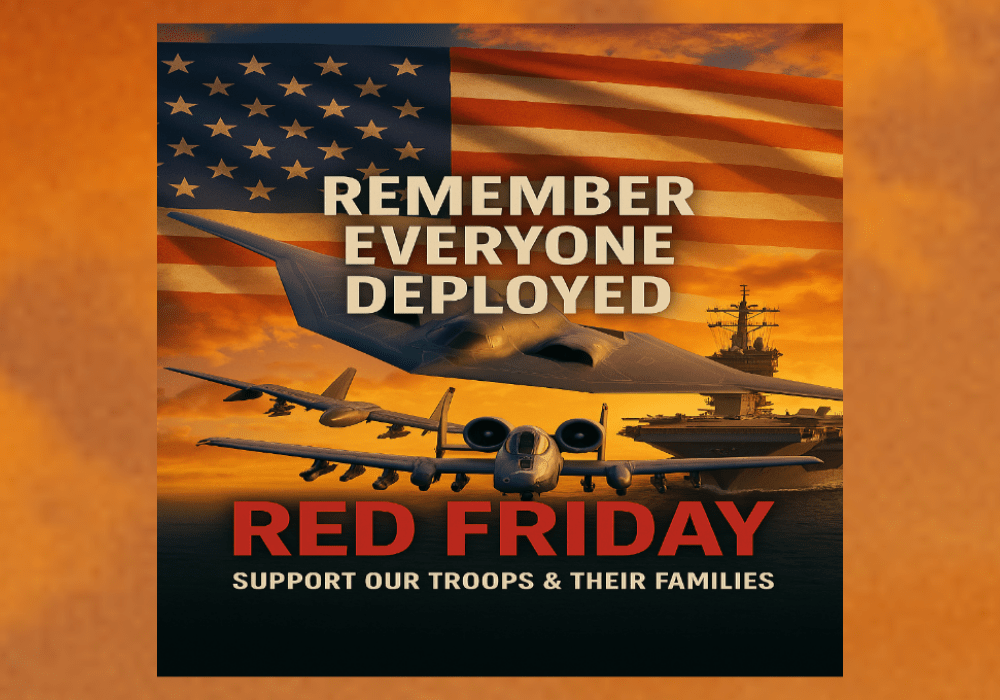
U.S. Forces Intensify Middle East Presence: A Tribute to Deployed Troops and Their Families
As U.S. military presence continues to grow in the Middle East, with strategic deployments of B-2 bombers, additional aircraft carriers, and a second bomber strike group, we turn our attention today to the brave men and women serving abroad, as well as the families they leave behind. These courageous individuals are the heart of our military strength, and the sacrifices made by both the troops and their families cannot go unnoticed.
The recent deployment of B-2 bombers and the USS Carl Vinson to the region marks just another chapter in the ongoing efforts to ensure peace and stability in an area marked by ongoing threats from Iran, Houthi rebels, and the volatile dynamics of the region. While these missions are critical to national security, they also bring immense emotional weight for those who are deployed, as well as for the families eagerly waiting for their return.
The service members who board these aircraft, ships, and bombers, and who conduct operations from remote outposts, carry with them the hopes and dreams of their loved ones. Every airstrike, every naval patrol, and every mission completed brings them closer to the ultimate goal: ensuring the safety of those they protect and safeguarding the freedoms that we often take for granted. Their daily sacrifices—enduring long stretches away from home, living in uncertain conditions, and facing unthinkable dangers—are a testament to their unwavering commitment.
But these service members are not alone in their sacrifice. Their families are there, too, waiting patiently back home. The mothers, fathers, wives, children, and friends who stand by them, offering support from afar, share in the responsibility of this national service. Their role may not involve boots on the ground, but their unwavering support and resilience are equally important. Every day they wait, every moment they spend worrying for their loved ones, is a reminder of the unseen sacrifices that happen behind the scenes. The patience and strength they display form an essential part of the military’s strength.
As we honor the service members who stand on the front lines, let us also remember the families who continue to support them, often in silence. Both groups face challenges, but through unity and shared purpose, they endure. RED FRIDAY serves as a reminder for us to support the brave men and women who wear the uniform, as well as the families who stand by them, no matter the distance or the hardship.
Today, we celebrate all of them. Our deployed troops, who face the unknown in foreign lands, and their families who wait with bated breath, knowing that their sacrifice is just as vital to the mission as the service members’ own. We honor them with deep respect and gratitude.
#REDFriday #DeployedTroops #MilitaryFamilies #SupportOurTroops #USMilitary #MiddleEastDeployment #SacrificeAndStrength #FamilySupport
A-10 Warthogs Redeployed to the Middle East Amid U.S. Military Buildup
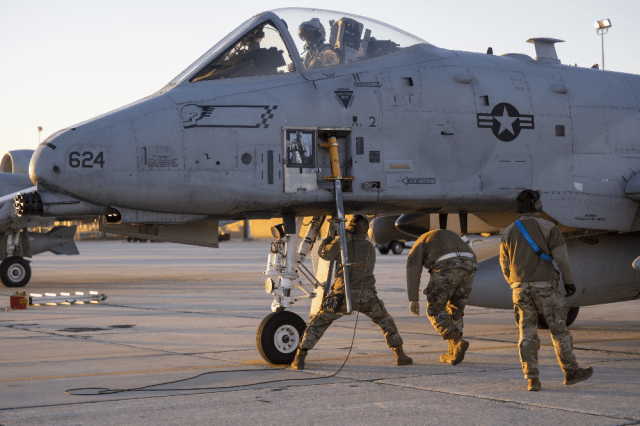
In response to escalating tensions in the Middle East, the United States has strategically redeployed A-10 Thunderbolt II aircraft, commonly known as “Warthogs,” to the region. This move is part of a broader initiative to enhance U.S. military presence and deterrence capabilities.
Deployment Details
The initial deployment saw A-10s arriving at Al Dhafra Air Base in the United Arab Emirates on March 31, 2023. These aircraft, operated by the 75th Expeditionary Fighter Squadron and supported by the 75th Expeditionary Fighter Generation Squadron from Moody Air Force Base, Georgia, were integrated into the 380th Air Expeditionary Wing. Their primary mission is to provide close air support (CAS) within the U.S. Central Command area of responsibility. Brigadier General David R. Lopez, commander of the 380th AEW, emphasized that the A-10s’ arrival would bolster airpower delivery and regional defense while also strengthening partnerships with Emirati hosts.
Strategic Context
The redeployment of A-10s aligns with the U.S. Department of Defense’s strategy to address growing threats in the Middle East, particularly from Iran and its proxies. Defense Secretary Pete Hegseth extended the deployment of the USS Harry S. Truman Carrier Strike Group in the region and ordered the USS Carl Vinson group to join, aiming to deter aggression and ensure the free flow of commerce. Additionally, A-10 attack planes and B-2 stealth bombers have been dispatched to reinforce U.S. military capabilities.
A-10’s Role and Capabilities
The A-10 Thunderbolt II, introduced in 1975, is renowned for its effectiveness in close air support missions. Designed specifically to support ground troops, the A-10 excels in destroying enemy forces and infrastructure. Its recent deployment offers U.S. Air Forces Central Command an opportunity to experiment with CAS capabilities, aiming to achieve a robust and diverse force posture.
Future of the A-10 Fleet
Despite its proven capabilities, the A-10 fleet is undergoing significant reductions. In 2024, the Air Force retired at least 39 A-10C aircraft, marking a notable increase in divestments as the service moves toward phasing out the aircraft. The National Defense Authorization Act signed in December 2024 reduced the minimum number of A-10s the Air Force must retain from 135 to 96. Nevertheless, the A-10 continues to be utilized in overseas operations, including training exercises and combat missions.
Additionally, discussions have emerged regarding the potential transfer of retired A-10s to allied nations. The Senate Armed Services Committee has directed the Pentagon to explore transferring A-10s to Jordan, assessing the feasibility and advisability of such a move, including Jordan’s capacity to maintain the aircraft independently.
Conclusion
The redeployment of A-10 Warthogs to the Middle East underscores the United States’ commitment to regional stability and deterrence. While the A-10 fleet faces reductions, its continued operational use highlights its enduring value in providing close air support and enhancing the capabilities of U.S. and allied forces in complex environments.
U.S. Deploys B-2 Stealth Bombers Amid Rising Tensions with Iran and Houthi Rebels
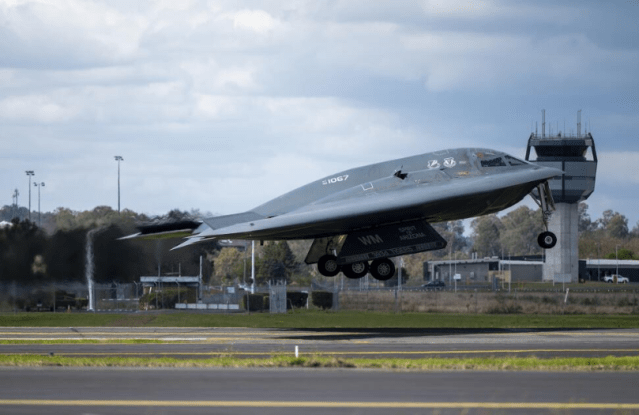
In response to escalating tensions in the Middle East, the United States has strategically deployed B-2 Spirit stealth bombers to Diego Garcia, a British Indian Ocean Territory. This move aims to enhance U.S. military readiness and deter potential threats from Iran and the Iran-backed Houthi rebels in Yemen.
Deployment Details
Satellite imagery analyzed in late March 2025 revealed the presence of at least four B-2 bombers at Diego Garcia. These aircraft, known for their advanced stealth capabilities, enable the U.S. to conduct precision strikes while minimizing detection by enemy radar systems. The deployment also includes aerial refueling tankers and support aircraft, indicating preparations for sustained operations in the region.
Strategic Context
The deployment coincides with intensified U.S. airstrikes against Houthi militants in Yemen and increasing warnings to Iran regarding its support for the group and its nuclear ambitions. The B-2 bombers, capable of carrying both conventional and nuclear payloads, serve as a formidable deterrent against adversarial actions in the region.
B-2 Bomber Capabilities
The B-2 Spirit is a multi-role bomber capable of delivering both conventional and nuclear munitions. Its stealth design allows it to penetrate sophisticated enemy defenses and deliver precision strikes. With a range exceeding 6,000 nautical miles without refueling, the B-2 can project power globally, making it a critical asset in the U.S. strategic arsenal.
Regional Implications
The stationing of B-2 bombers at Diego Garcia underscores the strategic importance of the base, providing the U.S. with a platform to project airpower across the Middle East and South Asia. This deployment serves as a clear signal to Iran and the Houthi rebels of the U.S.’s commitment to regional stability and its readiness to respond to threats against its interests and allies.
Conclusion
The deployment of B-2 stealth bombers to Diego Garcia reflects the United States’ proactive approach to addressing emerging threats in the Middle East. By enhancing its military posture, the U.S. aims to deter aggression, reassure allies, and maintain stability in a region marked by complex geopolitical dynamics.
Pentagon Deploys Second Aircraft Carrier to Middle East Amid Escalating Tensions
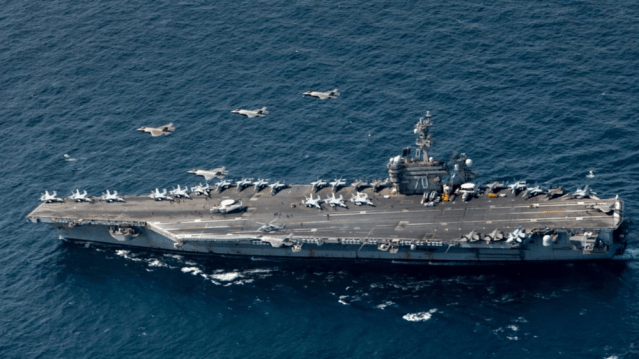
On April 2, 2025, the United States Department of Defense announced the deployment of a second aircraft carrier strike group to the Middle East. This strategic move aims to bolster U.S. military presence in the region in response to increasing threats from Iran and intensified conflicts involving Houthi rebels in Yemen.
Deployment Details
The USS Carl Vinson, following its scheduled Indo-Pacific exercises, has been directed to join the USS Harry S. Truman in the Middle East. This marks a significant enhancement of naval capabilities in the area, with both carrier strike groups operating simultaneously. The decision to deploy the USS Carl Vinson underscores the U.S. commitment to maintaining regional stability and safeguarding vital maritime routes.
Strategic Context
The deployment of the USS Carl Vinson comes amid a series of U.S. military actions targeting Houthi militants in Yemen and heightened tensions with Iran. The Houthi rebels, backed by Iran, have intensified their attacks on vessels in the Red Sea, posing significant threats to international shipping lanes. In response, the U.S. has increased airstrikes against Houthi positions and bolstered its naval presence to deter further aggression.
Defense Secretary Pete Hegseth emphasized that these deployments are intended to deter aggression and ensure the free flow of commerce in critical waterways. The presence of two carrier strike groups enhances the U.S. Navy’s ability to project power and respond swiftly to emerging threats in the region.
Regional Implications
The simultaneous operation of the USS Harry S. Truman and USS Carl Vinson in the Middle East signifies a robust U.S. commitment to its allies and partners in the region. This deployment serves as a clear signal to Iran and its proxies that the U.S. is prepared to defend its interests and support regional stability. Additionally, the enhanced naval presence aims to reassure allies of the U.S. dedication to maintaining security in the face of escalating threats.
Conclusion
The Pentagon’s decision to deploy a second aircraft carrier to the Middle East reflects a strategic effort to address the complex security challenges in the region. By augmenting its naval forces, the United States aims to deter hostile actions, protect vital maritime routes, and support ongoing operations against destabilizing forces such as the Houthi rebels. This move underscores the U.S. commitment to maintaining regional stability and safeguarding its interests amid evolving geopolitical dynamics.
