RED Friday: Standing with Our Deployed Heroes and Strengthening America’s Defense
On this RED Friday, we remember what it truly means to Remember Everyone Deployed. While we go about our daily lives, thousands of service members are far from home, answering the call to serve. Today, we honor them, their families, and the constant sacrifice that comes with defending our nation.
Just last week, more than 140 Soldiers from the Pennsylvania National Guard’s 3622nd Sustainment Maintenance Company stood before their families and fellow service members in Harrisburg, preparing to leave for a yearlong deployment to Kuwait. These Soldiers, experts in sustaining military vehicles and equipment, are heading into a demanding mission with Task Force Spartan, ensuring U.S. forces in the region remain operationally ready. Their absence will be deeply felt by loved ones, but their service is essential to our nation’s commitments overseas.
While the 3622nd prepares for their mission, innovation is shaping the battlefield in new ways. The U.S. Navy’s HELIOS laser system recently demonstrated its power, successfully destroying a drone in a test that signals a future where high-energy lasers bolster our defenses. As our troops put themselves in harm’s way, advancements like these serve as a reminder that we must always equip them with the best tools possible.
And as we continue to honor those currently deployed, we must not forget the 81st anniversary of the USS Harder (SS-257)’s commissioning—a submarine that became legendary for its relentless strikes in World War II. The courage of those who served aboard her set the standard for generations of warfighters who would follow.
Every RED Friday, we wear red not just as a statement but as a promise—to stand with those deployed, to support their families, and to never forget their sacrifices. The 3622nd, the crews aboard Navy ships, and all our deployed troops deserve more than just our words. They deserve our unwavering support until they all come home.
USS Carl Vinson Strike Group Departs Thailand, Strengthening U.S.-Thai Alliance
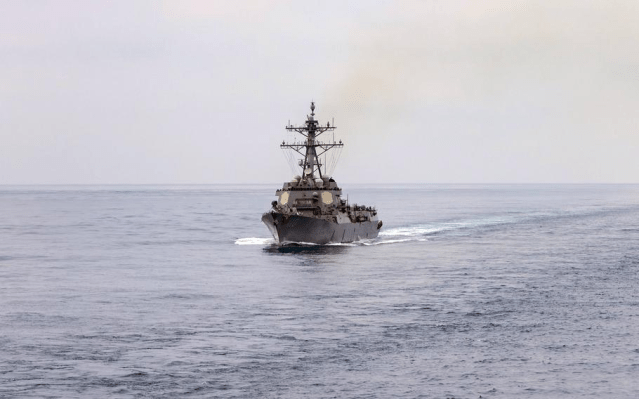
GULF OF THAILAND – The USS Carl Vinson Carrier Strike Group (CSG-1) has departed Laem Chabang, Thailand, following a five-day port visit that reinforced longstanding ties between the United States and Thailand.
The U.S.-Thailand relationship, one of the oldest in the Indo-Pacific, has remained a cornerstone of regional stability for over 190 years. As one of the United States’ five treaty allies in the region, Thailand continues to be a key security partner and leader in Southeast Asia.
“We are incredibly grateful to Thailand for hosting the Carrier Strike Group ONE team,” said Rear Adm. Michael Wosje, commander of CSG-1. “Port visits like this highlight the vital importance of the U.S.-Thailand alliance and our shared commitment to peace, stability, and prosperity in the Indo-Pacific. We have shared history, shared interests, and common values that will continue to unite us for the good of both of our countries.”
During their time in Thailand, nearly 7,500 sailors from the strike group participated in cultural exchanges, community relations events, and Morale, Welfare, and Recreation-sponsored tours designed to enhance cultural understanding and cooperation. U.S. Ambassador to Thailand Robert F. Godec praised the visit, stating, “Your time here reinforced the excellent relations between Thailand and the United States and our shared commitment to a free and open Indo-Pacific. We look forward to future visits.”
The strike group’s stay was marked by a high-level meeting aboard the USS Carl Vinson on Jan. 26, where Rear Adm. Wosje and Capt. Matthew Thomas, the carrier’s commanding officer, welcomed U.S. and Thai officials, including Ambassador Godec, Thailand’s Deputy Prime Minister and Minister of Defense Phumtham Wechayachai, Defense Forces Chief Gen. Songwit Noonpackdee, and Thai Marine Corps Commandant Rear Adm. Nirat Tagoodruar.
“I know I can speak for all of the Carl Vinson crew when I say how grateful we are to the people of Laem Chabang and Pattaya City for welcoming our sailors with such kindness and hospitality,” said Capt. Thomas. “This visit provided our sailors the opportunity to recharge as we continue our mission of maintaining a free and open Indo-Pacific. We remain committed to the U.S.-Thai friendship and look forward to future opportunities to strengthen this bond.”
Following its departure, the Carl Vinson Carrier Strike Group transited to the South China Sea, where it resumed routine operations, including flight operations by F/A-18 Super Hornets, MH-60S Seahawks, and E-2D Advanced Hawkeye aircraft. The carrier was replenished at sea by the USNS Carl Brashear to sustain its ongoing mission in the Indo-Pacific.
The Carl Vinson Carrier Strike Group includes USS Carl Vinson (CVN 70), Carrier Strike Group ONE and Destroyer Squadron ONE, Carrier Air Wing TWO, the Ticonderoga-class guided-missile cruiser USS Princeton (CG 59), and the Arleigh Burke-class guided-missile destroyers USS Sterett (DDG 104) and USS William P. Lawrence (DDG 110). Carrier Air Wing TWO operates a diverse air complement, including F-35C Lightning IIs, F/A-18E/F Super Hornets, EA-18G Growlers, E-2D Advanced Hawkeyes, CMV-22 Ospreys, and MH-60R/S Seahawks.
CSG-1 continues operations in the U.S. 7th Fleet area of responsibility, supporting regional security efforts alongside allies and partners to uphold a free and open Indo-Pacific.
U.S. Navy Advances Directed Energy Capabilities with HELIOS Laser System
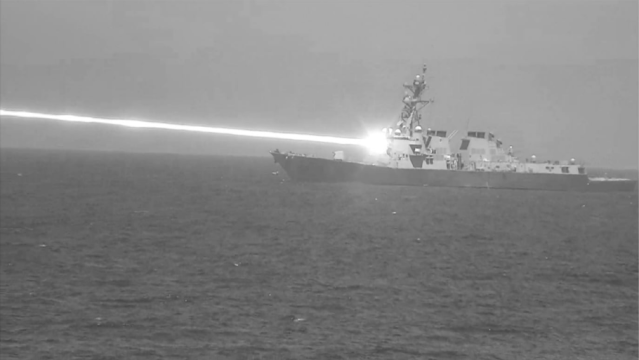
The U.S. Navy has taken a significant step forward in directed energy weaponry with the successful testing of the High Energy Laser with Integrated Optical Dazzler and Surveillance (HELIOS) system aboard USS Preble (DDG 88). Conducted in late 2024, this milestone marks the first airborne target engagement for the HELIOS program, reinforcing the Navy’s commitment to integrating high-energy laser technology into its fleet.
A Milestone in Directed Energy Weaponry
The HELIOS system, a 60-kilowatt-class directed energy weapon developed by Lockheed Martin, is the first laser weapon to be fully integrated with the Aegis combat system. Its recent test against an unmanned aerial vehicle (UAV) provided valuable data for further development, with the Center for Countermeasures (CCM) collecting imagery to validate the system’s performance.
“CCM supported the Navy’s demonstration on USS Preble (DDG 88) to verify and validate the functionality, performance, and capability of the HELIOS system against an unmanned aerial vehicle target,” stated the Department of Defense’s FY2024 annual report.
Expanding the U.S. Navy’s Laser Arsenal
HELIOS is part of the Navy Laser Family of Systems (NLFoS), which includes the Optical Dazzling Interdictor, Navy (ODIN) and the Solid State Laser – Technology Maturation (SSL-TM) initiative. These systems aim to provide surface combatants with scalable laser weapons capable of neutralizing a variety of threats, including drones, small boats, and anti-ship cruise missiles.
The HELIOS system represents a key component of the Navy’s broader High Energy Laser Counter Anti-Ship Cruise Missile Project (HELCAP), which seeks to develop a 300+ kilowatt laser platform. Technologies developed under HELCAP will contribute to the Laser Weapon Testbed (LWT), scheduled for primary demonstrations at White Sands Missile Range in FY2025.
Future of Directed Energy in the Fleet
As the Navy continues to refine its laser weapon technology, the integration of HELIOS on USS Preble serves as a proving ground for future deployments. Current plans indicate that HELIOS-compatible Aegis software has already been installed on multiple Arleigh Burke-class destroyers, paving the way for broader adoption of the system.
According to Navy budget documents, the service will “continue to provide shipboard technical support, sustainment, and engineering assistance to inform tactical employment of HELIOS,” ensuring its operational readiness.
The successful test aboard USS Preble underscores the Navy’s dedication to advancing directed energy capabilities, providing warfighters with cost-effective, high-precision defense solutions against emerging threats in maritime combat environments.
Pennsylvania National Guard’s 3622nd Sustainment Maintenance Company Deploys to Kuwait
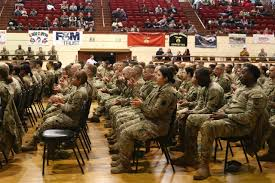
HARRISBURG, Pa. – More than 140 Soldiers with the Pennsylvania National Guard’s 3622nd Sustainment Maintenance Company were honored during a deployment ceremony on Feb. 1 at the Zembo Shrine. The Soldiers are embarking on a year-long mission to Kuwait in support of Task Force Spartan, contributing to U.S. Central Command’s ongoing efforts to enhance regional security and stability.
As part of the 728th Combat Sustainment Support Battalion, 213th Regional Support Group, the 3622nd SMC specializes in maintaining military vehicles, weapons, artillery, and other essential equipment. The unit, based at Fort Indiantown Gap, includes Soldiers from across Pennsylvania and neighboring states.
During the ceremony, Pennsylvania National Guard leaders praised the dedication and professionalism of the departing Soldiers.
“As you embark on this mission, know that you carry with you the support and prayers of your loved ones, your leaders, and your country,” said Col. Jeremy Coleman, commander of the 213th RSG. “We are immensely proud of each and every one of you. Your skills, professionalism, and resilience will undoubtedly make a significant impact wherever you go.”
Maj. Gen. Laura McHugh, deputy adjutant general-Army, was among the senior leaders in attendance, recognizing the sacrifices of both the Soldiers and their families.
Maj. Bryson Meczywor, commander of the 728th CSSB, highlighted the vital role the unit plays in sustaining military operations.
“Whether it’s ensuring the reliability of equipment, maintaining operational readiness, or providing technical solutions under demanding conditions, your role cannot be overstated,” Meczywor said. “You are the backbone that keeps operations running smoothly.”
Task Force Spartan is a multi-component organization that includes National Guard, Army Reserve, and Regular Army units. Through Operation Spartan Shield, it maintains a strategic U.S. military presence in Southwest Asia, strengthening defense partnerships and regional stability.
The mission includes logistics support, force protection, information management, and theater security cooperation efforts such as joint exercises, key leader engagements, humanitarian assistance, and disaster response planning.
The deployment marks another chapter in the Pennsylvania National Guard’s ongoing commitment to supporting global military operations while reinforcing its legacy of service and excellence.