Honoring Nearly Four Centuries of Service by America’s Citizen-Soldiers
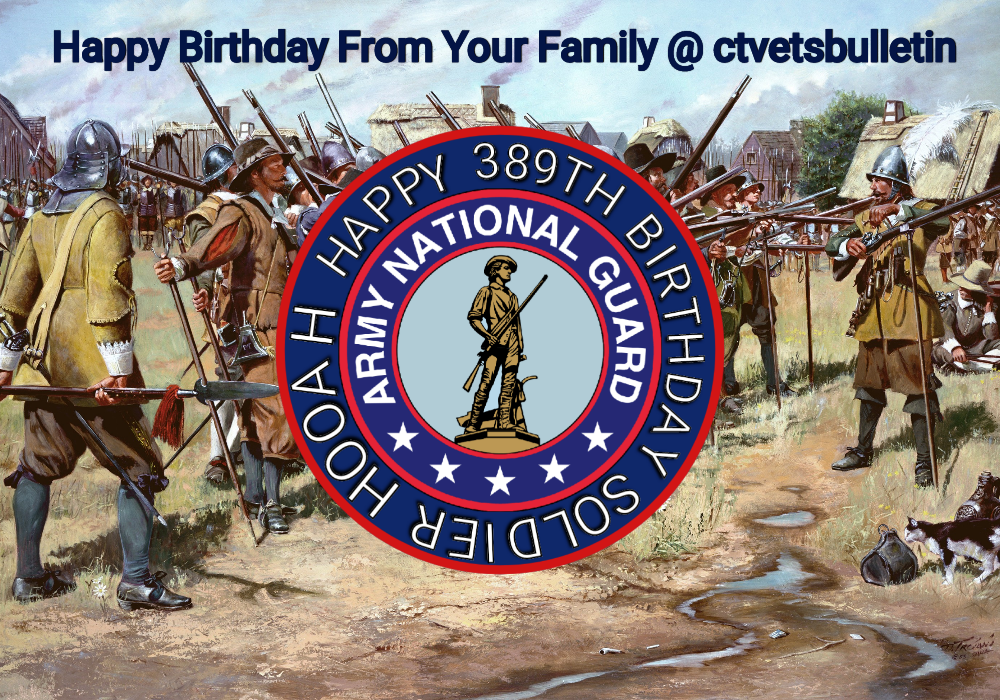
December 13, 2025, marks the 389th birthday of the National Guard, the oldest military organization in the United States. Its beginnings trace back to December 13, 1636, when the Massachusetts Bay Colony formally organized its militia into three regiments — establishing a permanent, structured defense force for the colonies. That moment laid the foundation for what would become one of America’s most versatile and relied-upon military institutions.
From protecting first settlements to answering missions across the globe, National Guard Soldiers and Airmen have stood ready — serving both community and country — longer than the United States has existed as a nation.
The Birth of America’s Militia Tradition
In the early 1600s, survival in the New World required organized defense. Every able-bodied male citizen was expected to train, respond to threats, and defend the colony. On December 13, 1636, the General Court of Massachusetts issued a pivotal directive:
- Militia companies throughout the colony were reorganized into the North, South, and East Regiments
- These regiments established permanent command structures, regular training, and rapid response capability
- Their mission included defense against hostile forces, internal security, and protection of trade routes
Today, these original formations continue as:
- 181st Infantry Regiment
- 182nd Infantry Regiment
- 101st Field Artillery Regiment
- 101st Engineer Battalion
These units represent the oldest continuously serving military units in the United States — predating the U.S. Army by nearly 140 years.
Colonial Service: The Pequot War and Guard Roots in New England
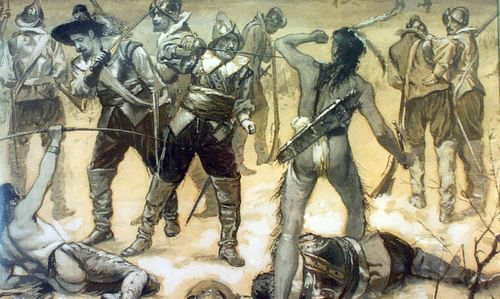
Only months after the formation of those initial regiments, they were put into action. The Pequot War (1636–1638) marked the first large-scale colonial military campaign in New England.
A combined force of militia from:
- Massachusetts Bay
- Connecticut Colony
- Plymouth Colony
— fought alongside Mohegan and Narragansett tribal allies against the Pequot Confederation, then a dominant power in southern New England.
One of the defining moments came at the Battle of Mystic Fort on May 26, 1637, near present-day Mystic, Connecticut. The assault — led by Captain John Mason — resulted in a decisive but devastating victory as the fortified Pequot village was destroyed. The aftermath reshaped the region’s balance of power and cemented the militia’s role as a primary military force in the colonies.
This campaign is recognized as the earliest example of the National Guard operating as a unified military body in defense of English settlements.
Growth Through Revolution, Civil War, and Beyond
As the colonies formed a new nation, the militia remained essential. Throughout American history, National Guard units have stepped forward during every major conflict:
Revolutionary War (1775–1783)
- Citizen-soldiers fired the first shots at Lexington and Concord
- Militia formations became foundational in the fight for independence
Civil War (1861–1865)
- Nearly 80% of Union Army regiments originated from state militias
World War I & II
- Guard units were federalized and deployed overseas
- The 26th “Yankee” Division — built from New England units — earned distinction in both conflicts
Post-9/11
- Guard service expanded dramatically into global operations
- Hundreds of thousands mobilized for missions in Iraq, Afghanistan, and worldwide security roles
A Dual Mission: Serving State and Nation
The National Guard’s unique structure gives it two primary responsibilities:
- Federal Mission: Support U.S. military operations abroad
- State Mission: Respond to domestic emergencies under the authority of state governors
Whether in combat zones or hometown communities, Guardsmen serve wherever needed, including:
- Hurricane, flood, and wildfire response
- Search-and-rescue operations
- Pandemic and medical support
- Civil protection and security
- Border and infrastructure support
- Cyber defense missions
Their motto — “Always Ready, Always There” — continues to define the force today.
The Formation of the Air National Guard
A major milestone came on September 18, 1947, when the U.S. Air Force became an independent branch and the:
➡️ Air National Guard was established as its reserve component.
Like the Army Guard, the Air Guard includes historic units whose aviation heritage dates back before World War I:
- 102nd Rescue Squadron (NYANG) — origins in 1915
- 109th Airlift Squadron (MNANG) — continuously serving since 1921
Today, Air Guard units perform critical missions such as:
- Air defense of the continental U.S.
- Strategic airlift
- Space operations and cyber warfare
- Combat rescue and homeland security defense
Modern Mission: Global Reach, Hometown Strength
More than 440,000 Soldiers and Airmen serve in the National Guard across:
- All 50 states
- Three U.S. territories (Guam, Virgin Islands, Puerto Rico)
- District of Columbia
Connecticut’s National Guard remains deeply engaged in both state and national missions, contributing units specializing in aviation, engineering, security, and emergency response.
Whether responding to tornados in the Midwest, wildfires in the West, or military deployments overseas, the National Guard remains central to America’s security and resilience.
Honoring America’s Citizen-Soldiers
As we celebrate the National Guard’s 389th birthday, we honor:
- The colonial militiamen who stood watch in early settlements
- The soldiers and airmen who fought in every major conflict
- The modern Guard members who protect communities and defend freedom worldwide
Their enduring legacy is built on:
Duty. Sacrifice. Community. Patriotism.
The National Guard’s story is the story of the American people — everyday citizens who step forward when duty calls, continuing a tradition stretching back nearly four centuries.
Happy Birthday to the National Guard — and heartfelt gratitude to all who serve, past and present. Always Ready, Always There.
