27 June 2025
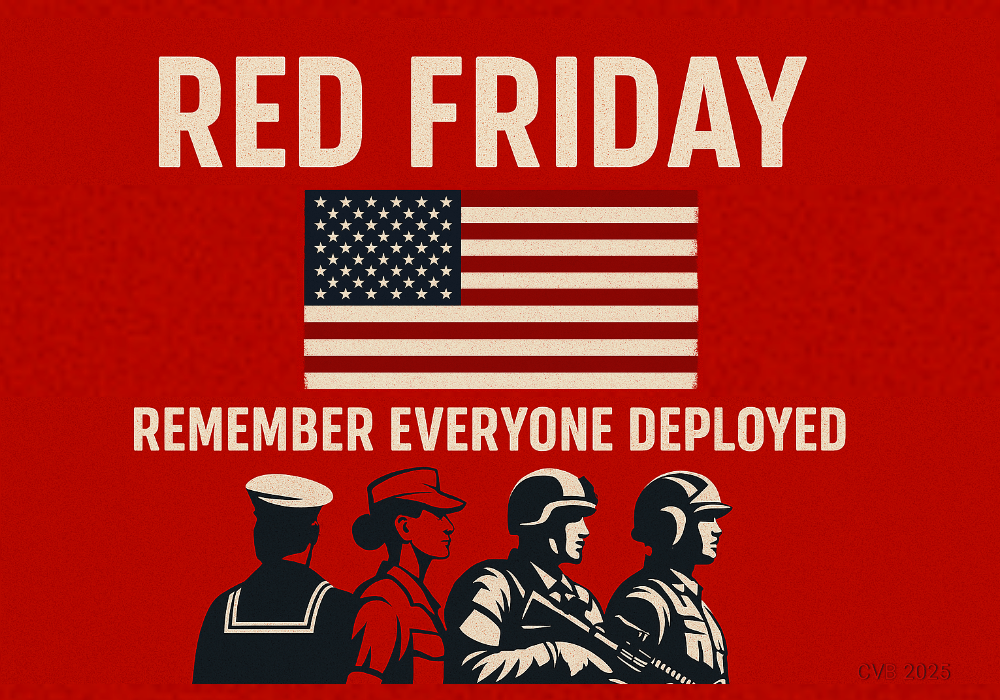
Across America this morning, red shirts are worn not as fashion—but as a promise. A silent yet bold statement. Today is RED Friday, and communities throughout Connecticut and across the nation unite in a shared purpose: to Remember Everyone Deployed.
Whether they serve aboard aircraft carriers in the Mediterranean, in remote outposts in Eastern Europe, or as part of humanitarian missions in the Pacific, thousands of U.S. service members are standing watch on distant shores. They are the sons and daughters of small towns and cities like ours. They are Soldiers, Sailors, Airmen, Marines, Guardians, and Coast Guardsmen—quiet professionals who carry the weight of freedom on their backs so others do not have to.
🌍 Deployed But Never Forgotten
While we go about our daily lives—dropping kids at school, opening shops, or gathering for summer cookouts—more than 160,000 American troops remain forward-deployed around the world. Many are serving in conflict zones, training allies, interdicting illegal weapons, conducting maritime patrols, or responding to crises and disasters.
Each one of them carries personal sacrifice: missed birthdays, first steps, final farewells. Their absence is felt by the families waiting back home—by the children clutching teddy bears in red pajamas, the spouses holding on to a last voicemail, and the parents staring at world maps, following every dot.
RED Friday is for them, too. For those who wait.
🇺🇸 Why We Wear Red on Fridays
RED stands for Remember Everyone Deployed. It’s a tradition born from the desire to ensure that no service member is ever forgotten while serving away from American soil. On Fridays, red garments, ribbons, and banners across schools, businesses, and neighborhoods stand in as reminders that freedom comes at a cost.
This isn’t a holiday—it’s a living vow.
Each red shirt is a thread in a much larger American flag, held together by unity, gratitude, and unshakable support. When we wear red, we send a clear message: You are not alone. We remember you. We honor you.
💌 Messages from Home
Many communities, including our own Connecticut towns, are writing letters and assembling care packages for deployed troops today. In classrooms, children learn about the meaning of service. In workplaces, teams stand for a moment of silence before clocking in. Across CVB, we spotlight the sacrifices being made right now—those we see and those we don’t.
If you know a deployed service member—write to them. If you don’t—wear red anyway. The color isn’t for the people who see it. It’s for those who can’t. It’s for the troops standing watch, knowing that someone, somewhere back home is standing with them.
🌅 The Quiet Strength of the Deployed
There are no cameras where they serve. No grand speeches. No trending headlines. There is only the mission—and the unwavering devotion to something bigger than self.
They wake up in the dark, shoulder rifles and radios, maintain aircraft on windy decks, walk perimeter lines under desert moons, and write “love you” in sand or snow with the hope someone back home will feel it.
They carry with them the best of who we are—and they deserve the best of what we can give in return: remembrance, honor, and our visible gratitude.
✨ How You Can Observe RED Friday
- Wear red every Friday to show visible support.
- Share stories of deployed service members with your community.
- Support military families—deployment affects every member of the household.
- Donate or volunteer with organizations sending care packages overseas.
- Pray, reflect, or take a moment—even a brief pause can be a powerful gesture.
In Their Honor, We Wear Red
From the decks of the USS Gerald R. Ford sailing toward Europe, to Marines in Koa Moana serving across the Pacific islands, to the quiet teams in undisclosed locations carrying out America’s most sensitive missions—they are out there right now.
They’re not home. But they are never alone.
Today, and every RED Friday, we wear red for them. Not just as a color—but as a commitment.
Remember Everyone Deployed. Always.
Operation Midnight Hammer: Honoring the U.S. Heroes Who Crippled Iran’s Nuclear Threat and Secured the Free World
WELCOME HOME HEROES!!
On the night of June 21, 2025, while much of the world slept, hundreds of brave and exceptionally skilled U.S. military personnel launched one of the most daring and complex missions of the 21st century. Operation Midnight Hammer—the precision strike on Iran’s nuclear facilities at Fordow, Natanz, and Isfahan—was more than a show of force. It was a masterpiece of military coordination, technical brilliance, and professional courage, carried out by men and women who knowingly risked their lives to protect millions.
This mission was not just successful—it was historic. It neutralized three hardened, high-priority nuclear sites operated by the world’s leading state sponsor of terrorism. It sent a clear message to hostile regimes everywhere: America’s warriors will act when the safety of the free world is at stake.
🎯 The Mission at a Glance
Operation Midnight Hammer was the result of months of intelligence analysis, joint planning, and elite execution. According to the June 26 Pentagon briefing:
- Seven B‑2 Spirit stealth bombers launched from Whiteman Air Force Base, flying a nearly 36-hour round trip to deliver 14 GBU‑57 Massive Ordnance Penetrators (MOPs). These 30,000-pound weapons struck deep into the heavily fortified Fordow mountain complex, destroying uranium enrichment capabilities buried beneath hundreds of feet of rock.
- A U.S. Navy guided-missile submarine in the Persian Gulf launched over 24 Tomahawk cruise missiles, targeting Isfahan’s uranium conversion facilities with lethal accuracy.
- Over 125 aircraft, including fighter escorts, surveillance drones, and airborne refueling tankers, synchronized in a ballet of aviation and timing, blanketing Iranian radar zones with precision deception.
- The entire mission lasted under 30 minutes, leaving all targets crippled and zero U.S. casualties reported.
🛰 Confirmed: Devastation at the Sites
Despite efforts by hostile media to minimize the impact, imagery and independent assessments confirmed the overwhelming success:
- Satellite photos from Maxar Technologies reveal direct hits and collapse zones on critical structures at Fordow, Natanz, and Isfahan.
- U.S. intelligence and the International Atomic Energy Agency (IAEA) reported multiple enrichment cascades completely destroyed, equipment obliterated, and long-term uranium production capacity eliminated.
- A post-strike intelligence summary described the damage as “catastrophic to Iran’s nuclear capability for the foreseeable future.”
🛡 A Force Worthy of the Highest Honor
Behind this operation were Americans from every branch of the military, each playing a vital role:
- The B‑2 bomber crews, operating the most advanced stealth aircraft on Earth, flew undetected across continents to penetrate deep into the enemy’s most guarded sites. Their calm under pressure and unbreakable discipline reflect the highest traditions of Air Force service.
- Submarine crews, navigating in total silence beneath hostile waters, executed flawless Tomahawk strikes with pinpoint accuracy—showcasing Navy stealth and technical superiority.
- Intelligence analysts, cyber operators, reconnaissance teams, and mission planners worked around the clock for months, mapping targets buried in bunkers and preparing for every contingency.
- Aerial refueling teams, logistics staff, and maintenance crews ensured every aircraft was fully prepped, fueled, and in perfect formation when the clock struck zero hour.
🏅 The Legacy of Operation Midnight Hammer
These patriots didn’t carry out this mission for recognition. They did it because they swore an oath—to protect our country, our allies, and the principles of peace and liberty.
Their courage stopped Iran’s nuclear ambition in its tracks. They acted not in aggression, but in defense of a safer world. They did not seek conflict, but they met danger with unmatched resolve.
At a time when chaos threatens global stability, these men and women proved that American resolve, when tested, will never falter. This was not just a military strike—it was a strategic achievement that reasserted the values of peace, deterrence, and security.
✨ We Remember and We Honor
To those involved in Operation Midnight Hammer:
- You are warriors of unmatched professionalism.
- You defended the innocent against the shadow of nuclear tyranny.
- You reminded the world what it means when America leads.
Today, we say what cannot be said enough: Thank you.
We stand in awe of your skill. We are grateful for your sacrifice. And we are humbled by your dedication to a cause greater than yourselves.
🇺🇸 For Freedom. For Peace. For All of Us.
Let history remember this night not just as a turning point in global security, but as the moment when the United States Armed Forces once again answered the call to protect the world from catastrophic threat—with precision, professionalism, and undeniable success.
Operation Midnight Hammer was an American triumph. And the heroes who carried it out deserve to be remembered not only today—but always.
Gerald R. Ford Carrier Strike Group Sets Sail from Norfolk: 4,500 Sailors, Squadrons & Guided-Missile Destroyers Deploy amid Rising Tensions
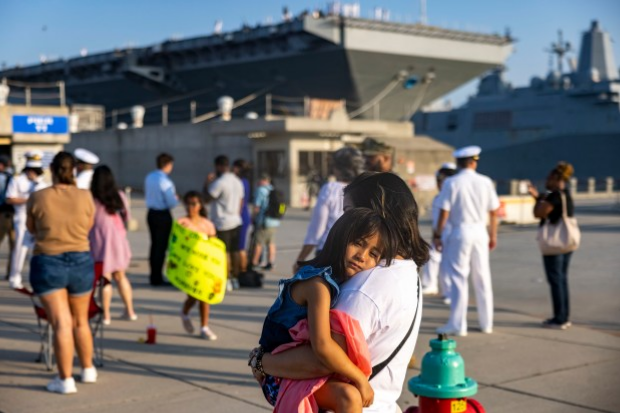
On June 24, 2025, nearly 4,500 U.S. Navy personnel departed Naval Station Norfolk and Naval Weapons Station Yorktown, embarking aboard the USS Gerald R. Ford (CVN 78) for a regularly scheduled deployment to the U.S. European Command (EUCOM) area of responsibility. Norfolk, Virginia—situated at the southern edge of Chesapeake Bay—is the world’s largest naval base, hosting the Navy’s Fleet Forces Command with over 75 ships and 134 aircraft.
🚢 Strike Group Composition & Capabilities
The deployment centers on Carrier Strike Group Twelve, consisting of:
- USS Gerald R. Ford (CVN 78): The Navy’s newest and most advanced aircraft carrier, equipped with electromagnetic catapults, improved sortie generation, and reduced crew requirements.
- Carrier Air Wing 8 (CVW-8): Nine squadrons including F/A-18E/F Super Hornets, EA-18G Growlers, E-2D Hawkeyes, MH-60R/S helicopters, and support units.
- Destroyer Squadron 2 (DESRON 2):
- USS Mitscher (DDG 57)
- USS Mahan (DDG 72)
- USS Bainbridge (DDG 96)
- USS Forrest Sherman (DDG 98) – deployed in May 2025
- USS Winston S. Churchill (DDG 81)
This integrated formation provides sea control, power projection, air and missile defense, anti-submarine warfare, and rapid crisis response capabilities.
🗺️ Mission & Strategic Context
While this deployment was scheduled in advance, it comes at a time of heightened global tensions, particularly in the Middle East, where U.S. forces are monitoring escalating conflict between Israel and Iran.
- Though initially tasked to operate under EUCOM in European waters, the strike group remains fully capable of redeploying to areas such as the Eastern Mediterranean or the Middle East within hours.
- Its presence enhances deterrence and ensures the U.S. can project force or support allies quickly, depending on developing threats.
👥 Leadership & Crew Readiness
- Rear Admiral Paul Lanzilotta, commander of Carrier Strike Group Twelve, stated the group is ready for sustained operations and can meet global challenges “wherever and whenever tasked.”
- Captain Dave Skarosi, commanding officer of the USS Gerald R. Ford, praised the crew’s professionalism and combat readiness.
🎖️ Families & Farewells
Sailors left behind families who gathered along the pier to say goodbye, many waving flags and holding signs of support.
- Emotions ran high as the reality of deployment amid global unrest set in.
- Many family members expressed pride as well as concern given the uncertain global climate.
- The Navy continues to emphasize support services and resources for both deployed personnel and their families at home.
🔭 Global Importance of the Ford-Class Deployment
- The USS Gerald R. Ford is the first in a new generation of aircraft carriers designed for 21st-century warfare.
- These ships reduce crew workload while increasing operational effectiveness and sortie rates.
- Its presence is both symbolic and strategic, demonstrating U.S. naval superiority and commitment to allies.
✅ Why This Deployment Matters
- Operational Flexibility: The strike group can rapidly reposition in response to crises across Europe, the Middle East, or Africa.
- Deterrence: Signals American resolve in regions experiencing increased threats or instability.
- Allied Assurance: Reinforces NATO and partner confidence in the U.S. as a reliable military presence.
- Readiness Validation: Tests and proves the U.S. Navy’s newest capabilities in live deployment conditions.
🧭 What Comes Next
- Will the strike group be diverted to the Middle East in response to rising tensions?
- How will this deployment integrate with other U.S. carrier groups like the USS Nimitz and USS Carl Vinson already operating in contested areas?
- Observers will also be watching for the strike group’s role in missile defense, drone interdiction, and maritime stability missions.
In Summary
The deployment of the Gerald R. Ford Carrier Strike Group represents a powerful symbol of U.S. military strength, strategic flexibility, and forward presence. With 4,500 sailors aboard cutting-edge platforms, the Navy is ready to respond to whatever the global environment demands. As geopolitical conditions shift, the world will be watching this historic mission and the men and women at its helm.
U.S. Marines and Sailors Launch Koa Moana 2 in Palau on June 24, 2025: Strengthening Indo-Pacific Partnerships through Logistics, STEM, Humanitarian & Cultural Engagement
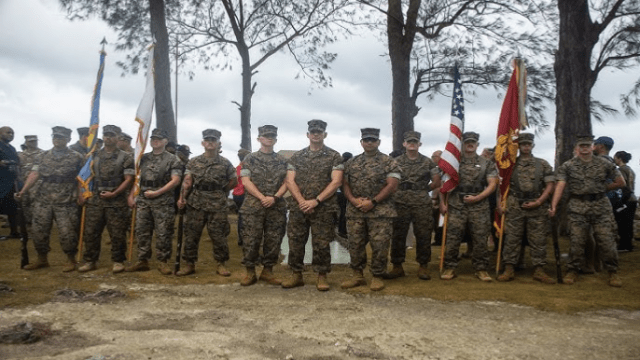
On June 24, 2025, U.S. Marines and Sailors from Combat Logistics Battalion 15, 1st Marine Logistics Group (1st MLG), I Marine Expeditionary Force, commenced Koa Moana 2 in Koror, Palau. This deployment marks the start of a multi-month U.S. Marine Corps mission across the Pacific designed to strengthen alliances under the Compacts of Free Association (COFA) and promote regional resilience and security.
🌏 What Is Koa Moana?
Koa Moana—meaning “Sea Warriors” in Hawaiian—is an annual Marine Corps mission that fosters cooperation and partnership with Pacific Island nations such as Palau and the Federated States of Micronesia (FSM). The exercise includes:
- Engineering projects
- Medical and religious community outreach
- Youth engagement and recruiting
- STEM and vocational training
- Subject-matter expert exchanges (SMEEs)
Koa Moana 2 represents the second phase of the broader Koa Moana 25 operation and continues the Marine Corps’ forward-deployed efforts in the Pacific.
🛠 Deployment Scope & Activities
The mission will take place across five key island nations and territories:
- Palau
- Yap
- Chuuk
- Pohnpei
- Kosrae
Key initiatives during the deployment include:
- Infrastructure and facility improvements
- Medical services in underserved areas
- Educational and vocational training
- Recruiter engagement with local students and youth leaders
🎓 Cultural & Strategic Events
The Koa Moana 2 mission will align with two major regional events:
- Pacific Mini Games (July 2025 in Palau): U.S. service members will participate in goodwill and cultural exchange activities during the international competition.
- Kosrae Liberation Day (October 2025): Marines and Sailors will support local celebrations marking freedom and resilience following World War II.
These events allow U.S. forces to build meaningful partnerships while honoring shared history and values.
👥 Leadership Perspective
Colonel Matthew Mulvey, commanding officer of CLR-17, emphasized the significance of the mission:
“Koa Moana allows us to continue developing meaningful, enduring relationships with our Pacific partners… strengthen our ability to work together in ensuring a free and open Indo-Pacific.”
This reflects the broader Department of Defense effort to reinforce regional partnerships through humanitarian support and tactical cooperation.
🛡 Why This Deployment Matters
- Fulfilling COFA Commitments: The U.S. reaffirms its promise to support and defend Palau and the FSM.
- Disaster Readiness: Medical, engineering, and logistical exercises improve local and regional disaster response capabilities.
- Military Diplomacy: Building goodwill through soft power engagements strengthens mutual trust.
- Interoperability: Joint operations and SMEEs increase effectiveness of future multinational responses to crises or conflicts.
📡 Next Steps
- Expansion to additional islands through fall 2025
- Execution of civil assistance, school visits, and medical programs
- Participation in local cultural and commemorative events
- Continued support from diplomatic partners and Marine Forces Pacific leadership
Summary
On June 24, 2025, U.S. Marines and Sailors began Koa Moana 2 operations in Palau. This forward-deployed logistics and outreach mission will continue through the fall, touching communities across the Western Pacific and reinforcing U.S. commitments under the Compact of Free Association. With a focus on humanitarian aid, STEM education, and strategic cooperation, Koa Moana 2 exemplifies America’s enduring partnership with Pacific Island nations.
U.S. Navy Commemorates 80th Anniversary of the Battle of Okinawa with Candle Lighting Vigil in Itoman
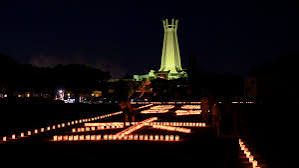
On June 22, 2025, U.S. Navy Sailors, their families, and Okinawan volunteers gathered at Peace Memorial Park in Itoman, Okinawa, to honor the 80th anniversary of the Battle of Okinawa. Together, they lit nearly 7,000 candles to remember the more than 200,000 lives lost during the bloodiest battle of the Pacific theater in World War II.
🕯️ Ceremony Highlights
- The event was organized by Bankoku-Shinryo-no-Kai, a nonprofit peace advocacy organization, and carried a message of remembrance, peace, and intergenerational education.
- More than 70 U.S. Navy Sailors from units including Naval Hospital Okinawa, Patrol Squadron 9, White Beach Naval Facility, and Kadena Air Base volunteered for the ceremony.
- With Japanese students and local citizens, Sailors helped arrange candles forming the kanji character for “peace” (平和), creating a solemn visual display along the park’s walkways and memorial walls.
🎙️ Reflections from the Participants
Naoki Matsukawa, chairman of Bankoku-Shinryo-no-Kai, shared the purpose of the vigil:
“The first purpose of this event is to commemorate those who died during the war. The second is to promote peace to the world. And the third is to share this important message of peace to the next generation.”
Capt. Joseph Parsons, commanding officer of Fleet Activities Okinawa, expressed gratitude for the shared moment:
“It’s a moving experience… Having local Okinawans, U.S. Navy Sailors, and their families work side by side reflects the close relationship we share with the local community.”
🇯🇵 Community and Historical Connection
- After the candle lighting, volunteers visited the Okinawa Prefectural Peace Memorial Museum to view exhibits and survivor testimonies. These experiences deepened their understanding of Okinawa’s tragic wartime past.
- The U.S. Navy’s participation in the memorial underscores a long-standing commitment to respect and honor the history and people of Okinawa.
🌏 Why It Matters
- Honoring the Fallen: The vigil provided a meaningful opportunity to remember both civilian and military lives lost during the battle.
- Advocating Peace: The shared effort served as a symbolic reminder of the need for unity and nonviolence in today’s uncertain world.
- Building Trust: Events like this highlight the strong bond between the U.S. military and Okinawan communities.
- Educating Future Generations: By involving youth and military families, the event ensured that the legacy of Okinawa’s history is not forgotten.
🧭 Looking Ahead
- The candle-lighting ceremony is part of the annual observance of Okinawa’s Irei No Hi (Memorial Day).
- It will remain a key tradition to promote peace, honor sacrifice, and support continued cooperation between the United States and Japan.
Summary:
On June 22, 2025, the U.S. Navy joined Okinawan volunteers in a powerful candle-lighting ceremony at Peace Memorial Park in Itoman to mark the 80th anniversary of the Battle of Okinawa. The event honored the memory of over 200,000 lost lives and affirmed a shared commitment to peace, remembrance, and cross-cultural unity.
