
November is National Veterans and Military Family Month
by CVB 1 November 2024
Standing Strong: Red Friday CVB Honors Commitment to Security and Service

As we recognize Red Friday, the CVB community stands united in support of U.S. service members deployed across the globe, upholding a commitment to protect our nation and allies. This week, several key developments underscore the dedication and readiness of American forces.
From the Middle East to the Pacific, U.S. military personnel have been actively engaged in missions and joint exercises that enhance security, resilience, and strategic alliances. In Syria, U.S. forces successfully conducted coordinated airstrikes against ISIS, neutralizing dozens of militants and reinforcing the mission to degrade terrorist capabilities. This latest operation highlights CENTCOM’s focus on eliminating threats while minimizing civilian impact, a testament to the U.S. military’s precision and accountability.
In Iraq, recent joint operations between U.S. and Iraqi forces targeted ISIS operatives, demonstrating ongoing commitment to eradicating extremist influence in the region. These missions, involving coalition teamwork and expert coordination, underscore the effectiveness of long-standing partnerships.
Meanwhile, the U.S. Marine Corps marked a historic milestone, integrating the Iron Dome air defense system in a live-fire training exercise in Israel. This groundbreaking collaboration between the U.S. and Israel signals a strengthened defense against airborne threats and showcases technological synergy with the Tamir interceptor and mobile launch systems, developed in partnership with Rafael Advanced Defense Systems and Raytheon. The success of these trials is a key step toward advancing the Marines’ capabilities to intercept diverse aerial threats and safeguard deployed forces.
In the Indo-Pacific, U.S. forces are actively engaged in Keen Sword, a comprehensive joint exercise with Japan designed to enhance interoperability and prepare for large-scale crises. Through rigorous training scenarios, medical support units, technical specialists, and service members are testing their readiness and refining the collaboration with Japanese Self-Defense Forces. Exercises like Keen Sword serve as essential reminders of the U.S. commitment to stability in the region, fostering military coordination that will be invaluable in times of crisis.
As Red Friday reminds us, the CVB community recognizes and honors the sacrifice and resilience of our service members, who remain steadfast in their mission to secure freedom and peace across every theater of operation. Each action taken this week, each exercise completed, and every mission fulfilled reinforces the unwavering dedication that defines the U.S. military and its role as a global force for security and partnership.
Strengthening Air Defense: U.S. Air Force F-16s Deploy Amid Middle East Tensions
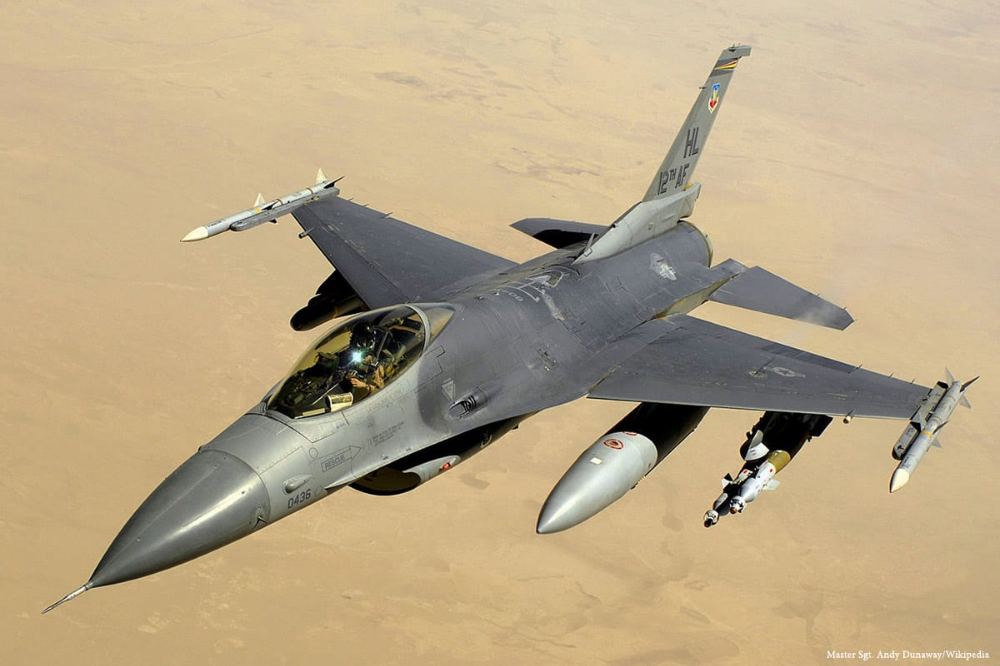
Amid escalating tensions in the Middle East, the U.S. Air Force (USAF) deployed F-16 Block 50 fighters to the region, responding to the Israeli bombing of Iran on October 26. This attack was a retaliation for a ballistic missile assault on Israel earlier in October. The F-16s belong to the 480th Fighter Squadron, based at Spangdahlem Air Base in Germany, and specialize in air defense suppression.
On the day the F-16s arrived, U.S. Secretary of Defense Lloyd Austin III spoke with Israeli Defense Minister Yoav Gallant, affirming the United States’ commitment to defend its forces and partners throughout the region. Austin warned that “Iran should not make the mistake of responding to Israel’s attacks, which should mark the end of this exchange.”
Originally intended to replace F-16s from the 510th Fighter Squadron at Aviano Air Base in Italy, the newly deployed aircraft will now bolster U.S. combat capabilities in the region, as the Aviano F-16s will remain in Italy due to the ongoing Iranian threat.
The U.S. has also enhanced its military presence in the area with the deployment of stealth F-22 Raptors, A-10 Thunderbolt II attack aircraft, and F-15 Strike Eagles, all equipped with advanced active electronically scanned array (AESA) radars. These radars enhance the aircraft’s ability to neutralize enemy drones, which Iran has increasingly deployed, often flying at low altitudes.
In addition to the fighter jets, the U.S. has positioned Terminal High Altitude Area Defense (THAAD) systems in Israel to strengthen air defense against ballistic missiles. General David W. Allvin, U.S. Air Force Chief of Staff, emphasized the urgency of these deployments, stating, “We are deploying them as quickly as we can… We are committed to fulfilling all these tasks as soon as possible.”
The Israeli bombing targeted Iranian military facilities, significantly impacting air defense capabilities and a missile production site responsible for the earlier missile strike on Israel. All Israeli aircraft returned safely from the operation, which drew condemnation from the Iranian government and a U.S. warning against any retaliatory actions.
As U.S. Central Command (CENTCOM) confirmed the arrival of the F-16s, the U.S. remains vigilant in its commitment to regional stability and defense. The U.S. Navy continues to operate a carrier strike group in Middle Eastern waters, including the USS Abraham Lincoln (CVN-72) and the USS Wasp (LHD-1), ensuring readiness to support operations and assist in evacuating U.S. citizens if necessary.
With these deployments, the U.S. Air Force is prepared to support the Israel Defense Forces (IDF) in the event of further hostilities, emphasizing a strong stance against the Iranian threat in the region.
U.S. Strikes Target ISIS Strongholds in Syria, Killing 35 Operatives
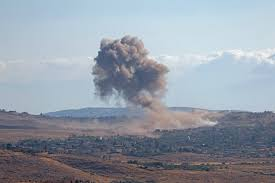
In a decisive move against ISIS in Syria, U.S. Central Command (CENTCOM) announced on Wednesday that American forces had conducted a series of airstrikes on multiple ISIS camps on October 28, killing up to 35 ISIS operatives. The strikes, which took place in the Syrian desert, targeted known ISIS locations, including senior leaders of the organization. CENTCOM has confirmed that no civilian casualties were reported in these operations.
These recent strikes in Syria mark a continuation of increased U.S. military activity aimed at countering ISIS threats in the Middle East. Last week, U.S. and Iraqi forces conducted operations in Iraq’s Anbar Province and central regions, resulting in the deaths of at least seven ISIS operatives. Two U.S. service members sustained injuries in these actions and were subsequently transferred to Walter Reed Medical Center for treatment, with a third being evaluated for traumatic brain injury.
While ISIS’s influence in Iraq and Syria has diminished since its peak nearly a decade ago, Pentagon officials continue to regard the group as a persistent threat. Deputy Pentagon Press Secretary Sabrina Singh stated that while ISIS has spread globally, the organization’s presence in the region does not indicate a resurgence but underscores its ongoing potential to destabilize.
This recent strike in Syria is part of an effort by CENTCOM to disrupt ISIS’s ability to plan and execute attacks, both against civilians and U.S. and allied forces. “The airstrikes will disrupt the ability of ISIS to plan, organize, and conduct attacks,” CENTCOM’s statement read, affirming the commitment to degrading ISIS operational capabilities alongside regional allies.
The recent actions come as the U.S. prepares to reassess its military footprint in Iraq. Approximately 2,500 U.S. troops remain stationed in Iraq to support anti-ISIS operations in collaboration with Iraqi Security Forces. The Pentagon has indicated potential adjustments to this presence in 2025, though specific changes have not been disclosed. Less than 1,000 U.S. troops remain in Syria, where they continue to support anti-ISIS missions.
Since ISIS first emerged as a major threat in 2014, U.S. forces, alongside Iraqi and coalition partners, have engaged in numerous operations to dismantle the group’s control and influence. This week’s successful airstrikes demonstrate an ongoing commitment to ensuring ISIS’s enduring defeat in the region and preventing further attacks against civilians and military personnel.
U.S. and Japanese Forces Sharpen Readiness with Medical Support at Keen Sword Exercise

TWENTYNINE PALMS, California – As the latest Keen Sword exercise unfolds from October 23 to November 1, U.S. Navy Sailors are actively collaborating with Japanese forces in one of the largest bilateral military drills aimed at strengthening combat interoperability and regional security.
Among the participating units, Sailors from Navy Expeditionary Medical Facility (EMF) Bravo, stationed at Navy Medicine Readiness and Training Command (NMRTC) Twentynine Palms, are playing a vital role in medical support. Their involvement emphasizes the significance of healthcare readiness in military operations, as they work to ensure all personnel receive essential medical care if a real-world crisis were to arise.
A longstanding joint effort since 1986, Keen Sword draws together thousands of U.S. and Japanese service members to train in realistic scenarios, preparing for potential mass casualty situations and reinforcing joint operational protocols between the two nations.
Hospital Corpsman 1st Class Raymond Black, a biomedical equipment repair technician from Colorado City, Arizona, explained his team’s mission during the exercise. “While much of the operation involves Navy activities on ships, our team’s primary job is setting up a field hospital. This ensures we’re prepared to handle patient evacuations in an emergency scenario,” said Black. “It’s all about readiness and making sure we’re equipped to provide immediate support if required.”
This medical team brings a range of specialties, creating a comprehensive setup that functions like a full hospital, complete with radiology, preventive medicine, surgical, and administrative support. “The goal is to cover any medical need that arises,” Black added. With extensive experience in field deployments, including Iraq and Kuwait, Black understands the challenges of managing medical equipment in remote environments. “Parts delays and outdated equipment add complications in a field setting, so having those experiences prepares me for the unexpected challenges we might face during Keen Sword.”
Lieutenant Junior Grade Belinda Larche, a patient administration officer from Cameroon, shared the importance of this exercise in testing EMF Bravo’s rapid deployment capability and healthcare readiness in challenging conditions. “Keen Sword is designed to assess our ability to deploy within 10 days and provide Role III healthcare support,” she noted. Drawing from her role as a medical regulator in Iraq, where she managed complex medical evacuations across multiple coalition units, Larche believes these skills will be instrumental in Keen Sword’s success.
Another key figure, Information Systems Technician 3rd Class Christopher Logan from Long Beach, California, is responsible for maintaining stable communication systems, a crucial element for coordinating patient care during the exercise. “As a system administrator, my job is to ensure communications are uninterrupted, which is vital for medical information sharing and efficient evacuation operations,” Logan explained.
In the surgical suite, HM1 Isai Lopez, a surgical technician with prior service at NMRTC Rota and aboard the USS Essex, will be overseeing sterile conditions for potential procedures. Lopez emphasized the value of training under realistic conditions, saying, “Working in simulated mass casualty situations pushes us to optimize our efficiency and coordination. This type of preparation is essential to ensure readiness in real-world scenarios.”
Black also emphasized the strategic benefits of training alongside Japan’s Self-Defense Forces. “Keen Sword helps us resolve potential issues in working together, especially with communication, which is critical to success in joint operations,” he said. “Our goal is to ensure we’re fully prepared with our allies should any conflict arise.”
Held biennially, Keen Sword underscores the U.S. and Japan’s dedication to stability in the Indo-Pacific, particularly as regional security dynamics evolve. “We have to be ready for anything,” Black concluded. “Exercises like this are crucial for keeping our forces sharp and our partnerships strong.”
U.S. Marines Achieve Milestone with Successful Iron Dome Live-Fire Training
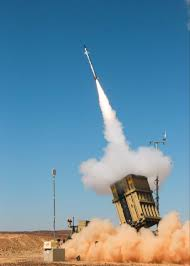
The U.S. Marine Corps has completed its first-ever live-fire training exercise incorporating Israel’s Iron Dome air defense system. This significant event, conducted in collaboration with Israel’s Ministry of Defense, showcased a comprehensive integration of American radar systems, command-and-control centers, and Israel’s Iron Dome interceptor—also known as the Tamir missile—mounted on a mobile launcher specifically developed for the Marines by Israel’s Rafael Advanced Defense Systems and Raytheon.
During the exercise, the Marines effectively intercepted multiple airborne targets, testing the Iron Dome’s continuous launch capabilities from a mobile platform. The drill not only highlighted the operational synergy between U.S. and Israeli technologies but also demonstrated the Iron Dome’s adaptability for various aerial threats, including cruise missiles, drones, and different types of rockets, artillery shells, and mortars.
Part of the Marine Corps’ broader project to develop a medium-range interception capability (MRIC), this live-fire exercise is a key step toward establishing the Marines’ first operational Iron Dome battery. The success of this drill advances the U.S. Marine Corps’ strategic air defense plans, reinforcing its readiness to intercept a range of aerial threats in diverse and challenging environments.
The exercise underscores the long-standing U.S.-Israel defense collaboration, with Israel’s multi-layered defense network playing a critical role. The Iron Dome system, in continuous operational use for over a decade, is part of Israel’s advanced defense structure that includes David’s Sling and the Arrow 2 and 3 systems. With thousands of successful interceptions, the Iron Dome has proven to be an essential tool in safeguarding civilians and infrastructure, especially amidst recent conflicts.
Officials from Israel’s Ministry of Defense and Rafael praised the cooperative achievement. Moshe Patel, head of Israel’s Missile Defense Organization, affirmed the Iron Dome’s versatility and interoperability, noting its seamless integration with U.S. defense systems. Shlomo Toaff, head of Rafael’s Air Defense Division, emphasized the importance of the partnership with the U.S. Marine Corps, recognizing the collaborative potential for advancing air defense technologies further.
This training exercise is a powerful testament to the ongoing U.S.-Israeli defense partnership and marks a new chapter in military interoperability and technological advancement in air defense systems.
