
RED Friday: Honoring the Sacrifice and Service of Our Troops – August 16, 2024

On this RED Friday, we take a moment to reflect on why we wear red on Fridays and the significance it holds for service members across the globe. RED—Remember Everyone Deployed—is more than a color we don. It’s a symbol of solidarity, support, and deep appreciation for the men and women who put their lives on the line for our safety and freedom.
For soldiers like those stationed at Forward Operating Site Powidz, Poland, completing the grueling Norwegian Foot March earlier this week, the mission is always challenging—whether it’s marching 30 kilometers with a heavy rucksack or standing ready to defend our nation’s interests alongside NATO allies. The physical and mental endurance required in these operations remind us that while we go about our daily lives, our troops continuously push themselves to their limits in distant and often dangerous places. Wearing red is a small but powerful gesture of acknowledging their sacrifice and dedication.
Likewise, the sailors and Marines of the USS Somerset (LPD 25), who recently returned home after a seven-month deployment to the Indo-Pacific region, exemplify courage and commitment in the face of adversity. From participating in multinational exercises like Cobra Gold, Tiger Triumph, and RIMPAC to reinforcing relationships with our global partners, their work ensures a stable and secure world. As they dock back home, the symbolism of RED Friday resonates even more deeply—it is a reminder that these service members spent months away from their families, working to protect our freedoms.
In the Mediterranean and Middle East, U.S. Navy forces continue to stand on high alert amidst growing tensions. Their deployment—whether aboard the USS Roosevelt, USS Abraham Lincoln, or numerous destroyers safeguarding vital waterways—is a testament to the ever-vigilant watch our military keeps around the world. These sailors remain forward-deployed, responding to crises and defending our nation’s interests.
RED Friday is not just about honoring one group of service members, but about uniting us all in recognition of the thousands of men and women who are still deployed, working tirelessly to maintain peace, protect our allies, and ensure our security. We wear red for those still overseas—whether they are battling fatigue on a march, embarking on multinational missions, or standing ready in regions marked by tension and uncertainty.
As we move into another RED Friday, let us remember their sacrifice and show our support. By wearing red, we stand together as a nation, echoing the sentiment: “Remember Everyone Deployed.” Our troops, scattered across the globe, deserve our unwavering appreciation and respect, not just on Fridays, but every day.
So this Friday, as you pull on your red shirt, reflect on what it truly represents. It’s not just a color—it’s a message of gratitude, unity, and strength. A message that our troops, wherever they may be, are never forgotten.
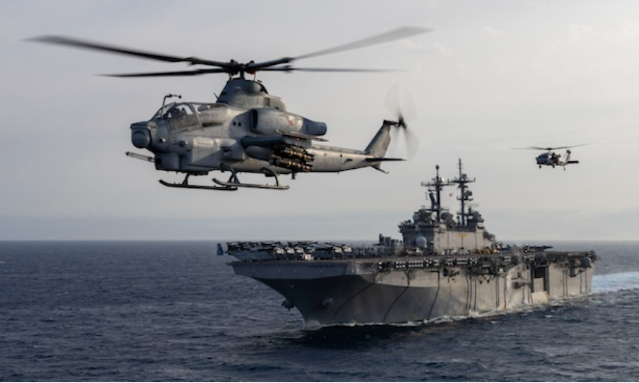
US Navy Expands Presence in Middle East Amid Rising Tensions
The US Navy has an assortment of warships in the Middle East and Eastern Mediterranean.
These assets were deployed to respond to various conflicts and crises — and more are coming.
Here are the warships in the area and what’s coming, according to a US defense official.
The US Navy is rapidly moving additional forces to the Middle East as the region remains on high alert, bracing for a potential attack on Israel by Iran and its proxies.
Iranian officials have vowed to take revenge over the recent assassinations of Hezbollah and Hamas leaders — both of which have been blamed on Israel — and fears continue to grow that any retaliation from Tehran and its proxies could plunge the Middle East into more violence.
Facing this possibility, the Pentagon has deployed several military assets to the Middle East this month to defend Israel and US troops in the region. Most recently, on Sunday, the secretary of defense, Lloyd Austin, directed a submarine to the Middle East and ordered a carrier strike group to accelerate its transit to the region.
When these forces arrive on station, they’re set to join a wide range of existing naval capabilities in the Middle East and Eastern Mediterranean that were already deployed in response to various conflicts and crises.
The following are the American warships already in the area and those on their way, a US defense official who spoke to Business Insider on the condition of anonymity to discuss sensitive force posture changes said Tuesday, adding that the Navy was “ready to respond to anything.”
Eastern Mediterranean
The Wasp Amphibious Ready Group deployed in June and is operating in the Eastern Mediterranean, which falls under US European Command.
Related stories
Its arrival in the region came amid concerns over increasing hostilities between Israel and Lebanon’s Hezbollah.
The ARG consists of the multipurpose amphibious assault ship USS Wasp and its embarked 24th Marine Expeditionary Unit, the dock landing ship USS Oak Hill, and the amphibious transport dock USS New York.
Additionally, two destroyers — the USS Bulkeley and the USS Roosevelt — have been in the area for several weeks.
A third destroyer, the USS Laboon, is in port at Souda Bay, a decades-old forward-operating station on the Greek island of Crete. Laboon spent months deployed off the coast of Yemen as part of the US response to Houthi attacks on merchant shipping lanes.
Red Sea
The destroyer USS Cole is operating in the Red Sea, where the Navy has seen continuous conflict for months.
Like the Laboon and a number of other American warships, the Cole has been involved in the Navy’s ongoing counter-Houthi mission for several weeks.
Advertisement
As part of this mission, this warship is tasked with defending commercial shipping lanes in the Red Sea and Gulf of Aden — both of which fall under US Central Command, or Centcom — from missiles and drones launched by the Yemeni rebels.
Gulf of Oman
The Theodore Roosevelt Carrier Strike Group arrived in the Centcom region last month to replace the Dwight D. Eisenhower Carrier Strike Group, which spent months battling the Houthis but has since returned to the US.
The strike group consists of the aircraft carrier USS Theodore Roosevelt and four destroyers — specifically the USS Michael Murphy, USS John S. McCain, USS Daniel Inouye, and USS Russell — and is operating around the Gulf of Oman.
Warships in transit
Shortly after the back-to-back killings of a top Hezbollah commander in Beirut and Hamas’ politician chief in Tehran two weeks ago that prompted calls for revenge in Iran, the US announced sweeping force posture changes in the Middle East.
The Pentagon directed the USS Abraham Lincoln Carrier Strike Group to replace the Roosevelt and its escort ships in the Centcom area of responsibility.
The coming Lincoln strike group consists of the aircraft carrier USS Abraham Lincoln and the destroyers USS Spruance, USS Stockdale, USS Frank E. Petersen, and USS O’Kane.
The strike group is still in the Philippine Sea, so it still has a ways to go before arriving in the Middle East. But Austin has ordered the Lincoln strike group to accelerate its transit to the region, where it’ll add “to the capabilities already provided” by the Roosevelt strike group, the Pentagon has said.
The defense secretary has also directed the guided-missile submarine USS Georgia to the Centcom area. The Ohio-class vessel is armed with more than 150 Tomahawk land-attack cruise missiles and was in the Mediterranean Sea as of July 31.
The Pentagon press secretary, Air Force Maj. Gen. Pat Ryder, told reporters at a briefing that as of Tuesday, the missile submarine had not yet arrived in the Centcom region.
USS Somerset Returns After Seven-Month Deployment Strengthening Indo-Pacific Alliances
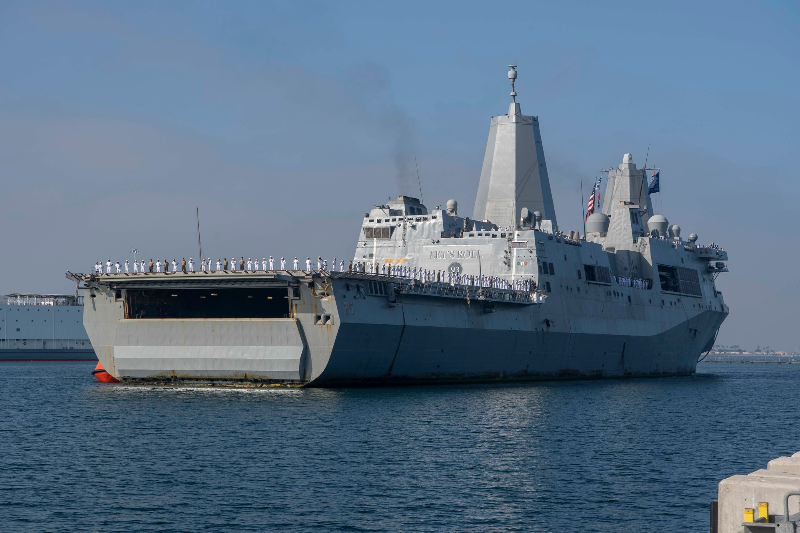
SAN DIEGO – On August 13, 2024, the USS Somerset (LPD 25), a San Antonio-class amphibious transport dock, returned home to San Diego after a seven-month deployment in the U.S. 7th and 3rd Fleet areas of operations. More than 1,400 Sailors and Marines from the 15th Marine Expeditionary Unit (MEU) were aboard, participating in joint and combined exercises that showcased the U.S. Navy and Marine Corps’ ability to respond rapidly and decisively to military operations.
“Somerset’s motto is ‘courage through adversity,’ and no crew exemplifies that more than the Navy-Marine Corps team aboard this ship,” said Capt. Andrew Koy, commanding officer of Somerset. He emphasized that the multilateral exercises Somerset participated in were vital in strengthening partnerships and alliances across the Western Pacific.
During its deployment, Somerset engaged in numerous exercises, such as Cobra Gold, Tiger Triumph, Balikatan, Cooperation Afloat Readiness and Training (CARAT) Indonesia, Tiger Strike, and Rim of the Pacific (RIMPAC) 2024. These efforts reinforced America’s commitment to its allies and enhanced force interoperability in the Indo-Pacific region.
In January 2024, Somerset participated in Exercise Cobra Gold, the largest joint exercise in mainland Asia, held in Thailand. This iteration saw U.S. Marines from the 15th MEU conduct community relations events and engage in unit-level training alongside Republic of Korea and Royal Thai Marines. The exercise improved interoperability and showcased collective strength during a Combined Arms Live Fire Exercise (CALFEX).
Following Cobra Gold, Somerset moved to India for Tiger Triumph 2024, marking the third U.S.-India collaboration. The exercise focused on joint humanitarian assistance and disaster relief operations, improving operational maneuvers and command coordination between U.S. and Indian forces.
Somerset then joined Exercise Balikatan 2024 in the Philippines, which featured French, Australian, U.S., and Filipino service members. Over three weeks, partner nations conducted maritime security drills, amphibious operations, and cyberspace exercises. The training injected $50 million into the local economy through humanitarian projects, such as building schools and medical centers.
After Balikatan, Somerset participated in CARAT Indonesia, enhancing collaboration between U.S. and Indonesian forces in maritime operations. This exercise marked 30 years of CARAT and 75 years of U.S.-Indonesia diplomatic relations.
The penultimate stop for Somerset was Malaysia for Exercise Tiger Strike 24, which improved joint force readiness and amphibious capabilities with Malaysian counterparts.
The deployment concluded with participation in RIMPAC 2024, the world’s largest international maritime exercise. Aboard Somerset, engineers demonstrated cutting-edge 3D printing technology, while Army surgeons tested interoperability in medical operations, marking the first use of an Army unit in place of a fleet surgical team.
As part of the Boxer Amphibious Ready Group and the 15th MEU team, Somerset remains a flexible and self-sustained crisis response force capable of handling everything from combat missions to humanitarian aid across the Indo-Pacific region.
Soldiers Complete Grueling Norwegian Foot March in Poland
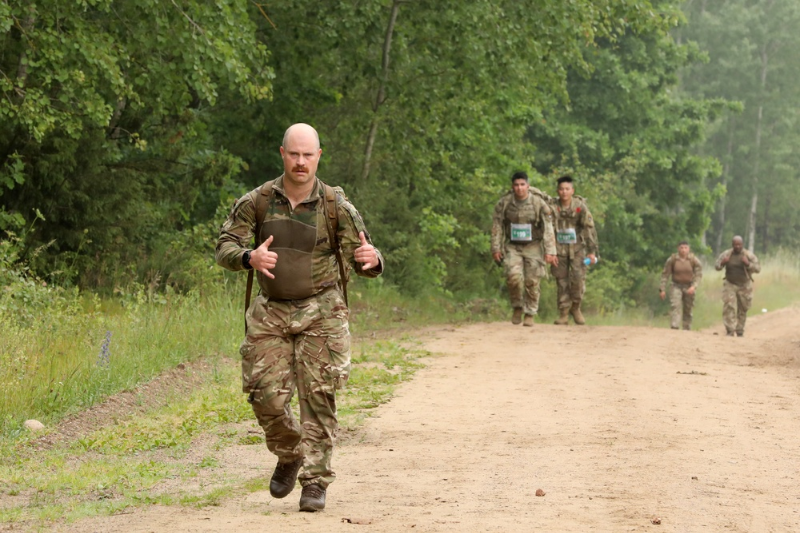
August 15, 2024 — FORWARD OPERATING SITE POWIDZ, Poland — Over 300 soldiers from across NATO’s eastern flank, from Romania to Estonia, gathered at the 33rd Air Transport Base in Poland to take on the grueling Norwegian Foot March. The event, which began in 1915 as a test of endurance for Norwegian soldiers, now serves as a challenging foreign service badge opportunity for U.S. service members.
Spearheaded by Staff Sgt. Ramon Figueroa and Staff Sgt. Letzy Williamsperez of Alpha Company, 553rd Division Sustainment Support Battalion, Task Force Gunslinger, the march covered 30 kilometers (18.6 miles) with each participant carrying an 11 kg (24 lbs.) rucksack. Participants were required to complete the march within a specific time based on age and gender.
The event drew soldiers aged 18 to 53 from permanent stations in Poland and deployed forces along NATO’s eastern flank. The largest age group, 21 to 34-year-olds, had to finish within five hours and 15 minutes for women, and four hours and 30 minutes for men.
For some, like Spc. Malaika Lukata, this was their first attempt. Lukata, a human resources specialist with the 53rd Transportation Battalion, completed the march in five hours and eight minutes. She emphasized the camaraderie that helped her push through the challenge. “It’s a mental and physical challenge, but the people around me made all the difference,” said Lukata, who earned the Norwegian Foot March badge in Bronze for her efforts.
Others saw the march as an opportunity for redemption. 1st Lt. Carson Deushane, an armor platoon leader from Fort Cavazos, Texas, had previously missed the time limit in an ROTC attempt due to taking a wrong turn. This time, Deushane successfully completed the march in four hours and 16 minutes, earning his badge in Bronze.
The event also saw outstanding performances from soldiers like Capt. Huayra Ferrufino of the Virginia National Guard. Ferrufino, who is currently stationed at Forward Operating Site Karliki, Poland, was the first female to finish, completing the march in four hours and 27 minutes. Despite only limited training, she impressed the organizers, earning both the Norwegian Foot March badge and a medal as the fastest female finisher.
The march, held over two days, demonstrated the enduring commitment and resilience of NATO forces stationed in Eastern Europe. Participants praised the event as a valuable challenge, encouraging fellow soldiers to test their endurance and foster camaraderie.
This event highlighted the strength of international cooperation and the shared values of honor, courage, and commitment between the U.S. and its NATO allies.
