
Every RED Friday, we remember Everyone Deployed—not just in the headlines, but in every remote outpost, airfield, convoy route, and fire line where American service members are answering the call far from home.
In June 2025, much of the public’s attention has been fixed on the visible deployment of U.S. Marines and National Guard troops to Los Angeles, where domestic unrest and rising tensions have prompted a strong show of force. Media cameras line the streets, and social feeds fill with commentary. But what they don’t show is just as important—and arguably more vital to America’s long-term security.
This week alone, thousands of U.S. troops are actively deployed across multiple continents, leading complex, high-stakes missions alongside allies and partners. While many Americans may believe the military’s primary focus is domestic stabilization, these global operations prove otherwise—and reveal the strength and reach of America’s Armed Forces and their families who sacrifice quietly behind the scenes.
🇷🇴 Saber Guardian 25: U.S. Army Builds NATO Strength on Europe’s Eastern Flank
From June 9–24, nearly 10,000 troops from the U.S., Romania, and five allied nations are conducting Saber Guardian 25, a massive joint military exercise spanning Czechia, Hungary, and Romania. Led by U.S. Army Europe and Africa, American units like the 2nd Cavalry Regiment are performing live-fire drills, river crossings, and long-range artillery coordination alongside Romanian Land Forces and NATO allies.
This isn’t training for the sake of it—this is frontline readiness in a region where threats are no longer hypothetical. Romania borders Ukraine, and the U.S. presence here sends a crystal-clear message to adversaries: NATO’s shield is active, mobile, and multinational.
🇳🇿 Southern Steel 2025: U.S. Air National Guard and RNZAF Firefighters Strengthen Pacific Alliance
Far across the globe in New Zealand, Southern Steel 2025 concluded this month after 12 days of intense joint firefighting and rescue operations. Forty U.S. Air National Guard Fire & Emergency Services personnel deployed from units in Pennsylvania and Oregon, operating side-by-side with the Royal New Zealand Air Force Aviation Rescue Firefighters.
From live-fire aircraft rescue drills to rope rescues and hazardous materials response, this exercise sharpened interoperability within the Five Eyes alliance. And while no cameras followed these American firefighters into burning fuselages, they proved that global readiness isn’t always about combat—it’s about saving lives, wherever they’re needed.
🇸🇧 Integrated U.S. Navy–Marine Corps Operations in the Solomon Sea
As of June 10, the 31st Marine Expeditionary Unit and the America Amphibious Ready Group are conducting integrated operations in the Solomon Sea, strengthening America’s maritime presence in the Western Pacific. Aboard the USS America, USS New Orleans, and USS Green Bay, Marines and Sailors are executing amphibious raids, flight operations, and rapid response drills in a region where China’s aggressive expansion continues to challenge international norms.
Deployed from Okinawa and across the Indo-Pacific, these Marines and Sailors represent the only continuously forward-deployed MEU in the world. Their presence is not a contingency—it’s an active commitment to freedom of navigation, partner defense, and Indo-Pacific stability.
💔 Families Back Home: The Silent Strength Behind the Uniform
For every deployed Marine in the Solomon Sea, every Army cavalry trooper crossing Romanian rivers, and every Air National Guard firefighter training in Auckland, there’s a family back home navigating daily life without them. These spouses, children, and parents don’t appear on TV, but they carry the weight of separation every day—while the country’s attention too often drifts toward only what’s visible.
It’s easy to forget the full scope of America’s military operations when the only images we see are armored vehicles on American streets. But this week reminds us that real deployment stretches far beyond our borders—to places where the mission is less understood, but no less vital.
🇺🇸 Why RED Friday Matters More Than Ever
Wearing red on Friday isn’t a fashion statement—it’s a national reminder that America’s defenders are deployed globally, 24/7, 365 days a year. While domestic deployments make headlines, the stories of those serving abroad—on ocean waves, in foreign skies, and across distant firefields—often go untold.
This week’s joint operations in Europe, the Pacific, and Oceania show that America is not retreating from its global commitments. From deterrence to disaster response, the U.S. military remains the backbone of international security—and the families behind every uniform remain its foundation.
As we mark this RED Friday, let us not confuse visibility with value. The heart of American service beats across the world. And so should our gratitude.
Saber Guardian 25: U.S. and Romanian Forces Boost NATO Strength Across Eastern Europe
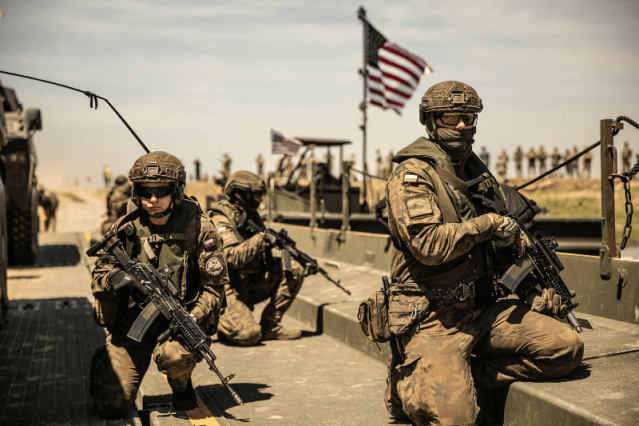
U.S., Romanian, and NATO Allies Conduct Massive Joint Training in Saber Guardian 25
From June 9 to June 24, 2025, more than 10,000 troops from the United States, Romania, and five other NATO and partner nations united for Saber Guardian 25, a wide-ranging multinational military exercise across Czechia, Hungary, and Romania. Designed to test battlefield coordination and NATO’s eastern defense posture, the operation demonstrated strategic mobility, mission command integration, and multi-domain combat readiness.
Participating Nations and Units
United States Army
- Key unit: 2nd Cavalry Regiment, supported by U.S. mechanized, engineering, aviation, and logistics forces.
- Logistics supported by the 21st Theater Sustainment Command’s Area Support Group – Black Sea, operating out of Romania.
Romanian Land Forces
- Core components: Multiple battalion-sized formations including the Multinational Brigade South-East.
- Equipment featured: Piranha V infantry vehicles, TR-85M1 tanks, and NATO-standard artillery.
Additional Allies & Partners
- Participating countries included Czechia, Hungary, Poland, Portugal, and other NATO contributors.
Training Objectives
- Convoy Operations: Executed long-range tactical road marches across three countries.
- River Crossings: Conducted engineering maneuvers over key waterways flowing to the Black Sea.
- Live-Fire Exercises: U.S. and Romanian troops collaborated in combined-arms engagements.
- Rocket Artillery Launches: Demonstrated long-range precision strikes over the Black Sea.
- Joint Command & Control: Refined interoperability through integrated headquarters planning.
Strategic Significance
- NATO Readiness: Strengthened coordination and command integration among NATO land forces.
- Regional Defense Posture: Reinforced NATO’s presence on the eastern flank amid evolving security challenges.
- Rapid Deployment Validation: Showcased NATO’s ability to mobilize and sustain large-scale operations swiftly.
Romania’s Defense Evolution
Romania plays a critical role in NATO’s southeastern defense corridor. With over 35,000 land force personnel, the country continues its military modernization through:
- Acquisition of HIMARS rocket systems and Patriot missile defense.
- Ongoing procurement of F-35 fighters by 2032.
- Hosting of the Multinational Brigade South-East, integrating forces from Poland, Portugal, and others.
Saber Guardian’s Background
Launched in 2013, Saber Guardian has grown into a signature NATO exercise across Eastern Europe. It now serves as a key testbed for alliance cohesion and battlefield integration under realistic, multinational conditions. Following Russia’s invasion of Ukraine in 2022, its importance has intensified in affirming NATO’s commitment to collective security.
Summary Snapshot
| Category | Details |
|---|---|
| Exercise Name | Saber Guardian 25 |
| Dates | June 9–24, 2025 |
| Participating Troops | Approx. 10,000 from 7 nations |
| Key Locations | Czechia, Hungary, Romania |
| Lead Forces | U.S. Army Europe & Africa, Romanian Land Forces |
| Focus Areas | Live-fire, mobility, river crossing, artillery coordination |
| Strategic Outcome | Strengthened NATO integration and deterrence |
Southern Steel 2025 Strengthens U.S.–New Zealand Firefighting Partnership
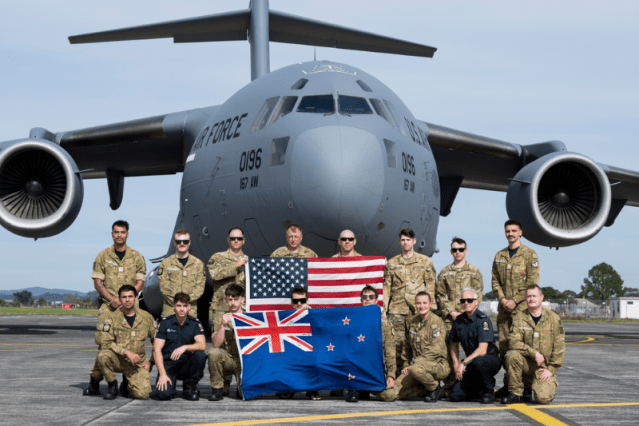
U.S. and RNZAF Firefighters Join Forces in Pacific Training Success
Announced on June 9, 2025, the completion of Exercise Southern Steel marked a significant milestone in U.S.–New Zealand military cooperation. Held in April 2025, this 12-day bilateral exercise brought together U.S. Air National Guard Fire and Emergency Services (F&ES) and Royal New Zealand Air Force (RNZAF) Aviation Rescue Firefighters (ARFF) for advanced training in Auckland, New Zealand.
The operation took place at RNZAF Base Auckland and the Mount Wellington Fire and Emergency New Zealand Region One Training Centre, where both nations integrated personnel and equipment in complex firefighting and rescue scenarios.
Participating Units
United States Air National Guard
- Units involved: 171st, 193rd, and 142nd F&ES
- Deployed 40 personnel with full equipment to New Zealand
- Validated rapid global deployment capabilities
Royal New Zealand Air Force (RNZAF)
- ARFF personnel participated in every training phase
- Contributed host-nation expertise and leadership
- Promoted operational alignment with U.S. partners
Exercise Goals
- Enhance Interoperability
Align U.S. and RNZAF emergency response techniques and procedures - Strengthen Five Eyes Operational Readiness
Extend cooperation beyond intelligence to practical, on-the-ground capabilities - Validate Deployment Efficiency
Demonstrate the U.S. Air National Guard’s ability to deploy a full team globally with zero logistical issues
Background and Origins
Southern Steel began as an idea in Antarctica, where U.S. and RNZAF firefighters collaborated during operations at McMurdo Station. Those early engagements inspired planning within the Five Eyes alliance, culminating in this inaugural exercise a year later.
Training Highlights
Using a progressive “crawl, walk, run” approach, teams completed advanced, hands-on emergency scenarios, including:
- Live-fire aircraft rescue drills
- Hazardous materials response
- Vehicle stabilization and extrication
- Confined space rescues
- High-angle rope operations
The training allowed both nations to sharpen their skills under realistic and high-pressure conditions.
Reflections from the Field
Tech. Sgt. Robert Gregor III, 171st Civil Engineer Squadron (ANG):
“We moved 40 responders and their equipment halfway around the world without a single hiccup.”
Senior Master Sgt. Jesse Marshall, U.S. F&ES Functional Manager:
“Primary objectives included enhancing ARFF interoperability, standardizing TTPs, and strengthening joint deployment capabilities.”
Flight Sergeant Hayden Bayliss, RNZAF:
“Working together allows us to compare techniques and elevate our shared skill set.”
Strategic Impact
Southern Steel 2025 elevated the Five Eyes alliance by demonstrating that cooperation isn’t limited to information sharing—it also includes:
- Tactical synchronization
- Operational deployment readiness
- Regional disaster response capability
The exercise reinforced that the U.S. and New Zealand can operate as one in real-world emergencies.
Looking Ahead
The success of this year’s exercise has opened the door for expanded future iterations. Southern Steel may soon include additional Five Eyes partners and more diverse mission sets, such as cyber defense, medical triage, and maritime emergency operations.
Summary
| Element | Details |
|---|---|
| Exercise Name | Southern Steel 2025 |
| Dates | Conducted in April 2025; reported June 9 |
| Location | Auckland, New Zealand |
| U.S. Units | 171st, 193rd, 142nd ANG F&ES |
| NZ Units | RNZAF Aviation Rescue Firefighters |
| Key Focus | Firefighting, rescue, hazardous materials |
| Strategic Goal | Strengthen Five Eyes emergency readiness |
America ARG & 31st MEU Marines Conduct Integrated Operations in Solomon Sea – June 10, 2025
Comprehensive Report with Background and Strategic Implications
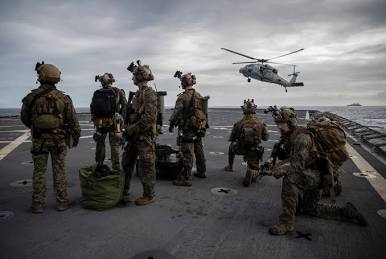
Mission Overview — 9–10 June 2025
From June 9 to June 10, 2025, the USS America Amphibious Ready Group (ARG) and the 31st Marine Expeditionary Unit (MEU) conducted integrated operations in the Solomon Sea. This deployment brought together key U.S. Navy and Marine Corps forces to enhance readiness and demonstrate multi-domain capabilities in the Indo-Pacific region.
Units Involved
America Amphibious Ready Group (ARG)
The ARG is composed of:
- USS America (LHA 6) – An amphibious assault ship that serves as the flagship of the ARG, capable of launching F-35B Lightning II jets and MV-22B Ospreys.
- USS San Diego (LPD 22) – An amphibious transport dock designed to transport and land Marines, their equipment, and supplies.
- USS Rushmore (LSD 47) – A dock landing ship supporting amphibious operations and logistics.
Operating under Amphibious Squadron 11 (PHIBRON 11), these vessels form the forward-deployed naval force in the U.S. 7th Fleet area of operations.
31st Marine Expeditionary Unit (MEU)
- Commanded by: Colonel Chris P. Niedziocha
- Based at: Camp Hansen, Okinawa, Japan
- Established: March 1, 1967; reactivated September 9, 1992
- Size: Approximately 2,200 Marines and Sailors
The 31st MEU is the only permanently forward-deployed MEU and includes a Ground Combat Element (1st Battalion, 7th Marines), an Aviation Combat Element (VMM-262 and VMFA-242), a Logistics Combat Element (CLB-31), and Maritime Special Purpose Forces (MSPF).
Strategic Purpose
This operation emphasized joint force readiness and seamless Navy–Marine Corps integration, with complex air, sea, and amphibious activities. Flight operations featured both F-35B Lightning II stealth fighters and MV-22B Ospreys, demonstrating the full reach of the ARG-MEU team. According to PHIBRON 11 Commander Capt. Patrick German, the exercise showcased “the incredible capability of this Navy and Marine Corps team.”
Timeline of Deployment Activity
- January 28, 2025 – 31st MEU embarked aboard the USS America at White Beach Naval Facility in Okinawa.
- April 28 – May 9, 2025 – MEU Exercise (MEUEX) conducted on Okinawa to validate combat readiness.
- May 26, 2025 – Memorial Day observed at sea in the Philippine Sea.
- June 9–10, 2025 – Integrated ARG-MEU operations conducted in the Solomon Sea.
Capabilities Highlighted
| Capability | Description |
|---|---|
| F-35B Lightning II | Stealth fighter jets providing forward air combat power. |
| MV-22B Osprey | Tiltrotor aircraft used for rapid troop movement and insertion. |
| Maritime Special Purpose Forces | Conduct direct-action missions and hostage rescue operations. |
| Amphibious Assault Platforms | Ships enabling the movement of Marines and equipment ashore. |
| Logistics Support | Combat Logistics Battalion 31 enables sustained operations in remote areas. |
Regional Impact
The Solomon Sea operation is part of a larger U.S. strategy to maintain a free and open Indo-Pacific. Through forward deployment, joint readiness, and rapid-response training, the U.S. sends a strong message of deterrence and assurance to both allies and potential adversaries in the region.
Summary
- What: Integrated Navy–Marine Corps amphibious operations
- When: June 9–10, 2025
- Where: Solomon Sea, Indo-Pacific Region
- Who: America ARG and 31st MEU
- Why: To enhance multi-domain readiness, crisis response, and regional stability
These integrated operations underscore the U.S. military’s continued focus on preparedness, mobility, and strategic presence in the Western Pacific. The America ARG and 31st MEU remain at the forefront of Indo-Pacific security and crisis-response capabilities.
Connecticut’s 1-102nd Infantry Returns Home from Greece After ‘Immediate Response 25’ NATO Exercise
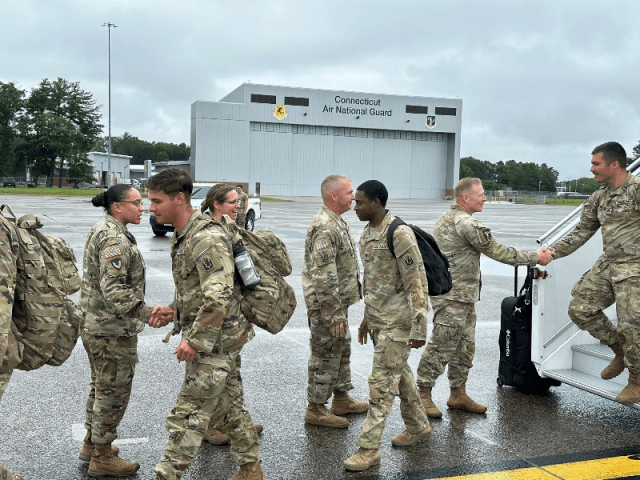
June 11, 2025, soldiers from Connecticut’s 1-102nd Infantry Regiment returned home after completing a multinational training mission in Greece. WELCOME HOME WARRIORS!! The unit, part of the 86th Infantry Brigade Combat Team, took part in Immediate Response 25, a major NATO exercise that was part of the broader Defender 25 series across Europe.
High-Intensity NATO Training
During their time in Greece, the 1-102nd Infantry engaged in live-fire mortar exercises, air-assault drills, and mounted operations using Humvees and .50-caliber machine guns. They trained side-by-side with Greek forces and other NATO allies in areas including Alexandroupolis and Petrochori. The exercises were designed to strengthen combat readiness and multinational coordination in response to modern threats.
Mission Highlights:
- Amphibious landings and air-assault operations
- Joint maneuvers with 29 partner nations
- Live-fire and combined-arms drills
- Focus on rapid response and alliance interoperability
Community Homecoming
The soldiers arrived at Bradley Air National Guard Base to a warm welcome from family members, fellow Guard personnel, and community leaders. The Connecticut National Guard shared moments from the return on social media, celebrating the dedication and sacrifice of these citizen-soldiers.
Local officials praised the regiment’s performance and emphasized how these missions contribute to both global stability and local pride. Many of the returning troops now resume civilian roles across Connecticut with added skills and experience.
Historical Context
The 1-102nd Infantry Regiment has served the nation in World Wars, post-9/11 operations, and numerous overseas deployments. Their involvement in Immediate Response 25 adds to a century-long legacy of service and resilience.
Looking Ahead
The return of the 1-102nd marks the end of one mission, but the benefits of their training will be felt at home and abroad. As part of NATO’s broader readiness efforts, the unit’s successful participation showcases both the strength of American forces and the vital role of Connecticut’s National Guard in global defense.
These returning soldiers remind us that service doesn’t end when the mission is over—it continues at home, in our communities, and in their preparation for whatever comes next.
