
Veterans have long stood as some of the most credible and respected individuals in society. Their service to the nation not only earns them honor but also places them in positions of trust within their communities. Veterans’ service organizations (VSOs) are built on this foundation of trust, providing crucial support and advocacy for those who have served. Yet, in recent times, this hard-earned credibility is under attack, not from external enemies, but from a modern, insidious threat: the hacking and cloning of Facebook accounts.
Across social media, especially on platforms like Facebook, veterans and those associated with VSOs are experiencing a disturbing rise in the number of cloned and hacked accounts. These malicious acts are not just an annoyance; they are a direct assault on the trust that veterans and their organizations have built over years, even decades, of service.
In the past, such occurrences were rare, and when they did happen, Facebook was quick to respond, often taking swift action to remove the fraudulent accounts. However, in recent times, these hacking incidents have become an almost daily challenge. What’s more alarming is that Facebook’s response—or lack thereof—has drastically changed. Despite clear evidence that accounts have been compromised, the platform consistently fails to act, leaving veterans and VSOs vulnerable to reputational damage.
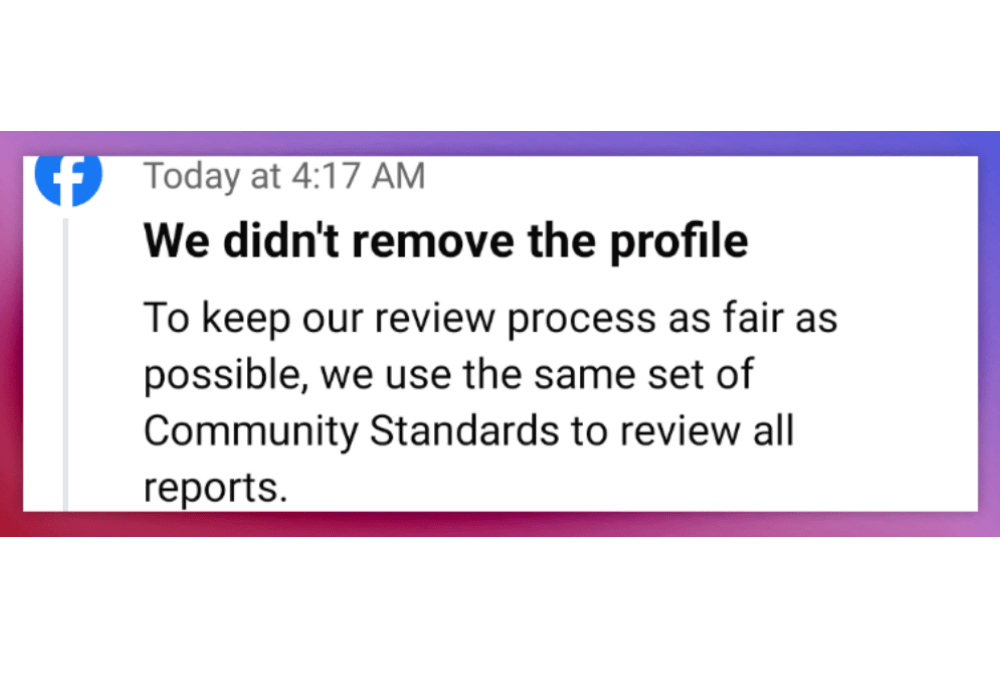
Every time a report is made about a hacked or cloned account, the response from Facebook is nearly always the same:
“We didn’t remove the profile.
To keep our review process as fair as possible, we use the same set of Community Standards to review all reports.
We’ve taken a look and found that the profile doesn’t go against our Community Standards.
We understand that this might be upsetting so we recommend exploring the options available to control what you see.
If you want us to review something specific within a profile, be sure to report the content (example: photo), not the entire profile.
You can also request a review within 180 days if you disagree with the decision to not take this down.”
This response is not only frustrating but potentially dangerous. When the account of a veteran or a VSO is hacked, the consequences can be far-reaching. These individuals and organizations often have broad followings—people who trust their posts and communications. When these trusted accounts are taken over by hackers, the damage can be immediate and severe. Friends, family, and supporters may fall victim to scams or misinformation, believing it to come from a reliable source. The betrayal is profound, and often, the trust that was once placed in these veterans and their organizations is irreparably damaged.
The implications of these actions—or inactions—by Facebook are grave. When a veteran’s account is compromised, and Facebook fails to act, the platform is complicit in the destruction of reputations. It undermines the very fabric of trust that veterans have built through their service. Worse, it can tarnish the reputation of entire organizations, causing harm to those who rely on their guidance and support.
Veterans, who have dedicated their lives to defending the country, now find themselves in the vulnerable position of having to defend their own reputations and those of their organizations. This situation is not just unfair; it’s a form of negligence that borders on criminal behavior. By ignoring reports of hacking and cloning, Facebook is allowing the deception to continue, further eroding the trust that veterans and their service organizations have spent years cultivating.
The time has come for Facebook to take these threats seriously. Veterans and their organizations deserve better protection from the very platforms they use to connect with and support their communities. The credibility and trustworthiness of these individuals and groups must not be left at the mercy of hackers and those who would seek to exploit them.
