
Red Friday: CVB Honors Deployed Troops with Unyielding Support Amid Global Military Movements

On Red Friday, August 23, 2024, the Connecticut Veterans Bulletin (CVB) once again stands firmly behind our deployed U.S. military troops, recognizing their sacrifices as global tensions escalate. From the strategic deployments in the Pacific to joint exercises in South Korea, these moments shape not only global defense postures but the hearts and minds of our troops abroad. Through each passing Red Friday, CVB members remain steadfast in their dedication to honoring and supporting these brave men and women.
Recently, the amphibious assault ship USS Boxer steamed into Tokyo Bay, bringing a much-needed respite to its crew after overcoming persistent mechanical issues. This visit, aimed at reaffirming the enduring U.S.-Japan partnership, also provided a momentary escape for more than 2,000 sailors and Marines aboard. Yet, while they were temporarily on land, the sobering reality of their duties lingered. Amid regional tensions and historic threats in the Pacific, their thoughts undoubtedly turned to their mission ahead.
Meanwhile, the Ulchi Freedom Shield 24 exercise commenced at Osan Air Base, South Korea, marking a significant milestone in the readiness efforts of the 51st Fighter Wing. For the first time in recent history, this recurring wing readiness exercise was fully integrated into Ulchi Freedom Shield. Over several days, personnel practiced flying and agile combat employment (ACE) operations. These efforts are vital to maintaining tactical and operational readiness across the Pacific, reinforcing the U.S. commitment to stability in the region. With every mission flown and strategy honed, deployed U.S. forces take comfort in knowing they stand ready to protect the freedoms they hold dear.
At the same time, tensions in the South China Sea flared following a collision between Chinese and Philippine coast guard ships. The U.S. responded by reaffirming its commitment to its oldest Asian ally under the 1951 U.S.-Philippines Mutual Defense Treaty. Such incidents highlight the precarious nature of military deployments in contested territories, where even routine operations carry the potential for conflict. For U.S. forces deployed in the region, this ongoing uncertainty makes the unyielding support from home all the more critical.
CVB members, through their continuous dedication, serve as a vital link between the home front and our deployed troops. By rallying behind Red Friday initiatives and offering encouragement, CVB creates a morale-boosting connection to deployed personnel. Knowing they are supported back home, these service members—whether navigating challenges in Japan, South Korea, or the South China Sea—can draw strength from the unwavering commitment of their fellow veterans and families.
CVB’s ongoing support reaches far beyond words; it reminds deployed troops that while their mission may be far from home, they are never alone. As global conflicts and exercises unfold, the enduring support from organizations like CVB ensures that U.S. forces remain connected to their communities and appreciated for their immense sacrifices.
U.S. Reaffirms Defense Commitment Amid Tensions in South China Sea

On August 20, 2024, Washington responded to a recent maritime collision between Chinese and Philippine coast guard ships in the South China Sea, highlighting the enduring U.S.-Philippines Mutual Defense Treaty. The collision occurred near the disputed Spratly Islands’ Sabina Shoal, located within the Philippines’ exclusive economic zone.
U.S. State Department spokesperson Vedant Patel emphasized that Article IV of the 1951 U.S.-Philippines Mutual Defense Treaty extends protection to Philippine armed forces, public vessels, and aircraft, including the Coast Guard, in the South China Sea. He condemned China for causing structural damage to Philippine vessels and endangering crew members.
Patel urged China to adhere to international law and cease destabilizing actions, reaffirming U.S. support for the Philippines’ lawful maritime operations. Meanwhile, China’s foreign ministry claimed Sabina Shoal as Chinese territory, blaming the Philippines for the collision and vowing to defend its sovereignty.
This latest incident is part of an escalating pattern of clashes between China and the Philippines over territorial disputes in the South China Sea. Philippine President Ferdinand Marcos Jr. has warned that any willful act leading to the death of a Filipino national could cross a dangerous red line, potentially invoking the mutual defense treaty and drawing U.S. and Chinese forces into a larger conflict.
USS Boxer Arrives in Japan for First Deployment in Five Years
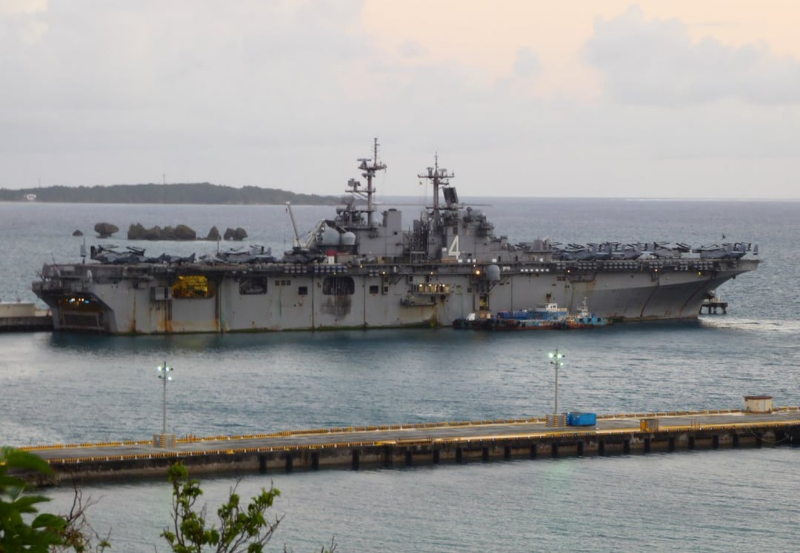
YOKOSUKA NAVAL BASE, Japan — The amphibious assault ship USS Boxer arrived in Tokyo Bay over the weekend for its first deployment in five years. The visit aims to strengthen U.S.-Japan relations and give the ship’s crew, consisting of over 2,000 sailors and Marines, a well-deserved break. Lt. Cmdr. John Mike, spokesperson for Expeditionary Strike Group 7, shared that the crew is excited to explore the unique culture, food, and sights of Yokosuka.
The Boxer’s arrival came just after Typhoon Ampil passed the area, narrowly avoiding landfall. For security reasons, the exact duration of the ship’s stay was not disclosed.
Before arriving in Japan, the Boxer and the amphibious dock landing ship USS Harpers Ferry had visited Busan, South Korea. The Boxer offloaded Marines from the 15th Marine Expeditionary Unit to train with their South Korean counterparts. The Harpers Ferry also made a stop at Sasebo Naval Base in southwestern Japan.
Lt. Cmdr. Mike emphasized the versatile role of the Boxer, saying that wherever the ship operates within the U.S. 7th Fleet, it provides a flexible and self-sustained force capable of combat missions, humanitarian aid, and disaster relief.
This deployment follows a series of mechanical setbacks since the ship’s last mission in 2019, when it navigated the Persian Gulf amid tensions with Iran. After returning to its homeport of San Diego in 2020, the Boxer underwent a $200 million overhaul that extended beyond the original 18-month timeline, lasting over two years. Engine component failures caused additional delays in 2022, further prolonging its return to service. The Boxer finally left San Diego on April 1, 2024, only to return for further maintenance. However, following emergency repairs to its rudder, the ship resumed its deployment in mid-July.
51st Fighter Wing Joins Ulchi Freedom Shield 24 for Major Readiness Exercise
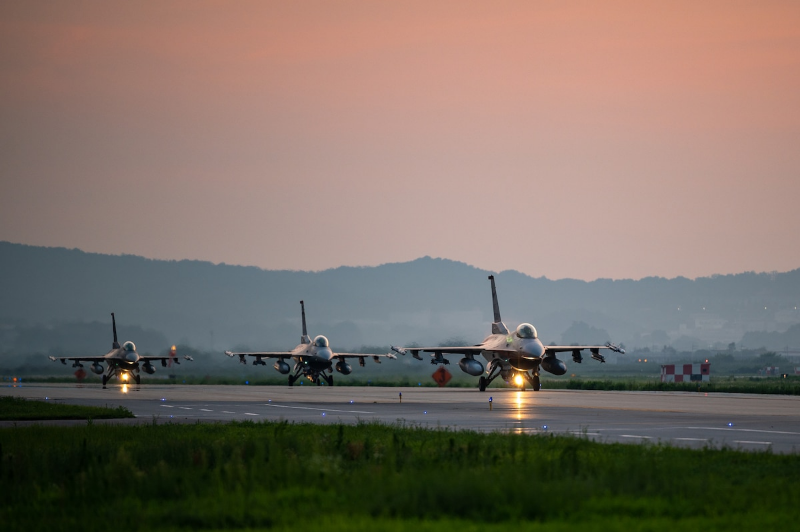
OSAN AIR BASE, South Korea – For the first time in recent memory, the 51st Fighter Wing (FW) at Osan Air Base has aligned its routine readiness drills with the Ulchi Freedom Shield 24 (UFS 24) exercise. The wing’s readiness operations began on August 19 and are scheduled to continue through August 23, 2024.
The 51st FW is focusing on local flight operations and agile combat employment (ACE), with an emphasis on improving its overall readiness while also supporting the training goals of Seventh Air Force and U.S. Forces Korea (USFK). Col. William McKibban, commander of the 51st FW, emphasized the importance of these activities, stating, “Exercises like this are essential to ensuring that we’re prepared to fight on short notice, from the tactical level to the operational.”
This exercise will see the 51st FW working closely with Seventh Air Force and USFK personnel, practicing contingency responses, force deployment, and maintaining ongoing base operations. The training also involves deploying fighter aircraft and personnel to a secondary location within South Korea, testing the unit’s ability to operate in less familiar surroundings with little warning.
By engaging in these training operations, the 51st FW continues to enhance its readiness and reinforces the U.S. commitment to maintaining stability and security in the Pacific region. UFS 24, an annual joint exercise involving both U.S. and South Korean forces, is aimed at strengthening defense and response capabilities through a mix of live, virtual, and simulated scenarios tailored to the evolving threats in the area.
