

As we approach Pearl Harbor Day, this RED Friday serves as a solemn reminder of the sacrifices made by our service members, past and present. It’s a day to wear red in solidarity, honoring the men and women who remain deployed across the globe, safeguarding the freedoms we hold dear.
Pearl Harbor Day, commemorated annually on December 7, marks the day in 1941 when a surprise attack on U.S. forces stationed at Pearl Harbor propelled America into World War II. The sacrifices of those who served then paved the way for the resilience and commitment we see in today’s armed forces.
This week, the focus remains on those currently serving far from home, including units like the recently inaugurated U.S. Space Forces Japan. Stationed at Yokota Air Base near Tokyo, this team works alongside Japanese allies to strengthen space surveillance and missile warning capabilities—critical components of modern defense. Their efforts symbolize the enduring spirit of collaboration and mutual support that has defined alliances since the days following Pearl Harbor.
On this RED Friday, let us take a moment to reflect on the dedication of every deployed service member. Whether patrolling the seas, securing the skies, or operating in the uncharted domain of space, they embody the courage and determination of those who came before them.
As we prepare to honor Pearl Harbor Day tomorrow, we encourage everyone to not only wear red today but also to share a message of gratitude to those in uniform. Their sacrifices—both historic and ongoing—ensure the legacy of service and protection remains unbroken.
With the News of Its Departure From the Middle East, USS Abraham Lincoln Moves to the South China Sea
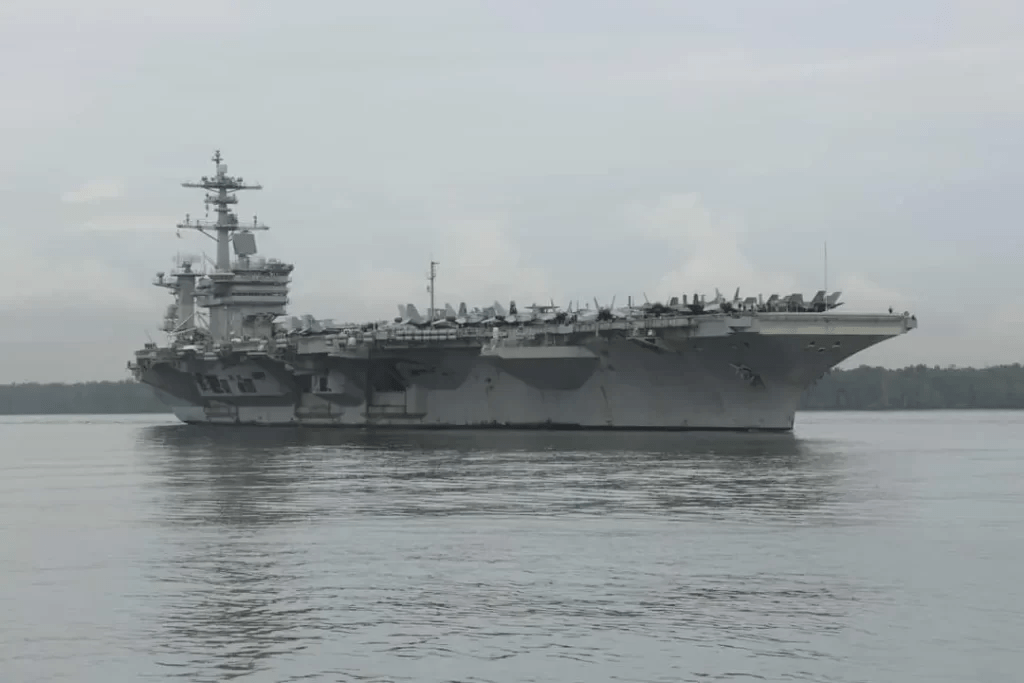
The USS Abraham Lincoln (CVN-72), flagship of Carrier Strike Group Three, has completed a pivotal redeployment. Initially operating under the Pacific’s Seventh Fleet, the nuclear-powered aircraft carrier was redirected to the U.S. Central Command (USCENTCOM) area of operations in late August 2024. This decision, made by Secretary of Defense Lloyd Austin, came in response to escalating regional conflicts between Israel and terrorist groups. The USS Abraham Lincoln joined the USS Theodore Roosevelt (CVN-71) in USCENTCOM’s area, providing enhanced protection for ground and maritime assets against drone, cruise missile, and ballistic missile threats.
Operations in the Middle East
The carrier conducted operations in the USCENTCOM area for nearly three months, bolstering U.S. military presence during a critical period. After fulfilling its mission, the USS Abraham Lincoln transitioned back to the Pacific theater.
Arrival in Malaysia
On Saturday, November 23, 2024, the USS Abraham Lincoln docked at the Port Klang Cruise Terminal in Kuala Lumpur, Malaysia, for a four-day liberty call. This marked the carrier’s first visit to Malaysia since the infamous 2013 arrest of Leonard “Fat Leonard” Francis, who previously managed the terminal. The crew enjoyed a much-needed break before continuing their deployment.
Departure From Malaysia
On Wednesday, November 27, 2024, the USS Abraham Lincoln departed Malaysia, accompanied by Japan Maritime Self Defense Force destroyer JS Samidare (DD-106). The Japanese destroyer, which had docked on November 24 after completing anti-piracy operations in the Gulf of Aden, began its homeward journey following drills with the Royal Malaysian Navy. Meanwhile, the Abraham Lincoln and its escorts headed toward the South China Sea.
Escort Operations
The USS Abraham Lincoln linked up in the Singapore Strait with its destroyer escorts: USS Spruance (DDG-111) and USS Michael Murphy (DDG-112), which had been in Phuket, Thailand, and USS Frank E. Petersen Jr. (DDG-121), stationed in Singapore. This maneuver occurred as the carrier departed the Malacca Strait, ensuring a coordinated transition into the South China Sea.
Transition to the South China Sea
On December 1, 2024, the USS Abraham Lincoln began conducting routine operations in the U.S. Seventh Fleet’s area of responsibility. As the largest forward-deployed numbered fleet, the Seventh Fleet collaborates with allies and partners to maintain a free and open Indo-Pacific region. An F/A-18E Super Hornet from Strike Fighter Squadron (VFA) 151 was launched from the carrier’s flight deck, underscoring the carrier’s readiness.
Broader Regional Developments
The USS Abraham Lincoln’s presence coincides with significant military activity in the South China Sea. Russian Navy vessels, including the corvettes RFS Gromkiy (335), RFS Hero of the Russian Federation Aldar Tsydenzhapov (339), and RFS Rezkiy (343), along with the submarine RFS Ufa (B-588), recently completed port visits to Malaysia and Thailand. These deployments reflect ongoing training and engagement missions in Southeast Asia. Additionally, Japanese forces tracked multiple People’s Liberation Army Navy (PLAN) ships near Japan, emphasizing heightened regional naval activity.
U.S. Maritime Patrols
On November 26, 2024, a U.S. Navy P-8A Poseidon Maritime Patrol Aircraft conducted a transit through the Taiwan Strait. According to Taiwan’s Ministry of National Defense, the aircraft flew from south to north in international airspace. While Taiwan’s forces maintained control over the region, China’s People’s Liberation Army (PLA) denounced the move as provocative, with spokesperson Snr. Col. Cao Jun criticizing the U.S. for hyping the incident. The PLA Eastern Theater Command reported monitoring and tracking the aircraft during its transit.
Commitment to Stability
The USS Abraham Lincoln’s redeployment to the South China Sea reflects the U.S. Navy’s commitment to maintaining stability and freedom of navigation in the Indo-Pacific. Amid growing regional tensions, the carrier’s movements underscore the importance of allied partnerships and the strategic role of forward-deployed naval forces.
U.S. Conducts Airstrikes in Syria to Protect Forces

The U.S. military executed a series of airstrikes in eastern Syria on November 28, 2024, targeting equipment operated by militant groups to protect American personnel stationed in the region, the Pentagon announced. The strikes underscore the U.S.’s commitment to defending its forces while maintaining a clear stance of non-involvement in Syria’s broader civil conflict.
Targeted Strikes Neutralize Militant Equipment
According to Pentagon officials, the operation targeted three truck-mounted rocket launchers, multiple mortars, an armored personnel carrier, and a main battle tank. The strikes followed attacks involving rockets and mortars fired toward a U.S. outpost at Mission Support Site (MSS) Euphrates. Air Force Maj. Gen. Patrick S. Ryder, Pentagon Press Secretary, emphasized the defensive nature of the operation, stating, “This was a self-defense strike carried out to ensure the safety of our personnel and deter any further attacks.”
Reports suggest that Fairchild Republic A-10C Thunderbolt II ground-attack jets, renowned for their close-air support capabilities and tank-destroying firepower, were deployed during the strikes. The distinct sound of their GAU-8 Avenger 30mm cannon was reportedly heard in videos circulating on social media, although the footage remains unverified. The deployment marks the second use of A-10 aircraft in defense operations in Syria within the past week.
Recent Incidents Highlight Rising Threats
The operation last Thursday follows another defensive strike on November 29, when A-10 jets eliminated militants preparing to launch rockets toward MSS Euphrates. Maj. Gen. Ryder noted that these repeated engagements demonstrate the military’s readiness to respond to threats against U.S. forces.
“The self-defense actions successfully eliminated imminent threats to U.S. personnel at MSS Euphrates,” Ryder said, adding that the Department of Defense continues to assess the operators of the targeted weaponry. He highlighted that Iranian-backed militias, known for past attacks on MSS Euphrates, are active in the region.
U.S. Mission Remains Focused on Defense
Ryder reiterated that these defensive strikes are unrelated to the recent escalation in Syria’s civil war, where rebel forces led by Hay’at Tahrir al-Sham (HTS) have made significant advances, including seizing control of Aleppo.
“To be clear, these self-defense actions successfully eliminated imminent threats to U.S. personnel and were not linked to any broader activities in northwest Syria by other groups,” Ryder stated. He emphasized that the U.S. mission in Syria remains centered on protecting American forces and collaborating with the Syrian Democratic Forces (SDF) to counter ISIS.
Complexity in Syria’s Ongoing Conflict
While the U.S. strikes were defensive, the situation in Syria remains volatile. Rebel forces and pro-Assad factions are locked in fierce battles, adding layers of complexity to the already fragmented conflict. The Pentagon’s clarification underscores the U.S.’s intent to avoid becoming entangled in the broader war while maintaining its ability to safeguard its personnel.
The deployment of the A-10 Thunderbolt II—an iconic aircraft known for its resilience and precision—highlights the evolving threats in Syria and the measures the U.S. is prepared to take to protect its interests in the region. As the civil war unfolds, the U.S. maintains its focus on counter-ISIS operations and preserving regional stability, even amid rising tensions and challenges.
U.S. Space Forces Japan Strengthens Defense Collaboration with Host Nation
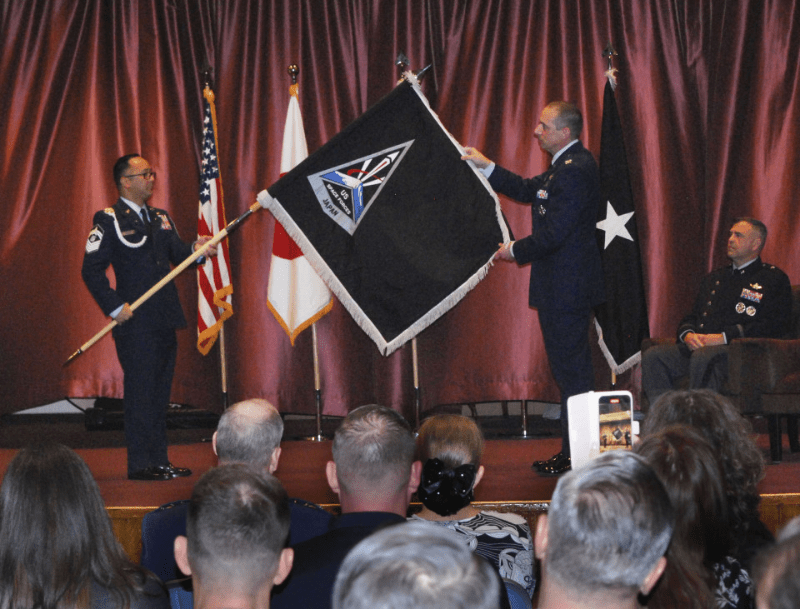
The United States recently inaugurated its first Space Force unit in Japan, emphasizing enhanced defense cooperation and support for deployed service members. The U.S. Space Forces Japan, officially activated at a ceremony held at Yokota Air Base near Tokyo, serves as a field component under the U.S. Space Forces Indo-Pacific, subordinated to U.S. Forces Japan.
This new unit is poised to significantly bolster Japan’s space surveillance and missile warning capabilities. It also aims to ensure seamless coordination with the Space Operations Group of the Japanese Air Force. According to Colonel Ryan Laughton, commander of the U.S. Space Forces Japan, these capabilities are critical for deterring aggression and protecting allied forces.
Brigadier General Anthony Mastalir, commander of the U.S. Space Forces Indo-Pacific, highlighted the unit’s role in fostering deeper collaboration and synchronization between the U.S. and Japan. He underscored the importance of addressing regional threats to stability, which include advancements in space-based military technologies.
The U.S. Space Force, established in December 2019 as the sixth branch of the U.S. military, focuses on ensuring security in space. With strategic competitors increasingly active in this domain, the branch is dedicated to safeguarding allied interests. Lieutenant General Stephen Jost, head of U.S. Forces Japan, reaffirmed his commitment to integrating space operations into the alliance’s overall deterrence efforts.
Last month, during a meeting in Darwin, Australia, U.S. and Japanese defense chiefs pledged further bilateral space cooperation. Their discussions included developing low Earth orbit satellites to counter threats posed by hypersonic missiles. These weapons, capable of traveling at speeds exceeding Mach 5 while maneuvering within the atmosphere, represent a growing challenge.
As global dynamics evolve, this latest development signifies a strengthened alliance between the U.S. and Japan, focused on protecting shared interests and ensuring the safety of those serving in this critical domain.
