
🔴 RED FRIDAY ALERT 🔴
Attention, Connecticut Veterans!
On this Friday, April 12, 2024, we honor and remember our brave men and women who have served and continue to serve our nation. Today, we proudly wear red to show our support and gratitude for their sacrifices.
Let us never forget the courage and dedication of our veterans, whose selfless commitment protects the freedoms we hold dear. Take a moment today to thank a veteran for their service and to reflect on the significance of their contributions to our country.
Join us in recognizing and honoring our heroes this RED FRIDAY. Wear your red proudly and let’s stand together in solidarity with our veterans!
REDFriday #SupportOurTroops #ConnecticutVeterans 🇺🇸
U.S. Military Destroys Inbound Missile Threat Over Gulf of Aden
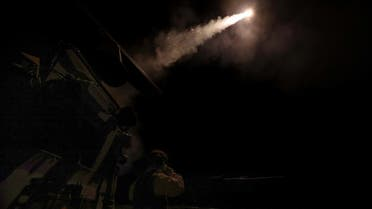
In a recent development underscoring the ongoing tensions in the Middle East, the U.S. military announced on Tuesday, April 9, 2024, that it successfully intercepted and destroyed an anti-ship ballistic missile over the Gulf of Aden. The missile, launched by Iranian-backed Houthi rebels, posed a significant threat to maritime security in the region, specifically targeting the MV Yorktown, according to U.S. Central Command.
The incident, which unfolded amid heightened concerns over Iran’s influence in the region, exemplifies the complex geopolitical landscape of the Middle East. The U.S. Central Command swiftly responded to the threat, deploying defensive measures to neutralize the missile and safeguarding the safety of U.S., coalition, and commercial ships operating in the area.
The U.S. military’s decisive action not only averted a potential catastrophe but also demonstrated its unwavering commitment to maintaining peace and stability in volatile regions. Through proactive defense strategies and vigilant monitoring, the United States reaffirms its role as a key player in safeguarding global maritime security.
Despite the attempted aggression by Iranian-backed forces, there were no reported injuries or damages to any vessels involved in the incident. This successful interception underscores the effectiveness of U.S. military capabilities in countering emerging threats and protecting vital sea lanes crucial for international trade.
In response to the incident, U.S. Central Command conveyed its reassurance to allies and partners in the region, emphasizing its dedication to ensuring the freedom of navigation and upholding maritime norms. The collaborative efforts between the United States and its allies serve as a bulwark against destabilizing activities and underscore the importance of international cooperation in addressing regional challenges.
As tensions persist in the Gulf region, the interception of the inbound missile serves as a stark reminder of the ongoing threat posed by malign actors seeking to disrupt maritime activities. The United States remains vigilant in monitoring and deterring such threats, reaffirming its commitment to protecting global security interests and preserving stability in the face of adversity.
U.S. and Philippine Armies Unite: Salaknib 2024 Strengthens Alliance
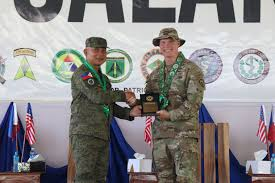
FORT MAGSAYSAY, Philippines — Strengthening the enduring bond between the U.S. and Philippine armies, soldiers from U.S. Army Pacific joined forces with the Philippine Army’s 5th and 7th Infantry Divisions to kick off Salaknib 2024 at Fort Magsaysay, Nueva Ecija, Philippines on April 8, 2024.
Salaknib, an annual bilateral exercise led by the Philippine Army and supported by the U.S. Army Pacific, aims to boost the military capabilities and interoperability of both armies while reinforcing their longstanding alliance.
Maj. Gen. Marcus Evans, commanding general of the U.S. Army 25th Infantry Division, and Maj. Gen. Luis Rex D. Bergante, Philippine Army Training and Doctrine Commander, oversaw the opening ceremony.
Throughout the exercise, soldiers from both nations will engage in field training, live-fire exercises, and knowledge sharing sessions covering various areas such as fire support, communications, engineering, and counter-improvised explosive devices.
“This exercise, a cornerstone of our army relationship since 2016, strengthens our shared values and collective strength, ensuring stability in the Indo-Pacific,” said Evans. “We will train side by side to enhance interoperability and camaraderie while adapting to Indo-Pacific and jungle environments.”
Salaknib 2024 introduces the Joint Pacific Multinational Readiness Center (JPMRC) into the fold, marking the U.S. Army’s first regional combat training center in the Indo-Pacific. This addition underscores the focus on addressing challenges in remote and rugged environments.
“This realistic training empowers our units to learn and collaborate effectively, protecting Philippine interests and supporting local populations,” Evans remarked.
This year’s Salaknib will also feature the first instrumented force-on-force Combat Training Center rotation, demonstrating the commitment to modernize the Philippine armed forces and uphold the alliance.
Evans concluded with a message of determination and cooperation, aiming for continuous improvement throughout the exercise.
USS John C. Stennis (CVN 74) Emerges from Dry Dock, Enters Second Phase of Extensive Refueling and Complex Overhaul

On April 9, 2024, from the Program Executive Office Aircraft Carriers Public Affairs at the Washington Navy Yard in DC, the USS John C. Stennis (CVN 74) marked a significant milestone as it undocked from drydock, signaling the commencement of the second phase of its extensive Refueling and Complex Overhaul (RCOH) at HII-Newport News Shipbuilding (NNS) in Newport News, Virginia.
Commissioned in December 1995, the USS John C. Stennis, the nation’s seventh Nimitz-class nuclear-powered aircraft carrier, embarked on its RCOH journey in May 2021 under a $3 billion contract with NNS. As the overhaul surpasses the 65% completion mark, it remains on track for redelivery in October 2026.
Aircraft carriers undergo refueling complex overhauls around the mid-point of their 50-plus-year lifespan to incorporate upgrades to propulsion equipment, infrastructure, and electronic systems. Following the flooding of the dry dock with over 100 million gallons of water by NNS, the ship transitioned to the shipyard’s outfitting berth, where shipyard workers and crew will finalize the installation and testing of major components and combat support systems.
Rear Adm. Casey J. Moton, of the Program Executive Office Aircraft Carriers, emphasized the significance of this milestone, highlighting that the next phase of the overhaul will introduce cutting-edge technologies to support the Navy’s warfighters, enabling the USS John C. Stennis to fulfill operational taskings for another 25-plus years of service.
Capt. Mark Johnson, manager of the PEO Aircraft Carriers In-Service Aircraft Carrier Program Office, emphasized the collaborative efforts between the Navy and industry partners, leveraging lessons learned from previous RCOHs, particularly from the USS George Washington (CVN 73), redelivered in May 2023. Johnson noted the adoption of new digital management tools and processes to enhance support for mechanics and sailors performing work on the ship.
The RCOH of the USS John C. Stennis involves over 25 million total man-hours of work, encompassing the refitting and installation of a new square and tapered mast, integration of state-of-the-art defense and communications systems, updates to the ship’s shafts, refurbished propellers, and modernization of aircraft launch and recovery equipment. This comprehensive construction enhances virtually every aspect of the carrier, from its hull, screws, and rudders to thousands of valves, pumps, and piping components, along with combat and aviation support systems.
As the outfitting and testing phase commences, shipbuilders will focus on completing the overhaul and installation of major components while ensuring the functionality of electronics, combat, and propulsion systems. This phase will also prioritize enhancements to the ship’s living areas, improving crew living spaces, galleys, and mess decks to enhance the overall quality of life for sailors aboard the USS John C. Stennis.
