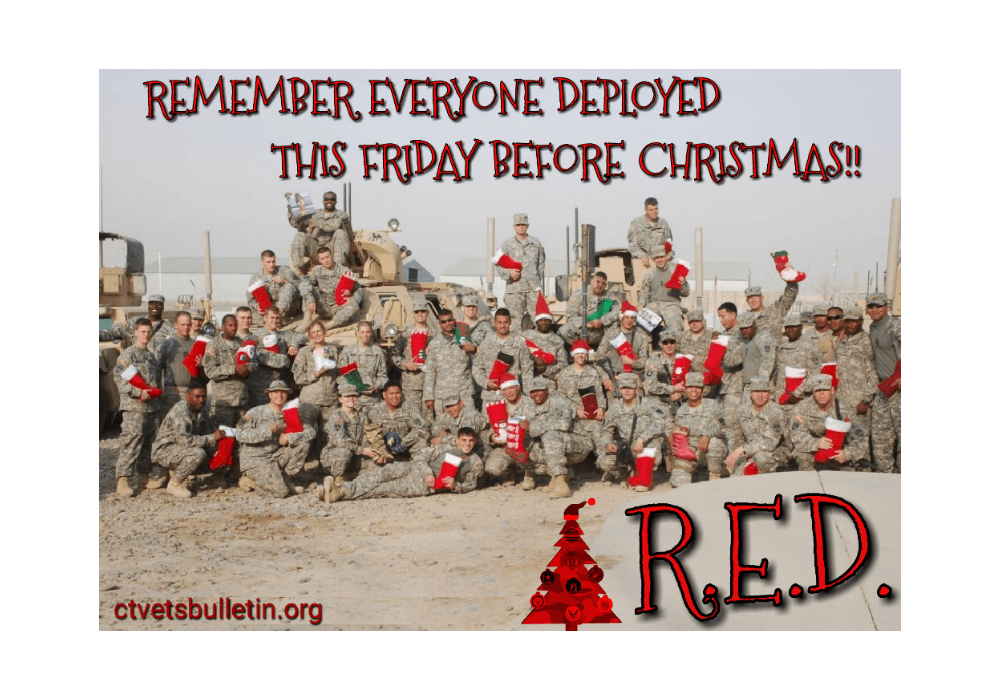
REMEMBER EVERYONE DEPLOYED UNTIL THEY ALL COME HOME!!
As we approach Christmas, it’s important to pause and reflect on the sacrifices made by U.S. service members deployed overseas. On this Red Friday, we stand united in gratitude for their dedication, which often means missing cherished moments at home with their loved ones to safeguard the freedoms we hold dear.
For many troops, the holiday season is a bittersweet time. Far from the familiar warmth of family gatherings, they serve on foreign soil, ensuring peace and security for millions. From remote outposts in the Indo-Pacific to challenging deployments in the Middle East and beyond, their unwavering commitment reminds us of the true meaning of service and sacrifice.
Among those serving are Airmen stationed in Oceania as part of U.S. efforts to enhance military interoperability with allies. Their work alongside Australian and New Zealand counterparts exemplifies the unity and strength of allied partnerships during critical times. These Airmen, along with thousands of other deployed troops, will spend this Christmas away from their families, focusing instead on their mission to maintain peace and stability across the globe.
Chief Master Sgt. of the Air Force David Flosi recently emphasized the importance of these alliances during his visit to deployed service members in Oceania. “Seeing our Airmen work hand-in-hand with allied forces reaffirms the importance of unity and knowledge-sharing in driving mission success,” Flosi said. His words underscore the sacrifices made by all deployed troops as they serve in challenging and often isolating environments.
At the same time, service members in Antarctica are working to support scientific and logistical operations, even as harsh weather and icy terrain underscore the difficulties of their mission. Whether they are on the front lines of strategic operations or supporting critical international programs, each service member overseas plays a vital role in safeguarding our way of life.
For their families back home, Christmas is also a season of sacrifice. Parents, spouses, children, and friends find themselves navigating the holiday spirit while longing for the presence of their loved ones. Yet their resilience and unwavering support for their deployed heroes are a testament to the strength of military families.
As we don our red this Friday, let us not only honor those deployed but also extend our heartfelt blessings to their families. May they find comfort in the knowledge that their sacrifices do not go unnoticed. To the troops spending Christmas overseas, know that you are in our hearts and prayers. Your courage, dedication, and service inspire us all, and we eagerly await the day when you return home to your loved ones.
This Red Friday, let us all take a moment to thank those who cannot be with their families this holiday season. From the snow-covered expanses of Antarctica to the bustling bases of Oceania and beyond, our service members embody the true spirit of sacrifice. May their Christmas, though distant, be filled with hope, gratitude, and the knowledge that a grateful nation stands behind them.
Blessings to our deployed troops and their families this holiday season.
Flosi Reinforces U.S.-Australia-New Zealand Military Collaboration in Oceania Visit
Chief Master Sgt. of the Air Force David Flosi concluded a pivotal trip to Oceania from Dec. 7–13, highlighting the essential military partnerships between the United States, Australia, and New Zealand. The visit served to enhance interoperability, strengthen strategic alliances, and emphasize mutual commitment to a free and open Indo-Pacific region.
Flosi engaged with senior leaders of the Royal Australian Air Force (RAAF) and the Royal New Zealand Air Force (RNZAF), as well as U.S. service members stationed in the region. These discussions addressed ongoing collaboration, training opportunities, and operational integration, particularly focusing on the E-7 Wedgetail aircraft—a critical component of regional airpower.
Strengthening Alliances Through Collaboration
During his meetings with Warrant Officer of the Royal New Zealand Air Force Guy Lipsham, Flosi emphasized the importance of the U.S.-New Zealand defense partnership. Discussions explored ways to expand joint training opportunities, further enhancing interoperability between the two nations.
Flosi also observed U.S. Airmen working closely with the RAAF under the Military Personnel Exchange Program at RAAF Williamtown. This program facilitates bilateral knowledge-sharing on E-7 Wedgetail operations, ensuring both nations are equipped to address complex security challenges. “Expanding our Military Personnel Exchange Programs is essential for fostering deeper collaboration and mutual understanding,” Flosi remarked.
Regional Integration and Historical Commemoration
The trip included a visit to U.S. service members assigned to Joint Task Force-Support Forces Antarctica, where Flosi learned about their role in fostering relationships across the Indo-Pacific and providing strategic logistical support to the U.S. Antarctic Program. These operations underscore the U.S. commitment to maintaining strong alliances in the region.
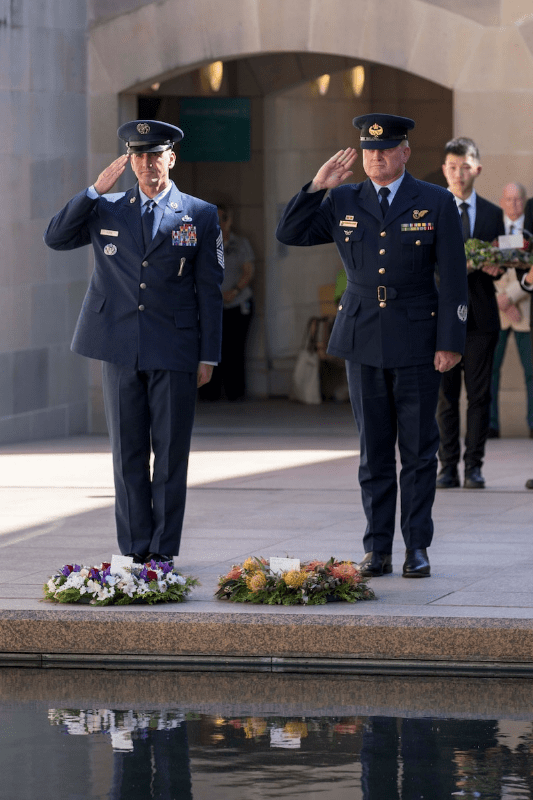
While in Australia, Flosi met with Chief of the Royal Australian Air Force Air Marshal Stephen Chappell and Warrant Officer of the Air Force Ralph Clifton. Together, they reinforced the bilateral partnership’s significance in promoting regional stability. In a moment of reflection, Flosi and Clifton laid a wreath during the Last Call ceremony at the Australian War Memorial, honoring the shared sacrifices of allied service members.
The Role of the ANZUS Treaty
The enduring partnership between the U.S., Australia, and New Zealand is rooted in the ANZUS Treaty, signed in 1951. This treaty remains the foundation of defense and security cooperation, enabling the three nations to consult on mutual threats and coordinate actions to address common challenges. The treaty was notably invoked by Australia following the 9/11 attacks, marking a historic moment of alliance solidarity.
The ANZUS Treaty facilitates access to advanced defense technologies, intelligence sharing, and joint exercises, bolstering regional engagement and stability. These collaborative efforts extend to cybersecurity, counterterrorism, and the prevention of weapons proliferation, ensuring the Indo-Pacific remains secure and prosperous.
Enhancing Regional Stability Through Partnership
As the U.S. Air Force sharpens its focus on Great Power Competition, engagements like Flosi’s visit highlight the indispensable role of allied partnerships. Through continued collaboration with Australia and New Zealand, the United States reinforces a unified approach to addressing evolving challenges and safeguarding shared interests in the Indo-Pacific.
“Our combined efforts help set the standard for regional airpower cooperation,” Flosi said. “Together, we are ensuring the readiness and resilience needed to maintain peace and stability in this critical region.”
Valiant Mark 2024: Strengthening U.S.-Singapore Defense Partnership
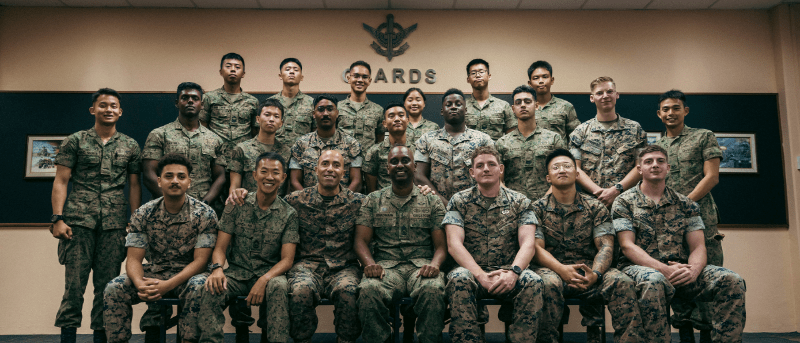
On Dec. 9, 2024, the Singapore Armed Forces (SAF) and Marine Rotational Force-Southeast Asia (MRF-SEA) launched Exercise Valiant Mark 2024 at Bedok Camp, Singapore. This annual bilateral exercise, running through Dec. 13, continues a longstanding tradition of enhancing military interoperability and fostering strategic partnerships between the United States and Singapore.
Valiant Mark 24 focused on cultivating a cohesive and responsive combined force, reinforcing the shared commitment to ensuring regional peace, stability, and a free Indo-Pacific. Highlighting this enduring partnership, Jesse Shaw, spokesperson for the U.S. Embassy in Singapore, stated, “The United States and Singapore enjoy a robust and enduring security partnership. This annual exercise is a testament to our shared commitment to regional peace and stability and to a free and open Indo-Pacific that allows all of us to prosper.”
Building Interoperability and Expertise
The bilateral training emphasized tactical-level collaboration, operational planning, and expert exchanges across various military specialties. Topics ranged from logistics and intelligence to medical care and leadership practices, all designed to deepen mutual understanding of operational doctrines and processes.
Maj. Jack McAndrews, the logistics officer for MRF-SEA, highlighted the significance of these exchanges: “This exercise allows us to partner with the SAF, understand how they think, how they act, and what they want. That makes us a better partner for them and makes them a better partner for us.”
Personnel from SAF’s 3rd Battalion Singapore Guards (3 GDS) and the U.S. Marine Corps’ 2nd Battalion, 7th Marines (2/7) collaborated in anti-armor training. U.S. Marine Corps 2nd Lt. Alexander Turner praised the Singaporean Lightstrike Vehicle’s capabilities, likening its function to the U.S. Marine Corps’ Combined Anti-Armor Team (CAAT) platoon. “In a real-world scenario, these two teams would likely be working in coordination to address armor threats in the area of operations,” Turner explained.
Operational Planning and Future Collaboration
Recognizing the importance of synchronized planning processes, leadership from MRF-SEA and SAF prioritized operational planning exchanges. These sessions allowed unit staff to identify similarities and differences in U.S. and Singaporean planning methodologies, fostering a stronger foundation for future collaboration.
Capt. Dan Donlon, the assistant intelligence officer for MRF-SEA, reflected on the exercise’s value: “Once we were finished, both forces had a better understanding of how each other work, which makes future collaboration that much easier.”
Preparing for Valiant Mark 2025
With Valiant Mark 24 successfully concluded, both forces are already preparing for the next iteration in March 2025. This upcoming exercise will expand in length and complexity, incorporating field training and live-fire events to further enhance operational readiness and interoperability.
“The successes we have achieved during Valiant Mark 24 will pay dividends in the future,” said U.S. Marine Corps Col. Stuart Glenn, commanding officer of MRF-SEA. “Valiant Mark 25 will see our teams train alongside the Singapore Guards to maintain regional stability through our proven interoperability and unwavering partnership.”
Strengthening Regional Security
As MRF-SEA continues its rotation in Southeast Asia, it remains dedicated to bolstering partnerships with regional allies. Upcoming engagements, including Exercise Cobra Gold in Thailand and Valiant Mark 25, underscore the commitment to sustaining a steady presence in the Indo-Pacific and enhancing the combined capabilities of partner forces.
Through exercises like Valiant Mark, the U.S. and Singapore reaffirm their shared dedication to peace, security, and stability in the region, ensuring a strong and unified response to any contingency in the Indo-Pacific.
U.S. Forces Take Decisive Action to Support Stability and Counter Threats in Syria
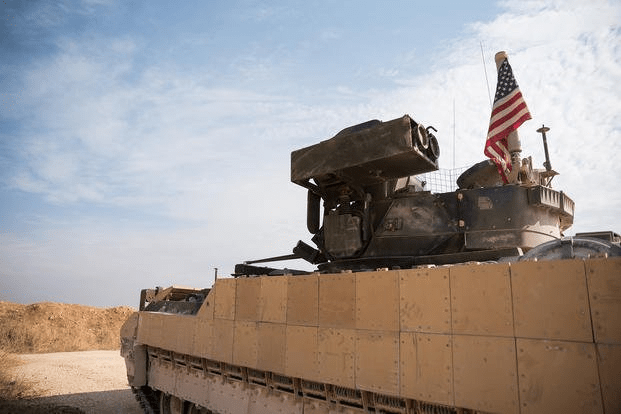
U.S. Central Command forces carried out precision airstrikes on December 16 and 17, 2024, targeting ISIS camps and operatives in Syria. These operations aim to disrupt the terrorist group’s ability to exploit instability in the region and to protect service members and allied forces engaged in maintaining regional security.
Precision Strikes and Initial Outcomes
According to Pentagon Press Secretary Maj. Gen. Pat Ryder, these targeted airstrikes eliminated approximately a dozen ISIS fighters with no indications of civilian casualties. Conducted in areas previously under Assad regime control, the strikes are part of an ongoing campaign to prevent ISIS from regrouping or launching external operations.
Gen. Michael Erik Kurilla, Commander of U.S. Central Command, reaffirmed the military’s commitment to preventing ISIS from regaining strength. “CENTCOM, working with allies and partners in the region, will not allow ISIS to reconstitute and take advantage of the current situation in Syria,” Kurilla stated.
Collaboration with Regional Allies
The U.S. military continues to coordinate closely with the Syrian Democratic Forces (SDF) to secure detention facilities holding ISIS detainees. Ryder emphasized the importance of this cooperation, noting the significant security threat posed by any potential ISIS prison break. U.S. forces provide an “outer layer” of security in the region while focusing on disrupting ISIS operations and ensuring stability.
Efforts to counter ISIS also include working with the international community to repatriate detainees, ensuring long-term solutions for regional security.
Supporting Stability in a Volatile Region
In addition to counter-ISIS operations, the Harry S. Truman Carrier Strike Group recently entered the U.S. Central Command area of responsibility. This deployment underscores the U.S. military’s commitment to maintaining security and stability in the region.
The strike group includes the USS Harry S. Truman, Carrier Air Wing 1 with nine aviation squadrons, the guided-missile cruiser USS Gettysburg, and two Arleigh Burke-class guided-missile destroyers, USS Stout and USS Jason Dunham. The group’s arrival follows similar deployments by the USS Abraham Lincoln and USS Theodore Roosevelt Carrier Strike Groups earlier this year.
Focus on Force Protection
Currently, about 900 U.S. troops remain stationed in eastern Syria. According to Ryder, the Pentagon is confident in the measures in place to protect service members and ensure the continuation of their mission. While no increases in troop numbers are planned, force protection remains a top priority as operations progress.
These ongoing efforts highlight the critical role of U.S. forces in ensuring the safety of personnel, degrading terrorist threats, and supporting long-term stability in Syria and the broader region.
