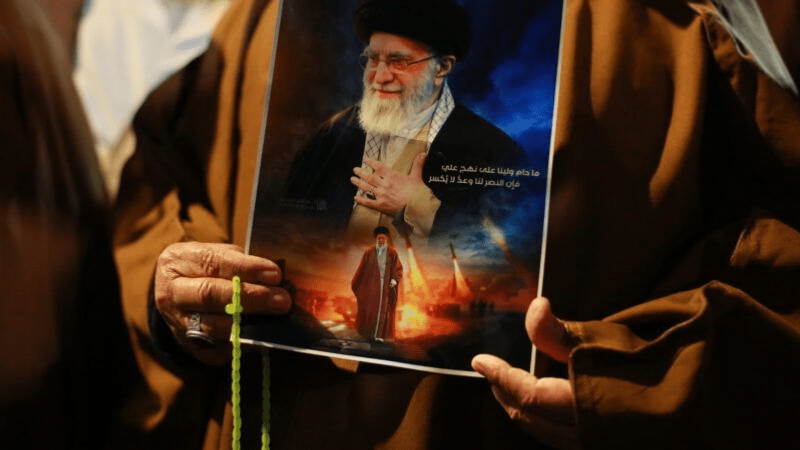
US–Israel Military Strikes on Iran, Death of Supreme Leader, and Ongoing War “Operation Epic Fury”
Timeline, Key Targets, Casualties, and Strategic Impact
Updated March 1, 2026 — Based on verified international reporting
On February 28, 2026, the United States and the State of Israel launched a coordinated military operation against the Islamic Republic of Iran that rapidly escalated into open conflict. This report compiles the latest confirmed developments, operational detail, and the unfolding strategic situation as documented by multiple independent global news sources.
BACKGROUND TO THE OPERATION
Military tension between the U.S., Israel, and Iran had been rising for years over Iran’s nuclear program, ballistic missile development, and regional proxy activities. On February 28, a coordinated strike campaign — identified by some sources as Operation Epic Fury — was initiated with the stated goal of degrading Iran’s ability to project force and eliminating top leadership figures believed to be driving hostile policies against the United States and its allies.
FEBRUARY 28, 2026 — INITIAL STRIKES BEGIN
Early to Mid-Morning — Opening Wave
At approximately 20:00 UTC (local afternoon) on February 28, joint U.S. and Israeli forces initiated a large-scale air and missile campaign across multiple Iranian provinces, including Tehran, Isfahan, Natanz, and Fordow. Targets reportedly included:
- Strategic military facilities
- Leadership compounds
- Missile launch sites
- Air defense systems
- Nuclear and underground infrastructure
Stealth fighters, cruise missiles (such as Tomahawks), and precision guided munitions were used to penetrate and suppress Iranian defenses, including S-400 air defense batteries.
Satellite evidence and multiple reports indicated heavy explosions in Tehran and other cities consistent with bombardment of hardened military and leadership command sites.
Targeting of Leadership
Among the principal strategic objectives was incapacitating the top Iranian leadership. Israeli officials publicly stated there were “many signs” that Supreme Leader Ali Khamenei had been killed in the initial strikes, noting severe damage to his secure compound.
Shortly thereafter, Iranian state media confirmed that Khamenei had indeed died in the attack, along with multiple senior security officials.
Multiple high-ranking Iranian commanders were also killed, including:
- Brig. Gen. Mohammad Shirazi — Head of the Supreme Leader’s Military Office, killed in Tehran.
- Maj. Gen. Mohammad Pakpour — Commander of the IRGC, killed during the strikes.
Iran’s Supreme National Security Council declared a 40-day national mourning period and seven days of public holidays following the announcement of Khamenei’s death.
MARCH 1, 2026 — DAY TWO OF CONFLICT
Leadership Transition Begins
On March 1, Iranian state broadcasting confirmed the death of Khamenei and announced the formation of an interim leadership council to manage state affairs during the transition period, as outlined under Iran’s constitution. The provisional governing body reportedly includes senior clerical and state figures tasked with leading until a new supreme leader is chosen.
Reports also emerged that Ayatollah Alireza Arafi — a senior clerical figure — has been appointed as interim Supreme Leader during the transition, highlighting the constitutional mechanism for succession after Khamenei’s death.
Iranian Government Response
Iran’s president, Masoud Pezeshkian, described the killing of Khamenei as a “great crime” and a “legitimate duty and right” of Iran to seek retaliation, framing the conflict in religious and nationalistic terms.
Retaliatory Strikes Across the Region
Iran’s Islamic Revolutionary Guard Corps (IRGC) declared that it had launched extensive missile and drone strikes against:
- Israeli military installations
- Multiple U.S. military bases across the Middle East
- Hosting states such as Qatar, Kuwait, Bahrain, and the UAE were among the listed targets
Explosions and defensive actions were reported in several countries throughout the region.
CASUALTIES AND DAMAGE
Iran
- Iranian state media reported over 200 deaths and hundreds of injuries across at least 24 provinces in the initial joint strikes.
- Among civilian casualties was a strike on an elementary school in Minab, which state sources said resulted in significant loss of life, with more than 140 killed and dozens wounded.
Regional Impact
- Missile attacks allegedly caused casualties in Israel and the United Arab Emirates, with specific death counts varying by report.
- U.S. military and allied personnel have so far not been publicly reported as killed, though the conflict is ongoing and assessments continue.
STRATEGIC IMPLICATIONS
Leadership Decapitation and Succession
The confirmed killing of Khamenei — Iran’s supreme leader since 1989 — marks a watershed moment in Iranian political history. His tenure saw the expansion of the IRGC’s influence, the pursuit of nuclear and missile capability, and support for proxy networks across the region.
The sudden removal of Khamenei has created a leadership vacuum, raising immediate questions about:
- Consolidation of power within Iran
- The role of the IRGC in post-Khamenei governance
- The speed and authority of succession mechanisms
Iran’s interim leadership council is charged with managing daily affairs, but the ultimate selection of a new supreme leader — a process controlled by the Assembly of Experts — remains a critical unresolved political event.
REGIONAL AND GLOBAL RESPONSE
Diplomacy and International Tension
Regional governments have strongly reacted, with protests reported in Iraq and other neighboring states condemning the strikes and mourning Khamenei’s death.
The United Nations and foreign governments have called for restraint, urging de-escalation while acknowledging the rapidly changing dynamics of the Middle East security landscape.
OVERVIEW OF TARGETS HIT IN INITIAL ATTACKS
The first wave of strikes on February 28 reportedly focused on:
1. Tehran: Supreme Leader Compound & Command Nodes
- The secure compound housing Ayatollah Khamenei was a primary target.
- Associated leadership offices and defense communication infrastructure were damaged.
2. Military Strategic Installations
- Key military sites including IRGC headquarters and senior military offices were targeted.
- High-ranking commanders, including Pakpour and Shirazi, were killed.
3. Underground and Missile Infrastructure
- Multiple missile launch sites and air defense batteries near Tehran, Isfahan, Natanz, and other provinces were struck using precision munitions and cruise missiles.
4. Civilian Areas Impacted
- While coalition sources emphasize military targeting, significant damage occurred in urban areas, including the Minab school incident.
WHERE THINGS STAND
- The conflict that began on February 28, 2026 remains active and volatile.
- Ayatollah Ali Khamenei’s death has been officially confirmed by Iranian state media and international reporting.
- Iran has entered a period of mourning and internal transition.
- Retaliatory strikes continue against regional targets.
- The potential for wider regional escalation and global impact — including disruptions to oil markets and alliance dynamics — remains high.
| M | T | W | T | F | S | S |
|---|---|---|---|---|---|---|
| 1 | ||||||
| 2 | 3 | 4 | 5 | 6 | 7 | 8 |
| 9 | 10 | 11 | 12 | 13 | 14 | 15 |
| 16 | 17 | 18 | 19 | 20 | 21 | 22 |
| 23 | 24 | 25 | 26 | 27 | 28 | 29 |
| 30 | 31 | |||||
