

RED Friday: Remember Everyone Deployed
As we stand on this April 19, we reflect on the significance of wearing red. RED Friday, or “Remember Everyone Deployed” Friday, remains a steadfast tradition in our hearts and communities, serving as a beacon of support for our deployed service members.
Across the nation, people unite in donning red attire, a symbol of solidarity and gratitude for those serving overseas. While we navigate our daily routines, we are mindful that thousands of brave men and women are stationed far from home, courageously safeguarding our freedoms.
Connecticut veterans proudly join the chorus of appreciation and support for our deployed troops. Whether they’re stationed in combat zones, engaged in humanitarian efforts, or providing vital logistical support, our deployed service members embody the essence of sacrifice and service.
On this RED Friday, let us not only wear our red shirts, hats, or ribbons, but also extend our heartfelt gratitude to the families of our deployed heroes, who await their safe return with unwavering hope and love. Let us keep them in our thoughts and prayers, and let us continue to demonstrate our support in every possible way.
To all our deployed service members: Your courage, dedication, and sacrifices are deeply cherished. You are not forgotten. We express our profound gratitude for your service, and we eagerly anticipate your safe return to the embrace of your loved ones.
Recent Developments in US Military Deployment Across Regions
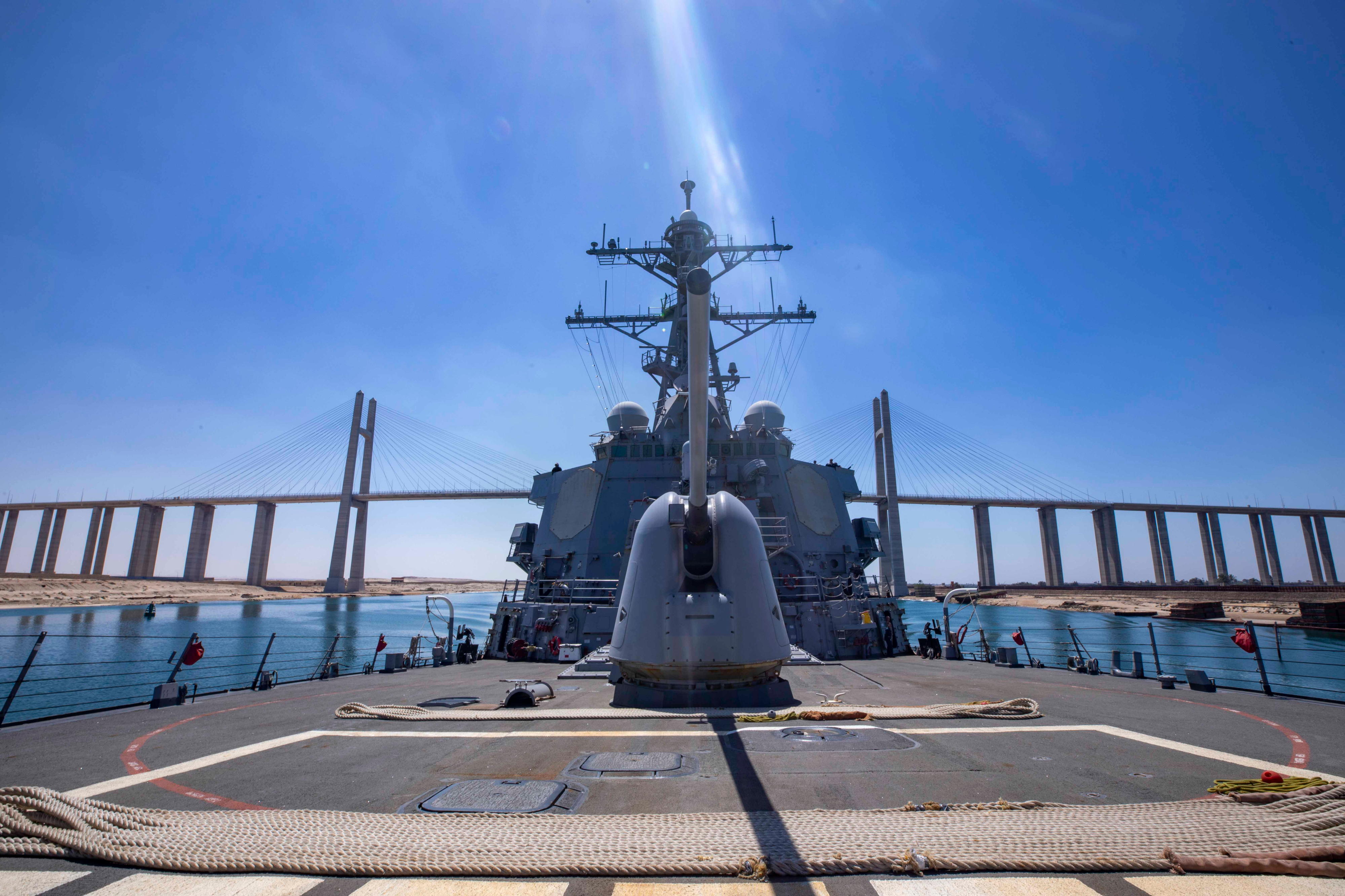
In Yokosuka, Japan, the USS Ronald Reagan (CVN-76) is currently stationed, but it’s scheduled to depart for repair work in Washington state later this year. Taking its place will be the USS George Washington (CVN-73), while the USS America (LHA-6) is currently docked in Sasebo.
Meanwhile, in the East China Sea, the USS Theodore Roosevelt (CVN-71) is actively underway, utilizing older C-2A Greyhounds for logistical operations due to the temporary grounding of the CMV-22B fleet following an Air Force MV-22B Osprey crash last November. However, recent lifting of the Ospreys’ grounding has prompted the Navy to begin recertifying crews and aircraft for logistical operations.
In the Mediterranean, the USS Carney (DDG-64) and USS Arleigh Burke (DDG-51) intercepted between four to six Iranian-launched ballistic missiles. Additionally, U.S. Central and European commands have successfully neutralized over 80 one-way attack unmanned aerial vehicles (UAVs) launched from Iran and Yemen.
Moving to the Red Sea, where the USS Dwight D. Eisenhower (CVN-69) and its accompanying strike group are currently stationed as part of Operation Prosperity Guardian. This multinational effort aims to safeguard ships navigating through the region amidst ongoing attacks by Houthi forces in Yemen.
In the Gulf of Aden, recent events include the interception of Houthi unmanned aerial vehicles and anti-ship ballistic missiles by CENTCOM forces, aimed at coalition ships and merchant vessels.
Further deployments include U.S. Coast Guard patrols in the Persian Gulf under Patrol Forces Southwest Asia (PATFORSWA), and ongoing efforts to construct a humanitarian aid pier in Gaza involving various U.S. Army watercraft and Navy support ships.
In domestic waters, the USS Wasp (LHD-1) is positioned off the coast of North Carolina, while the USS George Washington (CVN-73) returns to Norfolk, Va., before its upcoming deployment to the U.S. Southern Command area.
These deployments, alongside various other operations, underscore the multifaceted role of the U.S. military in maintaining security and stability across global regions.
Enhancing Joint Capabilities and Strengthening Bonds: Balikatan 2024 Update
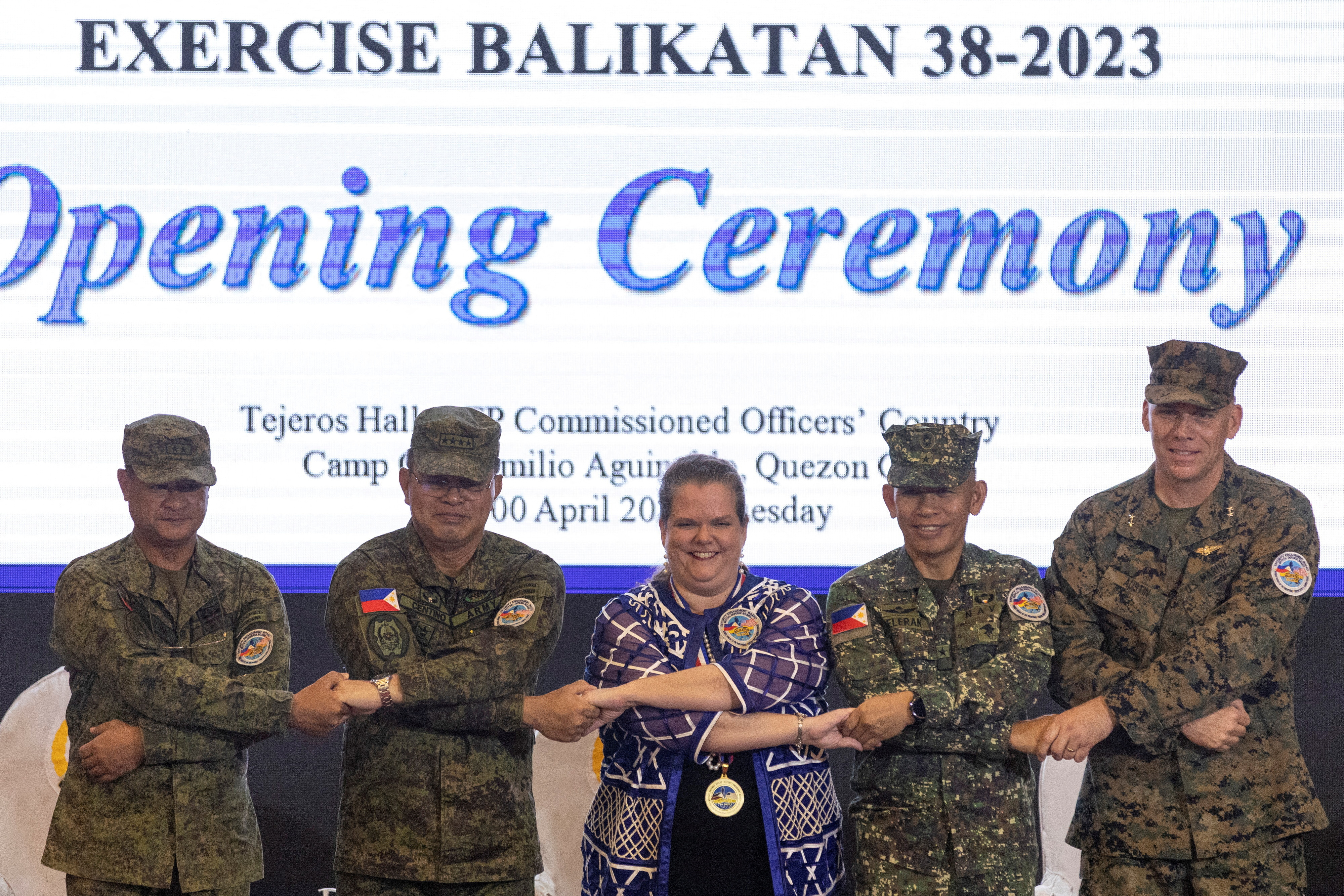
In Balikatan 2024, military forces are honing long-range, precision strike abilities, targeting simulated threats, tracking air threats, and employing various defense systems. Additionally, they are integrating air and land platforms to heighten maritime security awareness. The exercise culminates in targeting simulated enemy forces, including sinking an “enemy” ship.
Furthermore, the Armed Forces of the Philippines (AFP) and the U.S. civil-military operations task force are engaged in humanitarian civic assistance activities across the western and northern Philippines. These efforts, emphasizing the Balikatan spirit of solidarity, involve infrastructure development, medical skill-sharing, and fostering ties with local communities. Lt. Gen. Jurney underscores the exercise’s significance, emphasizing its role in promoting regional peace, stability, and mutual security interests.
Setback and Security Concerns as US Navy Aims to Complete Gaza Aid Mission Amidst Challenges
According to a Navy statement released Wednesday, the crew of the USNS 2nd Lt. John P. Bobo managed to extinguish the fire using portable devices and evacuated the affected area. However, the damage necessitated the ship’s return to Jacksonville, Florida, operating on a single engine for a detailed assessment. This mishap adds to the growing list of delays and issues affecting the mission, including other logistic setbacks with smaller Army ships involved in the operation.
A retired naval officer highlighted the severity of the situation, noting, “The delays of the Bobo and the smaller Army ships mean they’re going to have a lot fewer pieces to work with as far as building the actual pier.” The officer also expressed concerns over the security arrangements for these vessels, which are minimally armed and lack crew trained in maritime tactics. “You’ve got a couple of .50 cals and small arms, and the vessel masters are not taught maritime tactics,” he explained, underscoring the vulnerability of the mission.
In response to concerns about the safety of the vessels, Pentagon spokesman Ryder assured that there would be “some Israeli support when it comes to the maritime aspect of security” and highlighted that the Navy’s 6th Fleet would provide additional capabilities. Ryder also clarified the objectives for the Gaza aid mission, stating that while the goal for having a Joint Logistics Over-The-Shore (JLOTS) operation capable by the end of April or early May still stands, there is a crucial distinction between achieving initial operational capability and full operational capability.
Ryder optimistically projected that the construction of the two piers essential for the mission would likely commence “in the next two to three weeks.” Despite the setbacks, the Defense Department remains hopeful about meeting its timelines and effectively addressing the dire humanitarian needs in Gaza.
