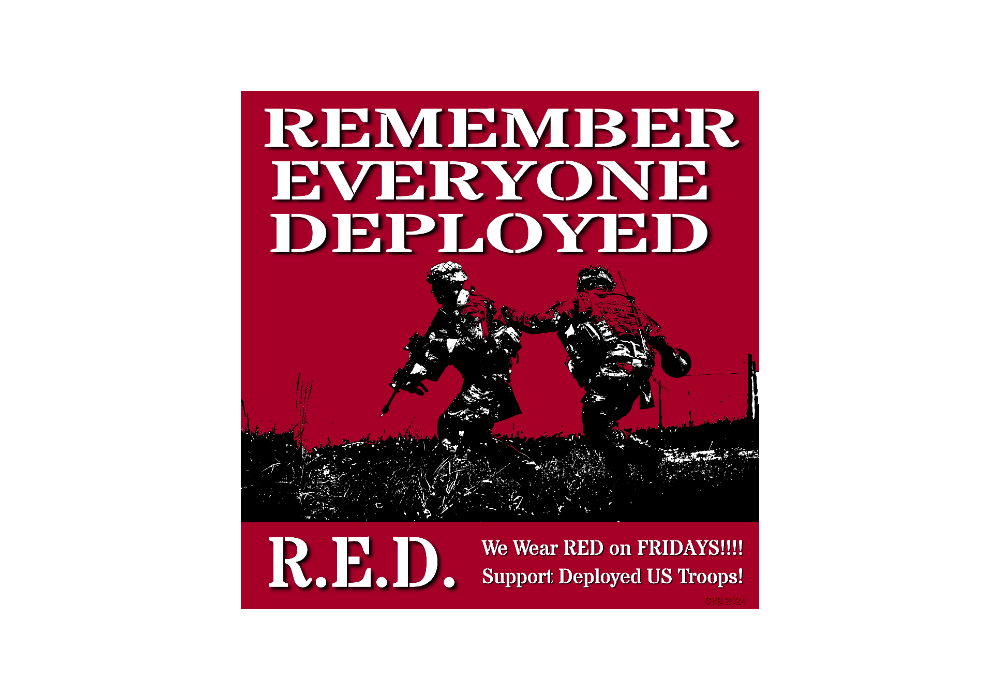
Red Friday: Standing Together for Our Deployed Troops

As the sun rises this Friday, we are reminded once again of the sacrifices our brave service members make every day while stationed in challenging regions across the globe. On this Red Friday, October 11, we unite to show our unwavering support for the men and women of the U.S. Armed Forces who stand on the frontlines of freedom. In recent weeks, the dedication and courage of our deployed forces have been more evident than ever, as they engage in critical missions in Syria, Yemen, the Philippines, and the Indo-Pacific region.
The U.S. military continues to operate in some of the world’s most volatile areas, working tirelessly to ensure stability and protect our national interests. From protecting vital sea lanes to offering humanitarian relief in disaster-stricken regions, our troops answer the call whenever and wherever needed.
In Syria, U.S. forces stationed near the Conoco gas field in Deir ez-Zor faced yet another missile attack as tensions rose in the region. Despite the dangers, our military personnel remain steadfast, responding to escalating threats with resilience and precision, showing the world that U.S. presence in the region is unyielding. Each day, they put their lives on the line, defending not just strategic positions but also the values that underpin our nation.
Meanwhile, in Yemen, U.S. forces continue to combat Houthi rebel forces, striving to maintain safety for merchant ships navigating the perilous waters of the Red Sea. Despite years of missile and drone attacks by these Iranian-backed rebels, our service members persist, ensuring that international commerce and humanitarian aid flow through this critical region. Their resolve is unmatched, as they face indiscriminate assaults to preserve freedom of navigation and safeguard innocent lives.
In the Philippines, U.S. Marines and sailors have mobilized to assist in recovery efforts following Typhoon Krathon. Their mission, in partnership with the Armed Forces of the Philippines and USAID, is a poignant reminder that the U.S. military is not just a force for defense but also for compassion. The 15th Marine Expeditionary Unit and the USS Boxer have deployed personnel and supplies to the hardest-hit areas, exemplifying the versatility of our military in times of crisis. Their presence is a symbol of hope and recovery for those most affected by natural disasters.
Our commitment extends to the Indo-Pacific, where U.S. forces are conducting their largest Combat Training Center rotation, strengthening military readiness alongside our allies. From Alaska to Palau, U.S. forces, together with regional partners, are preparing for future challenges through a combination of live and virtual exercises. Their readiness underscores the importance of maintaining a strong defense presence in a region vital to global security.
These stories, while happening thousands of miles away, serve as a reminder of the incredible burden our deployed troops carry. Their missions are complex, dangerous, and essential to maintaining peace, security, and humanitarian relief efforts worldwide. And while they fight on foreign soil, it is our duty here at home to show them that they are not forgotten.
On this Red Friday, we stand in solidarity with our troops, wearing red to honor their service and sacrifice. Each deployment, each mission, and each sacrifice they make is a reminder of their dedication to protecting our freedom. It is also a call for us, as a community, to keep them in our thoughts and prayers, recognizing the sacrifices they and their families make for our safety.
As we move forward, let us remain vigilant in our support—whether it’s through small gestures like wearing red on Fridays, or larger acts of gratitude to show our deployed forces that we are always behind them. Let today be a symbol of our unity and appreciation for all they do.
We stand strong for our heroes, because they stand strong for us.
U.S. Army Launches Largest Combat Training Center Rotation in Indo-Pacific
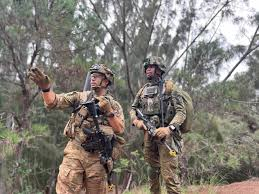
SCHOFIELD BARRACKS, Hawaii – On October 7, 2024, the 25th Infantry Division and the Joint Pacific Multinational Readiness Center (JPMRC) kicked off their largest Combat Training Center (CTC) rotation to date—JPMRC 25-01. Spanning from Alaska to Hawaii and Palau, this rotation pushes the limits of military readiness across diverse environments, from jungle to high-altitude volcanic terrain.
As the U.S. Army’s premier Indo-Pacific training center, JPMRC provides a realistic setting for U.S. forces and regional allies to prepare for future operations. The 2nd Light Brigade Combat Team (2LBCT) serves as the primary training unit, alongside the 11th Airborne Division, 5th Security Force Assistance Brigade, 3rd Multi-Domain Task Force, U.S. Army Special Operations Command units, and multinational forces from Malaysia, New Zealand, Indonesia, Thailand, Japan, Singapore, Maldives, Australia, and the United Kingdom.
The complex training environment allows forces to engage in multi-domain, live, virtual, and constructive exercises, fostering cooperation and readiness for real-world operations. 2LBCT’s participation in this rotation is critical, as it aims to validate the unit’s “Transformation in Contact” construct while testing new technologies and systems to enhance combat effectiveness.
Operational staff play a vital role in synchronizing these efforts. U.S. Army Capt. Christopher Onorato of the 2LBCT explains, “The operations order brief ensures subordinate units work together effectively to achieve successful outcomes.”
JPMRC 25-01 is a testament to the U.S. Army’s commitment to maintaining readiness and strengthening partnerships in the Indo-Pacific. “With proper planning and training, we can execute major missions in any environment,” said U.S. Army 1st Lt. Nathan Morgan of Delta Company, 25th Combat Aviation Brigade.
This groundbreaking rotation sets the stage for future challenges, ensuring U.S. forces and their allies remain prepared for evolving threats in the region.
U.S. Naval Strikes Against Houthi Targets in Yemen Continue Amid Merchant Shipping Threats
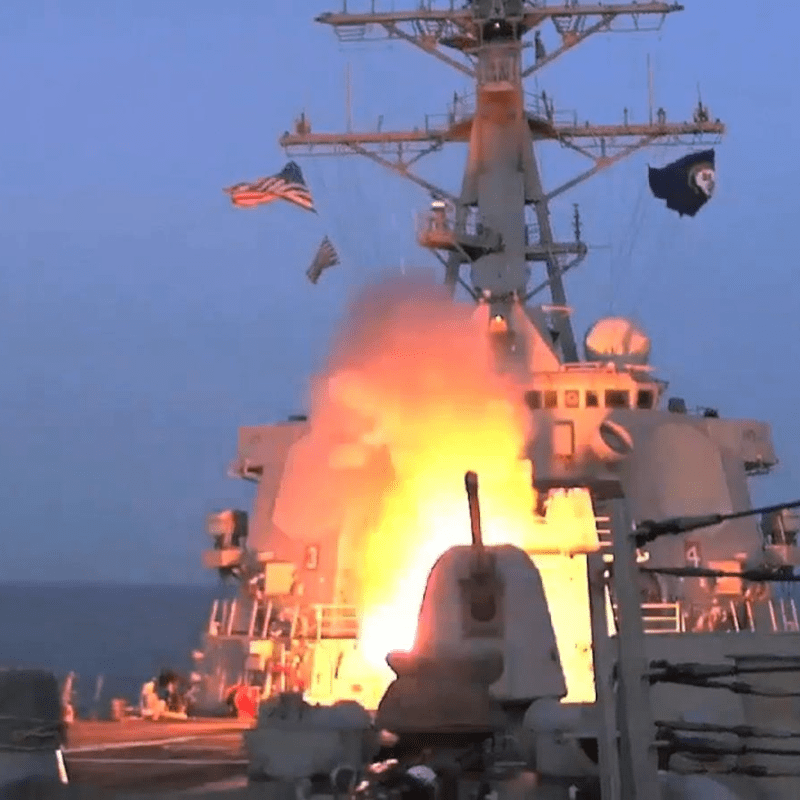
The Pentagon recently released more information regarding its latest strike on Houthi targets in Yemen, conducted on October 4, 2024. The operation, which involved U.S. Navy ships launching Tomahawk cruise missiles, targeted 15 Houthi-controlled sites across five locations. These included training facilities and weapons storage, aimed at diminishing the rebels’ offensive capabilities.
Major Gen. Pat Ryder, speaking at a briefing on October 7, confirmed that initial assessments of the strike indicated success. Despite this, Houthi attacks on merchant ships in the Red Sea persist, posing an ongoing challenge for U.S. forces. Over the past year, U.S. military actions have attempted to ensure the security of the region, but the rebels have continued to launch missiles and send drones to harass shipping routes.
The recent strike follows two similar operations earlier this year, in January and February, both executed with allied support. The January mission hit 60 targets across 16 locations, while February’s strike targeted 36 Houthi-controlled areas in Yemen.
The Houthis, backed by Iran, have claimed that their attacks target Israeli-owned or affiliated vessels in support of Hamas, which has been engaged in an ongoing conflict with Israel since October 2023. However, evidence suggests that the majority of these strikes are indiscriminate, often hitting ships with no ties to Israel, including one vessel delivering humanitarian aid to Yemen.
The Pentagon has reiterated that the purpose of these operations is to secure freedom of navigation in the Red Sea and safeguard commercial shipping lanes. “Our focus continues to be on enabling freedom of navigation,” said Ryder. Despite these efforts, the Houthis have continued to launch attacks, with more than 265 thwarted assaults and over 50 preemptive or retaliatory strikes since October 2023.
These intense naval operations have garnered recognition within the U.S. military. This spring, seven U.S. Navy ships were awarded the prestigious combat action ribbon after being involved in over 20 instances of combat between October 2023 and April 2024, marking them among the most battle-tested ships of recent years.
However, despite significant U.S. military intervention, the results have been less than satisfactory. Merchant traffic through the Red Sea remains diminished, with shipping data indicating that the number of vessels crossing the Suez Canal fell by half by the end of 2023 and has yet to recover.
Maritime historian Salvatore Mercogliano noted that although Houthi attacks have been relatively infrequent and not always effective, their impact on global trade is substantial. “The Houthis have pinched off 15% of world trade, deterring shipping companies from using the Red Sea route,” he explained. This has led to a costly detour for vessels, adding time, emissions, and risks, particularly during winter months.
Despite the escalating tensions, the U.S. has emphasized that it is not seeking full-scale conflict with the Houthis. “We’re not looking for a war,” Ryder stated, underscoring that while the U.S. would continue targeted strikes against Houthi capabilities, broader military engagement was not on the table.
Nevertheless, concerns over future threats persist. Reports suggest that notorious Russian arms dealer Viktor Bout, recently traded to Russia in exchange for basketball star Brittney Griner, may have resumed selling arms—reportedly supplying the Houthis. Experts like Mercogliano fear that other groups may replicate the Houthis’ tactics, further endangering global commerce.
U.S. Military Base in Syria Hit by Missile Attack Amid Escalating Regional Tensions
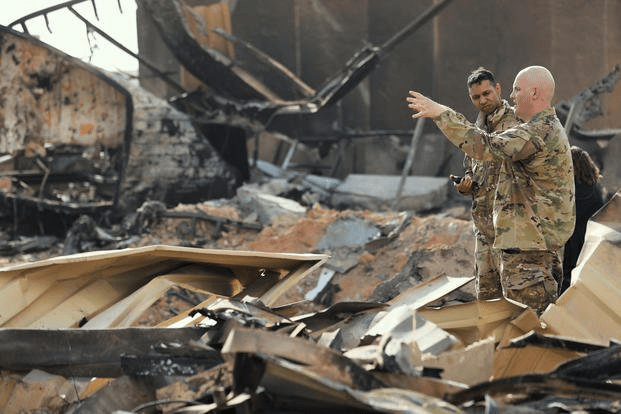
On October 9, 2024, a U.S. military base near the Conoco gas field in Syria’s Deir ez-Zor governorate came under missile fire, according to a report by Al Mayadeen television, citing unnamed sources. While no information regarding casualties or damage was immediately available, explosions were reportedly heard around the facility.
In response to the missile attack, forces of the U.S.-led international coalition launched retaliatory airstrikes on several nearby villages controlled by Syrian government troops. This action underscores the ongoing tensions in the region, where various factions continue to clash over control.
The Deir ez-Zor governorate, along with the provinces of al-Hassakah and Raqqa, remains largely under the control of the Syrian Democratic Forces (SDF), a Kurdish-led coalition that has received U.S. support. Since 2015, the United States has maintained a military presence in these areas, with nine bases established to safeguard the region, particularly the oil fields in eastern Syria. A plan approved by former U.S. President Donald Trump in 2019 ensured that several hundred U.S. troops would remain in Syria to secure these strategic resources, despite ongoing condemnation from the Syrian government, which views the U.S. presence as an illegal occupation.
The missile attack comes amidst heightened regional instability following the escalation of the Palestinian-Israeli conflict in Gaza. Shiite militias have increased missile and drone assaults on U.S. military bases in both Iraq and Syria, demanding that the U.S. cease its military support for Israel. As these hostilities intensify, U.S. forces in the region find themselves navigating an increasingly volatile landscape.
USS Boxer and 15th Marine Expeditionary Unit Arrive in the Philippines to Aid Typhoon Recovery
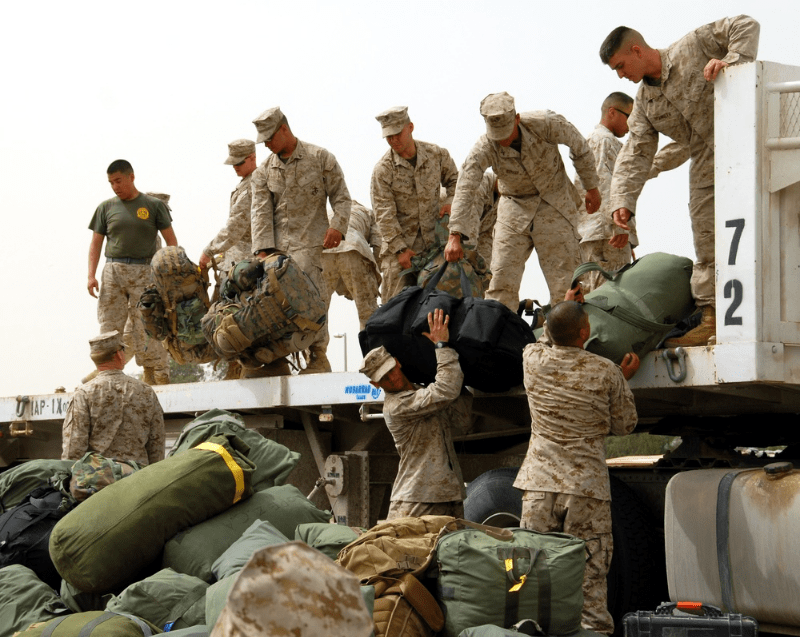
On October 8, 2024, the amphibious assault ship USS Boxer (LHD 4) and elements of the 15th Marine Expeditionary Unit (MEU) arrived in the Philippines to support disaster relief operations following the devastating impact of Typhoon Krathon, known locally as Julian. The typhoon struck the province of Cagayan on September 30, leaving widespread destruction in its wake.
The U.S. response, coordinated with the U.S. Agency for International Development (USAID) and at the request of the Philippine government, was directed by U.S. Secretary of Defense Lloyd Austin and U.S. Indo-Pacific Command. The primary mission is to assist the people of the Philippines in recovering swiftly and safely from the disaster, said U.S. Marine Corps Col. Sean Dynan, commanding officer of the 15th MEU.
“Our forces, in collaboration with the Armed Forces of the Philippines and USAID, will deliver and transport essential relief supplies to the hardest-hit areas, including the Batanes Islands,” Col. Dynan stated. “This mission aligns with our training, ensuring rapid response and assistance in an expeditionary environment.”
The Boxer Amphibious Ready Group (ARG) and the 15th MEU will work closely with USAID to distribute foreign disaster response (FDR) supplies to remote regions. These supplies include essential items such as shelter kits, tarps, and food packets.
U.S. Navy Capt. Tate Robinson, commodore of Amphibious Squadron (COMPHIBRON) 5, expressed his condolences to those affected by the typhoon and highlighted the swift and efficient response of the Navy and Marine Corps team. “Our amphibious force, with its unique capabilities of rapid deployment and maneuverability, is well-positioned to provide critical support. I am proud of the way we have joined forces with our Philippine allies to deliver aid and alleviate suffering.”
In addition to the ARG-MEU team, personnel from I Marine Expeditionary Force’s Marine Rotational Force – Southeast Asia, already in the Philippines, will help facilitate the distribution of supplies. U.S. Marine Corps KC-130J Hercules aircraft from Marine Aerial Refueler Transport Squadron 152, based in Okinawa, Japan, have also arrived in Manila to bolster relief efforts.
The Boxer and the 15th MEU regularly train for humanitarian assistance and disaster relief missions, having recently completed certification for such operations. Their deployment is part of routine operations within the U.S. 7th Fleet, the Navy’s largest forward-deployed numbered fleet, tasked with maintaining security and stability in the Indo-Pacific region. This mission is further enhanced by joint training exercises with the Philippines, such as Balikatan and Kamandag, which prepare both nations for effective crisis response.
